

worm gearboxes normally generate more heat because sliding contact creates friction, but a continuously rising temperature usually indicates that heat generation exceeds heat dissipation or that an operating fault is present.
What Makes a Worm Gearbox Generate Heat During Normal Operation?
How Does Sliding Contact Convert Mechanical Loss Into Heat?
The worm slides across the wheel teeth while transmitting torque. This produces frictional loss, and the lost mechanical power appears mainly as heat in the tooth contact, lubricant, bearings, and housing. Oil carries part of that heat to the housing for dissipation.
How Do Gear Ratio, Input Speed, and Load Affect Heat Generation?
Ratio alone does not cause overheating. A larger reduction ratio can make sliding-friction efficiency effects more noticeable, while input speed and load determine how much power passes through the mesh. Review the complete operating point.
Why Do Duty Cycle and Ambient Conditions Control Heat Dissipation?
The housing rejects heat to surrounding air and connected structures. High ambient temperature, restricted airflow, solar heating, frequent starts, and insufficient cooling time reduce thermal margin. Thermal inertia delays the new steady state after a change in speed, load, or cycle.
How Can Engineers Identify Worm Gearbox Overheating Before Damage Occurs?
Establish a Temperature Baseline From Startup to Steady-State Operation
Record temperature from a documented starting condition through the expected steady-state period. Keep load, speed, cycle, ambient temperature, sensor, and measurement points consistent. Unrelated spot readings are not a baseline.
Track Housing, Bearing, and Lubricant Temperature Trends
Measure repeatable housing points, bearing areas, and lubricant where permitted. A local bearing-area rise can indicate friction, misalignment, excessive shaft load, or poor lubrication. A broad housing rise points toward load, speed, oil, ventilation, or thermal capacity.
Recognize Noise, Vibration, Oil Leakage, and Lubricant Deterioration
New noise, rising vibration, leakage, darkened oil, debris, and lost lubrication pressure strengthen the diagnosis. Investigate the pattern as a system; this guide to industrial gearbox noise explains why abnormal sound is an engineering signal.
Determine Whether the Temperature Is Stable or Still Increasing
A temperature that rises and levels off may indicate thermal equilibrium. Continued climbing under unchanged conditions indicates insufficient heat rejection or an added loss. Compare the trend with model and lubricant limits, manufacturer instructions, and the site baseline.
Which Operating and Mechanical Faults Cause Worm Gearbox Overheating?
Overload, Frequent Starts, Reversing, and Shock Torque
Overload raises tooth, bearing, and lubricant losses. Starts, reversals, high-inertia acceleration, and shock events add transient heating even when average torque looks acceptable. Confirm peak torque, duration, frequency, and recovery time.
Incorrect Oil Viscosity, Oil Level, or Lubricant Condition
Oil that is too viscous can increase drag; oil that is too thin, degraded, contaminated, or insufficient can weaken the film and increase friction. Overfilling causes churning. Check the grade and level for the exact model and mounting position.
Misalignment, Excessive Radial Load, and Bearing Friction
Misalignment and a distorted foundation can shift tooth and bearing loads. A pulley, sprocket, or gear adds radial load at its actual shaft position. Excess load, belt tension, or bearing damage can create a local hot area first.
Blocked Venting, Seal Drag, and Internal Worm-Wheel Wear
A blocked breather can raise pressure and promote leakage; blocked airflow prevents heat rejection. Damaged seals add drag. Worn or scored worm-wheel surfaces increase friction and may release debris. Inspect leakage pathways as described for industrial gearbox oil leaks.
How Can Worm Gearbox Overheating Be Prevented Through Selection and Installation?
Size the Worm Gear Reducer for Torque, Ratio, and Duty Cycle
Build a torque-speed-time profile covering running and transient events. Select ratio from required speeds, then verify torque and service demand using the manufacturer’s method. Do not transfer limits from another family.
Separate Continuous Running Torque From Starting and Peak Torque
Continuous torque controls sustained mechanical and thermal demand. Starting, acceleration, reversal, jam, and shock torque are separate events with their own magnitude, duration, and frequency. Both must remain within the applicable limits.
Check Mechanical Capacity and Thermal Capacity Independently
Check gears, shafts, bearings, and external loads for mechanical capacity. Separately check power loss, heat dissipation, oil temperature, ambient conditions, and cooling. Passing one check does not prove the other; the lower verified margin controls selection.
Control Mounting, Alignment, and External Shaft Loads
Use a Rigid Foundation and Correct Coupling Alignment
Use a solid, vibration-free foundation and align couplings to the equipment instructions. Avoid soft foot and frame strain. Recheck fasteners and alignment after the first thermal cycle.
Verify Radial and Overhung Loads at the Gearbox Shaft
Calculate radial load at the actual gear, pulley, or sprocket location, including tension and overhung distance. Compare it with shaft and bearing limits, and check axial load.
Provide Ventilation, Sun Protection, and Space for Heat Dissipation
Keep cooling surfaces and the motor-fan path clear. Provide circulation space, shield outdoor units from sun and weather where practical, and avoid recirculating hot air. Keep breathers clear.
Select the Correct Lubricant and Fill Level for the Mounting Position
Use the specified lubricant grade, quantity, and inspection point for the selected orientation. Verify level after installation and service. Activate the instructed venting arrangement before operation.
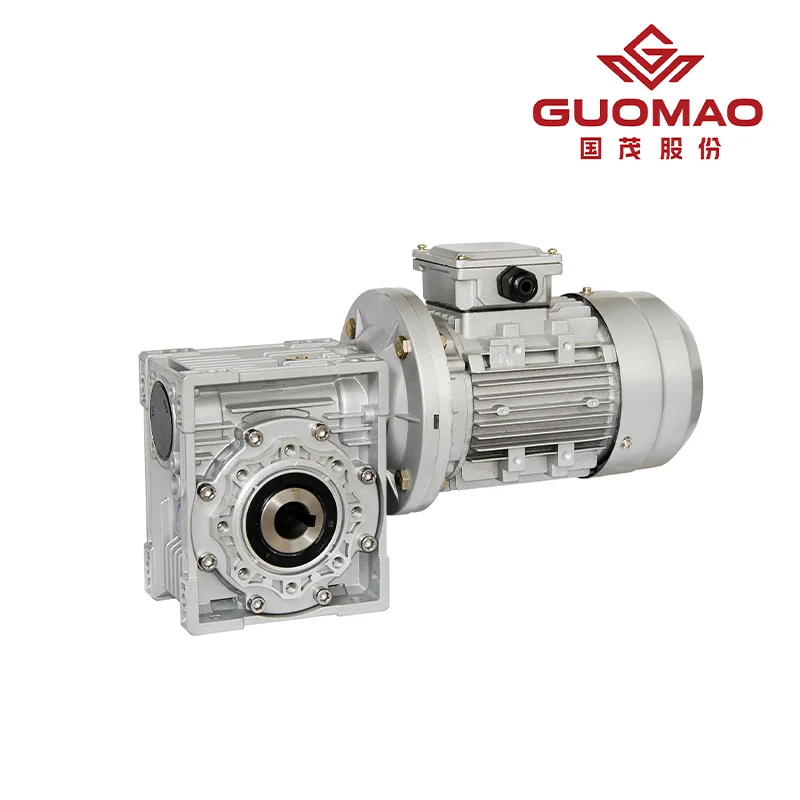
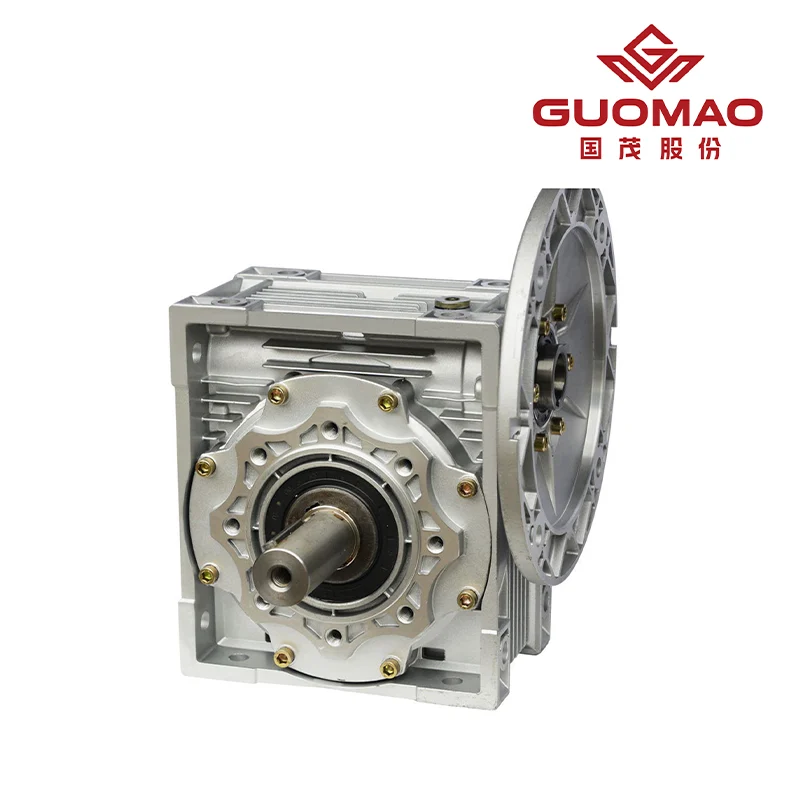
The Guomao RV Worm-Gear Speed Reducer is a compact industrial example offered in multiple installation forms, with source-listed low-noise characteristics and radial-load capability. The chosen mounting position still controls lubricant quantity and inspection points. Our engineers do not treat those features as an unspecified thermal rating or continuous-duty limit.
What Is the Correct Troubleshooting Process for a Worm Gearbox Running Hot?
Confirm the Actual Load, Input Speed, and Operating Cycle
Measure or retrieve actual input speed, running torque, peaks, starts, reversals, and time at each condition. Note ambient temperature and when the heating began. Compare the current cycle with the design basis and with the last stable baseline.
Inspect the Lubricant, Oil Level, Breather, and Leakage Points
Stop and isolate the drive when the inspection requires it. Check oil grade, level, color, odor, contamination, debris, foaming, breather condition, and leakage. Correct the cause of pressure or level problems instead of replacing a seal alone.
Check Alignment, Bearings, Seals, and Worm-Wheel Contact
Verify foundation condition, coupling alignment, shaft loads, bearing play and friction, seal drag, and the worm-wheel contact pattern according to the maintenance procedure. Localized heat, noise, vibration, or debris helps narrow the fault, but disassembly requires the proper safety and service process.
Correct the Root Cause and Restart With Staged Loading
Repair the identified fault, restore lubrication and ventilation, and document the change. Restart unloaded or lightly loaded when permitted, then increase load in stages while watching temperature, noise, vibration, and leakage. For a Guomao RV installation, we verify stable mounting, clear motor-fan airflow, the correct oil level, and gradual load application before returning to planned duty.
Define Conditions for Continued Operation or Immediate Shutdown
Continue only when temperature stabilizes below the applicable model and lubricant limits and no damaging symptoms are present. Reduce load and investigate an adverse trend. Shut down under the site safety procedure if temperature rises rapidly, an applicable limit is exceeded, or heat appears with smoke, burning odor, severe noise or vibration, loss of lubrication, major leakage, or suspected bearing or gear damage.
FAQ
Q: What temperature indicates worm gearbox overheating in an industrial drive?
A: No single housing temperature applies to every worm gearbox. Use the selected model’s limit, lubricant limit, ambient condition, measurement location, and established baseline; a continuously rising trend is itself a warning.
Q: Can incorrect oil level cause worm gearbox overheating?
A: Yes. Too much oil can increase churning, while too little can starve the mesh or bearings. Verify the mounting-position-specific level and the correct inspection method.
Q: How can worm gearbox overheating be prevented during continuous operation?
A: Check mechanical and thermal capacity independently, use the correct oil and level, maintain alignment and airflow, control shaft loads, and trend temperature from startup to steady state.
Q: Why does worm gearbox overheating occur after the load or reduction ratio increases?
A: Higher load raises transmitted power and losses; a ratio change can make sliding-friction efficiency effects more significant. Recheck speed, torque, duty cycle, lubricant, ventilation, and thermal capacity together.
Q: When does worm gearbox overheating require an immediate shutdown?
A: Shut down according to the site procedure when an applicable limit is exceeded or temperature climbs rapidly with smoke, burning odor, severe noise or vibration, lubrication loss, major leakage, or suspected internal damage.