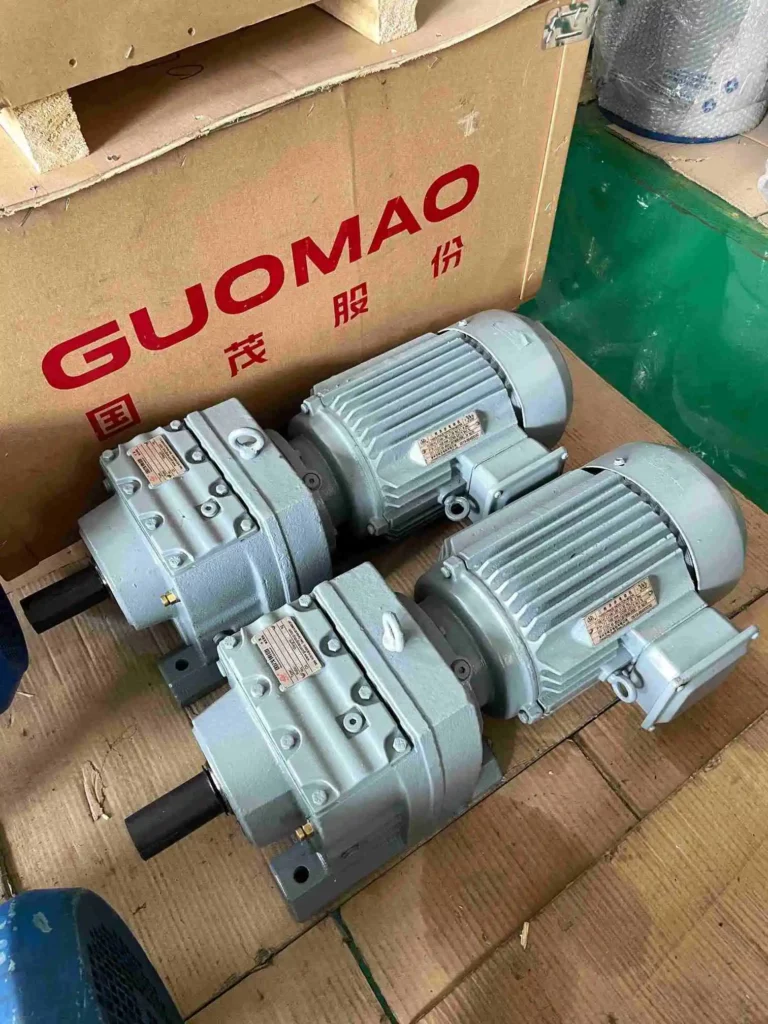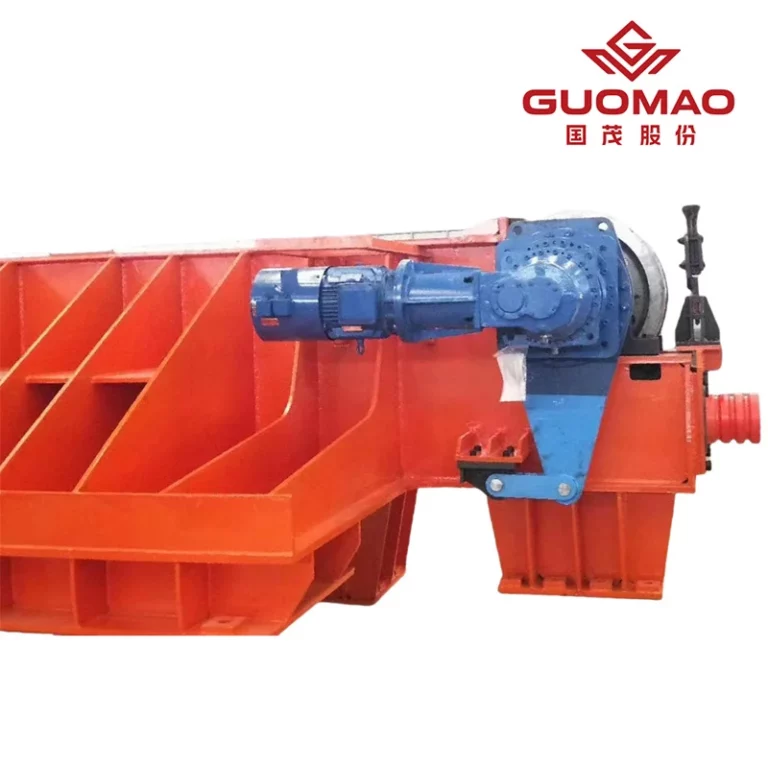



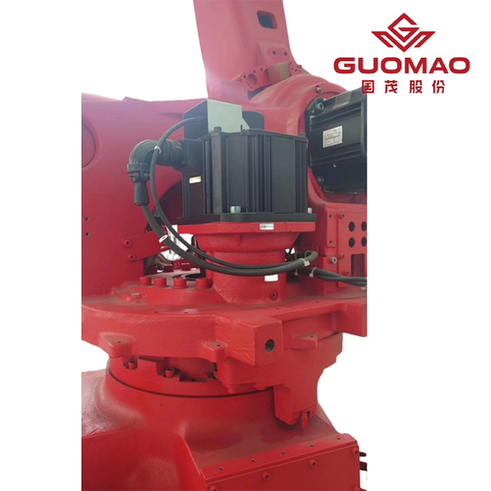
Automation axes need more than a high reduction ratio. A robot joint, rotary table, machine-tool axis, or semiconductor handling stage must accelerate and decelerate repeatedly while preserving position, resisting torsional deflection, and fitting inside a limited mechanical envelope. A precision planetary gear reducer addresses these demands through compact load sharing, high stiffness, and a configuration designed around servo motion.
Why Precision Matters in Motion Systems
Positioning and repeatability
Position error can come from backlash, torsional wind-up, bearing clearance, coupling compliance, or structural flex. The reducer cannot correct a weak machine frame, but it must add as little lost motion and compliance as practical. For a servo axis, evaluate backlash, torsional stiffness, transmission error, repeatability, and the effect of temperature over the complete speed and torque range.
The correct reducer ratio also matters. A ratio that is too low may leave the motor short of torque; a ratio that is too high can increase reflected inertia, reduce available speed, or make settling slower. Match the reducer to the servo motor, encoder resolution, controller tuning, and the actual acceleration profile.
Torque density and inertia
Robotic joints and automation mechanisms often have strict size and mass limits. A compact planetary arrangement can transmit substantial torque through several satellite gears while keeping the input and output axes aligned. This helps designers package the drive close to the joint or machine axis and reduce the mechanical volume around the actuator.
How a Precision Planetary Reducer Supports Automation
Stiffness and load sharing
Guomao provides the Precision Planetary Reducer for servo-driven automation that requires compact transmission, torsional stiffness, and controlled positioning.
The Precision Planetary Reducer is described with helical-shaped sun and satellite gears that are case hardened to 58–62 HRC. Its satellite gears are double-supported with full-complement needle bearings to increase torsional stiffness. These details are relevant to automation because servo reversals and acceleration changes repeatedly load the gear mesh and bearing system.
This same product description indicates that the gear used in an S-type configuration has better tolerance, fatigue resistance, lower noise level, and more rigidity. Such characteristics enable stability of the mechanical connection, but the final outcome will depend on proper motor selection, accurate coupling, loading, and installation. The use of a high precision gearbox does not substitute good engineering practices.
High-speed servo integration
The precision series is intended for high-speed drive applications and is documented with a customizable speed ratio from 30 to 160. Its compact format is useful when a servo motor must deliver controlled motion through a small joint, rotary axis, or positioning mechanism. Confirm allowable input speed, peak torque, continuous torque, emergency-stop loads, and duty cycle with the exact size.
Selecting the Right Precision Planetary Configuration
Ratio, backlash, and mounting
Select the rated and maximum torques of the motor, its output speed, time for acceleration, reflected load inertia, and positioning accuracy as the initial parameters. Next, compare ratios, backlash, torsional rigidity, rated life, bearing strength, flange compatibility, shaft sizes, and mounting orientation. Make sure to verify the inertia ratio of the motor and the reflected load to prevent any vibrations during tuning and settling.
The Precision Planetary Reducer is the relevant product focus when the application is a robot, machine tool, semiconductor system, or aerospace mechanism requiring precision transmission. The documented application list includes industrial robots, machine tools, semiconductor equipment, and aerospace. Use the exact product data for the selected size instead of transferring values from a larger industrial gearbox.
Environment and maintenance
The precision planetary gearbox is documented with an IP65 designation, meaning the stated protection is against dust infiltration and water jets from all directions. That does not mean the reducer or motor should be directly sprayed with water during cleaning. Use the specified cleaning, lubrication, and sealing practices, and protect the actuator from conditions outside its approved installation environment.
We can verify the exact configuration against motor torque, speed, backlash, stiffness, allowable loads, mounting, lubrication, and service life.
Check mounting faces, shaft fit, coupling concentricity, fastener torque, lubricant, and cable routing. On a robot axis, small alignment errors can become repeatability problems at the tool center point. Record installation measurements and baseline vibration or positioning data so future maintenance can distinguish wear from control tuning issues.
Where the Product Fits Best
Robots, machine tools, and semiconductor equipment
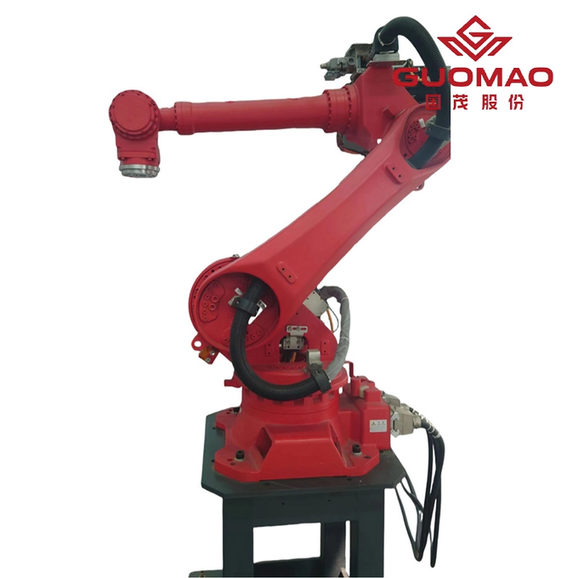
Robots benefit from compact torque transmission, low lost motion, and stiffness during frequent reversals. Machine tools need controlled positioning, rigidity, and stable transmission under cutting loads. Semiconductor equipment often prioritizes clean, repeatable motion in a restricted envelope. These are precision motion problems, so a precision planetary reducer is a closer match than a large general industrial gearbox.
The design team should also consider the full axis: motor, reducer, coupling, brake, bearing support, frame, encoder, and controller. A reducer with strong specifications can still underperform if the output bearing is overloaded or the structure flexes under acceleration.
When an engineering planetary unit is different
The Engineering Mechanical Planetary Gearbox is intended for high-torque industrial equipment such as crushers, road construction machines, cranes, and marine or engineering ship applications. It is described with power from 0.37 to 540 kW, ratios from 3.4 to 2500, and maximum output torque up to 850000 kN.m in the supplied product material. Those characteristics place it in a different selection class from a small precision robot reducer.
Review the Engineering Mechanical Planetary Gearbox when the machine needs heavy industrial torque density, not when the primary requirement is servo-axis precision. Keeping these use cases separate prevents an oversized reducer from adding inertia and packaging cost to an automation axis.
Design Checks Before Ordering
Motor and load matching
Prepare motor rated torque, peak torque, speed range, inertia, encoder data, acceleration and deceleration, duty cycle, holding or braking loads, radial and axial forces, ambient conditions, mounting orientation, and expected service life. Identify whether the load is continuous, intermittent, reversing, or shock-loaded. Also state the allowable backlash and positioning error at the output.
Verification and service planning
Ask for a model-specific selection confirmation covering ratio, torque, speed, backlash, stiffness, allowable loads, life, mounting, lubrication, and interface dimensions. The precision planetary reducer category can organize the product search, but the final order should use the exact configuration and verified data.
FAQ
Q: What is a precision planetary gear reducer used for?
A: It delivers controlled torque and speed. This occurs in applications such as industrial robots. It also occurs in machine tools. The same holds for semiconductor equipment. It covers other servo-driven automation axes as well.
Q: Why is torsional stiffness important in robotics?
A: Greater stiffness helps reduce angular deflection. It does this during acceleration. The same applies to reversal and load changes. This supports repeatable positioning. It also provides improved servo settling.
Q: Is a precision planetary reducer the same as a large industrial planetary gearbox?
A: No. A precision reducer focuses on servo motion. It also focuses on compact packaging and controlled lost motion. However, a large industrial planetary gearbox focuses on much higher process torque. It also handles heavy machine loads.
Q: Does IP65 mean a reducer can be washed with water?
A: No. The given enclosure protection does not take the place of the installation and cleaning instructions. Do not spray the reducer or motor directly with water.
Q: What data is needed to select a precision planetary reducer?
A: Motor torque and speed must be provided. Peak acceleration and reflected inertia are also necessary. The ratio comes next, along with the backlash limit. Stiffness requirements must be included too. Radial and axial loads should be given as well. The mounting interface, duty cycle, environment, and service-life target remain important.