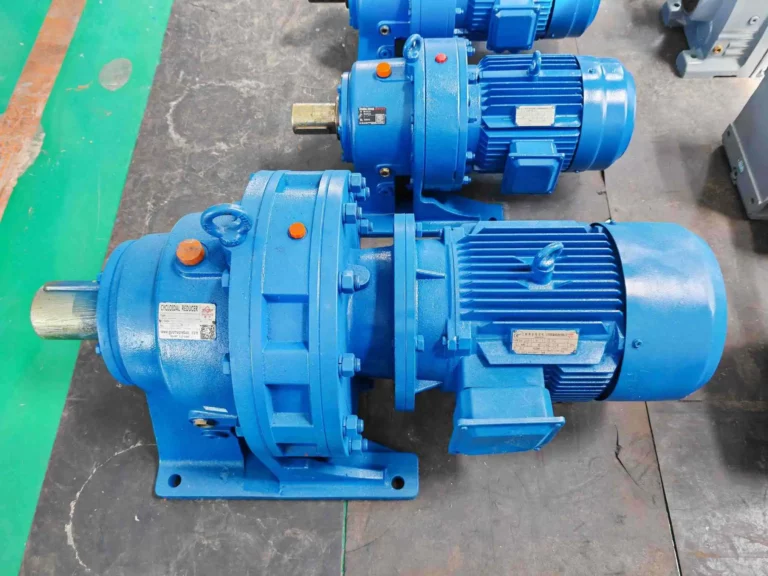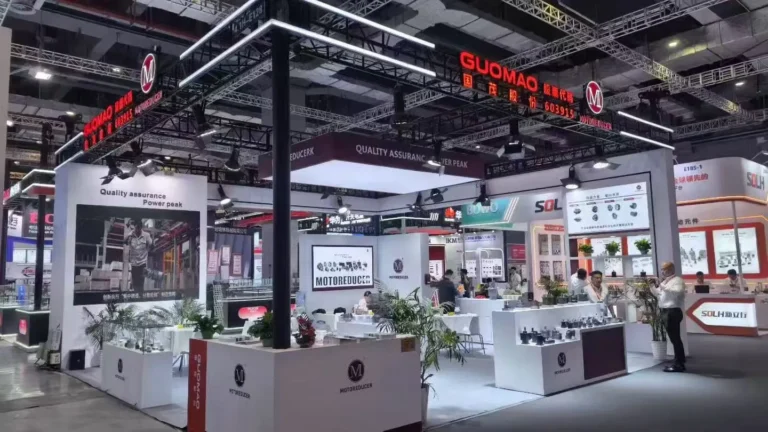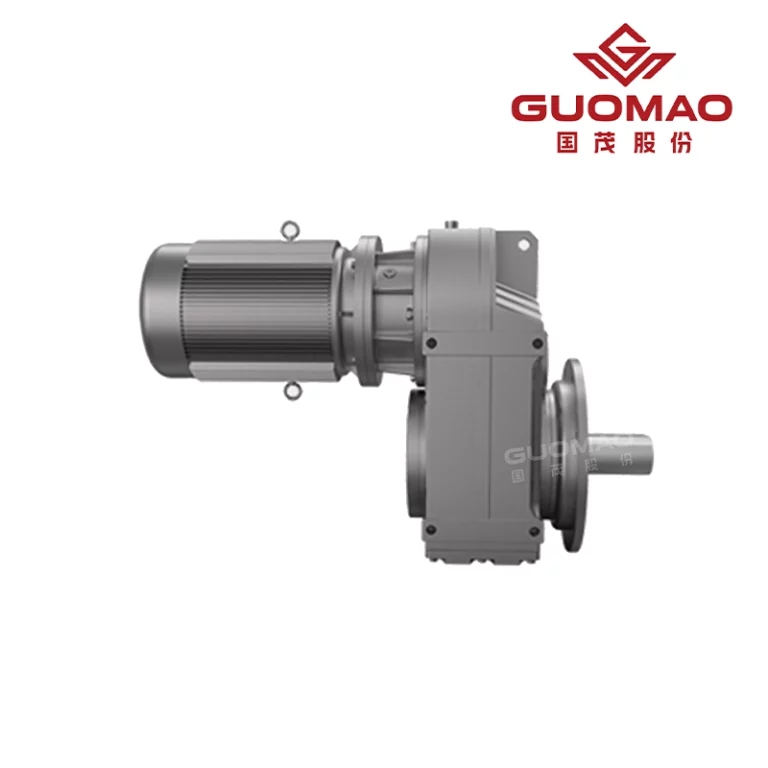



The drive has different work to do on a conveyor, a robot joint, and a mixer: running through a shift, accelerating and reversing, or overcoming changing material resistance. To assess a planetary gearbox, put duties alongside the space available: which part of the machine’s work sets the requirement? Those different duties matter more than a shared motor rating.
Where Are Planetary Gearboxes Used in Modern Industrial Equipment?
What motion-control equipment uses planetary gearboxes?
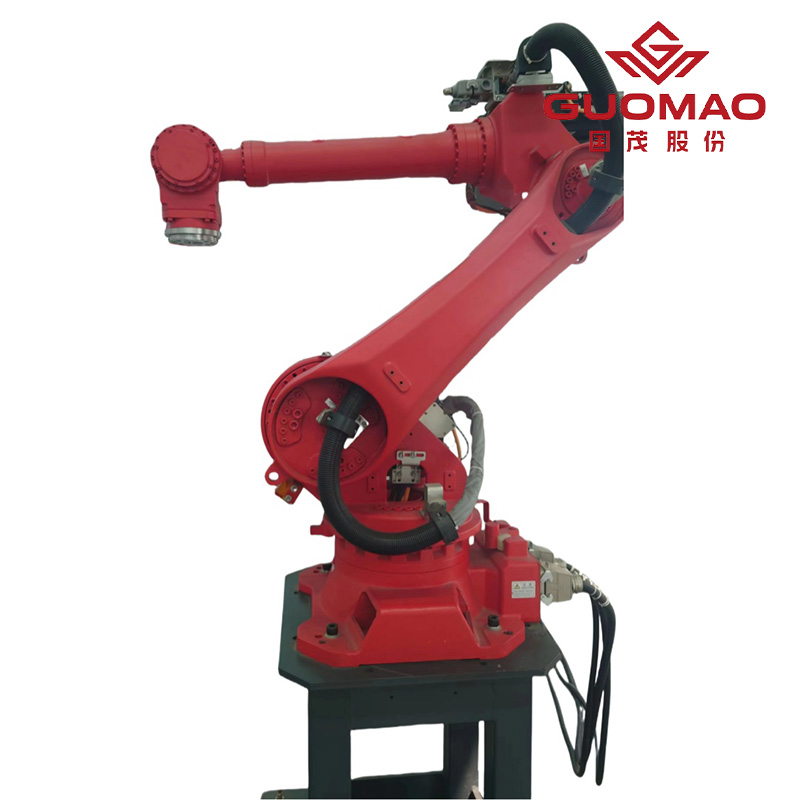
For an automated positioning unit or robot joint, write down the axis cycle before comparing reducers. What travel speed is commanded, what acceleration follows, and where do dwell and reversal occur? Compare the gearbox data against that sequence, including the motor, drive, coupling, and load. A “precision” label by itself says little about the finished axis.
How do planetary gearboxes support conveyors and material handling?
Material handling brings a different load picture. Belt conveyors and bucket elevators: separate startup under load from operating hours. Check belt pull and output-shaft loading alongside continuous torque and speed consistency. Crushers add torque spikes, impact loading, material surges, and higher transient gear and bearing loading. Guomao’s Инженерный планетный редуктор is a product family to investigate. Check configurations against the actual machine duty; keep those requirements beside the product data.
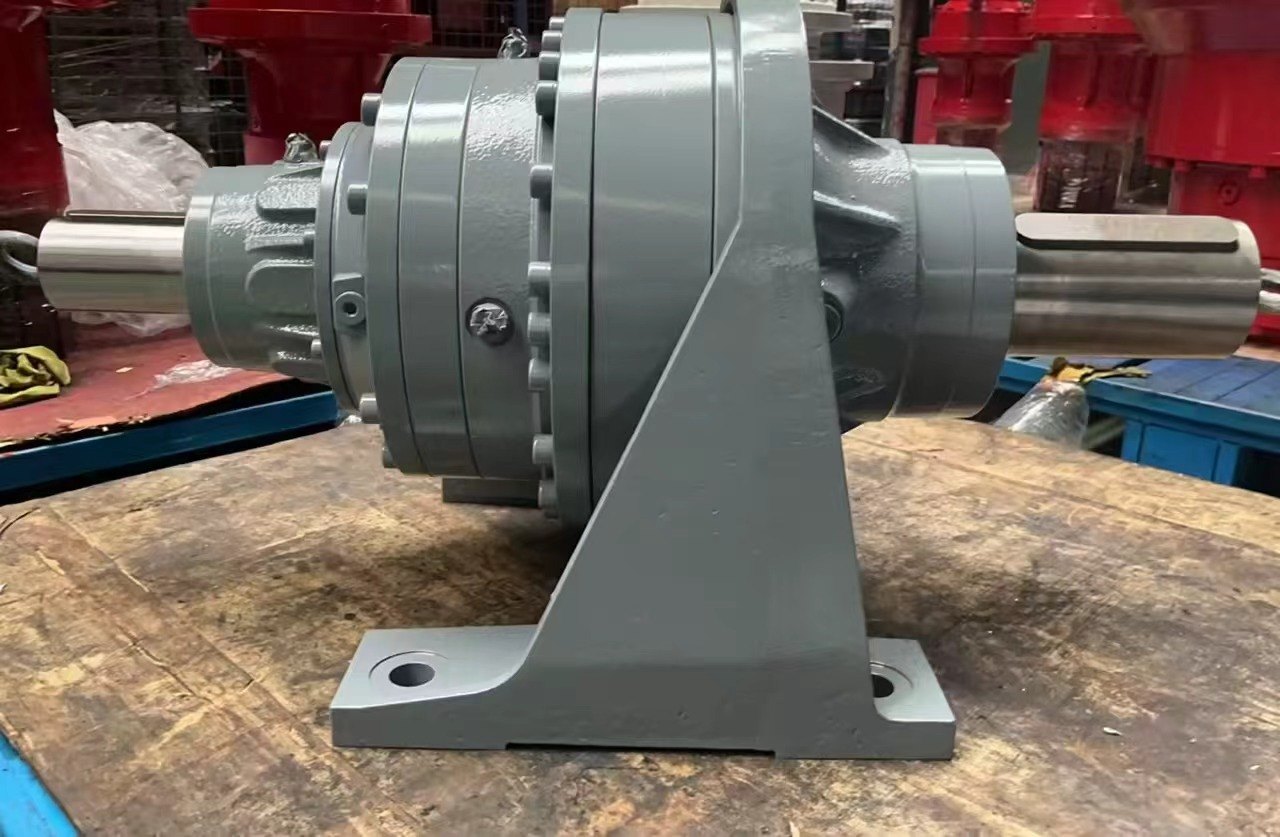
Which processing and heavy-duty machines use planetary drives?
Follow the material through a batch when assessing process drives. High starting torque matters in mixers, agitators, and process vessels. Long running cycles, changing viscosity, and varying fill level introduce non-uniform process loads. In water treatment and biological fermentation, slow-speed process drives need stable speed over continuous operation; reliability matters. A conveyor, mixer, and crusher can share similar motor power yet need different gearbox specifications.
Наши Инженерная механическая планетарная коробка передач is described as a compact design with large torque capability. The listed 0.37–540 kW range and ratios from 3.4 to 2500 refer to this product. Check the configuration being considered before applying these ranges.
Why Do Equipment Designers Choose a Planetary Gearbox?
How does a compact coaxial layout help machine integration?
An inline input-output arrangement puts the motor and driven shaft on a coaxial path. Trace their connection on the drawing, checking the mounting faces meet the coupling geometry. Allow service clearance; assess external forces and check the foundation. Then compare the unit’s interfaces and ratings against the drawing and duty.
How does shared loading support torque-dense applications?
In a planetary train, several planet gears engage and share the transmitted load. This arrangement helps explain why designers consider one when torque density matters. The application still sets the limits: overloads and misalignment remain relevant, as do ordinary periods between peaks. Record time at each speed between peaks as well as starts, reversals, impact events, and material surges.
When does a planetary gearbox suit multi-stage reduction?
The input speed and output torque define the comparison for multi-stage reduction for a large speed change. What losses and heat rejection accompany that ratio? Use the machine’s operating pattern in this comparison: several setpoints and hours at partial load belong in the review alongside the maximum operating point.
How Do Operating Conditions Change Across Planetary Gearbox Applications?
What changes between continuous and intermittent duty?
“Continuous duty” is only part of the picture. Long hours can build heat; intermittent axes repeat acceleration and braking. Process machines can impose steady duties or experience variable, shock, high-inertia, starting, or reversing duties at different stages. Startup frequency, interruptions, and material surges put operating hours into context for service-factor and fatigue evaluation. Track viscosity through the mixer batch; for the conveyor, establish whether the loaded start sets the requirement.
How do startup, reversing, and shock loads affect the drive?
The steady torque figure can hide the difficult moment. For a belt restart under product, a crusher surge, or an axis reversal, record duration and frequency. Include acceleration and braking, with the coupling and driven load. Compare the gearbox against the resulting pattern. A single service factor cannot represent every pattern.
Which applications need precise speed or position control?
For a robot joint or machine-tool axis, what happens before settling? Record commanded speed, acceleration, settling time, reversals, and output inertia. Use this record to assess the assembled axis. The control and mechanical interfaces contribute to the result; a product category cannot confirm system accuracy.
Наши Точный планетарный редуктор is a distinct product context. Helical sun and satellite gears are part of this design, with case hardening to 58–62 HRC. Full-complement needle bearings support its double-supported satellite gears. Those are product details. They cannot establish how the complete motion system will perform or describe every planetary-gearbox design. Compare current product data with the axis requirements.
How Can You Match a Planetary Gearbox to the Machine?
How should torque, speed, and ratio be defined?
Motor speed divided by machine speed gives the reduction ratio. The industrial gearbox transfers mechanical power continuously, multiplying output torque. Specify output speed and torque at the driven shaft. Work back from there to motor speed and ratio. Running torque belongs alongside startup, peak, and shock demands. Pair the stated load with speed for variable-speed machinery. Record operating hours, starts, reversals, and inertia separately from motor power.
How do mounting space and external shaft loads shape selection?
The layout drawing often eliminates an option before detailed sizing begins. On the drawing, find the envelope and shaft orientation. Work through mounting position, coupling, and foundation with service access. For a belt or chain drive, mark where pulley or sprocket force acts on the output shaft. Bearing load depends on that position. Verify support and alignment against the selected unit’s limits.
What thermal and environmental checks matter?
Can heat escape during long operation at high load? Check which mounting position the model specifications cover before using lubrication and environmental limits. Does that configuration meet washdown, sealing, and cooling requirements? Assess heat rejection at ambient temperature, speed, and running time, including poor ventilation, dust, and moisture.
What Should Operators Monitor After Installation?
Which lubrication and temperature signs deserve attention?
Without operating speed and load, baseline temperature lacks context. Check lubricant, level, interval, and orientation against the manufacturer’s instructions. A later reading needs operating details before comparison with the drive’s baseline.
How can vibration, noise, or leakage reveal a developing issue?
Does operating history explain changed sound or vibration? Where did leakage start? Check oil level and seals; inspect alignment, mounting, bearings, load, and lubricant condition. Record changes alongside the symptom to direct inspection without assuming a cause.
How should maintenance reflect actual duty?
Build the inspection record around operating hours, starts, load changes, and environment, using the reducer instructions. A process drive running all shift and an intermittently cycled robot axis need different duty records.
Часто задаваемые вопросы
Q: What are planetary gearboxes used for in industrial equipment?
A: They provide speed reduction and torque transmission. Motion-control axes, conveyors, elevators, mixers, and crushers are applications; layout and duty determine suitability.
Q: Are planetary gearboxes suitable for continuous operation?
A: Yes, if ratings cover torque, speed, hours, and thermal conditions. Verify lubrication and installation for continuous operation.
Q: How do I choose a planetary gearbox for my application?
A: Establish output speed and running and peak torque before the ratio. Check starts in duty cycle; confirm mounting, shaft loads, and environment.
Q: What affects planetary gearbox performance in industrial applications?
A: Match load, speed, and ratio to the drive. Shaft forces require mounting and alignment checks; assess lubrication, temperature, and environment there.
Q: Do planetary gearboxes need regular maintenance?
A: Yes; follow model-specific maintenance instructions. Actual duty, temperature, noise, vibration, and leakage records show changes.