


A helical gear reducer can run for long periods of time without problems if the gear mesh, bearings, lubrication, alignment, and thermal expansion are designed as a single system. Tooth form is not the only factor in noise – a true test of a gear is how it performs over a complete cycle of speed, torque and temperature.
What Makes Continuous Helical Gear Reducer Duty Difficult?
Separate the continuous load from short peaks
A drive that runs quietly in empty gear mode can become noisy after hours of operation in production mode. Measure speed and torque during normal production and then define acceleration, material blocking, and production restarts as separate events. Then see if the change can be correlated with the speed, the transmitted load, or the accumulated heat.
When conducting a noise investigation, vary one operating variable at a time where possible. Compare loaded running at the same speed to unloaded running at the same speed and then running at different speeds with a constant load. Note the change to the drive and not just say it is loud. If safe measurement is not possible, then stop the investigation and arrange an inspection as necessary. A stable observation method enables the investigator to easily distinguish between a developing fault and normal process variation.
Check the operating conditions
Teeth and bearings are constantly in contact and under load while power is dissipated as heat. In addition to start/stop/reversals in material, the same can be true for changes in material. Develop a load spectrum that includes torque, speed, duration, starts, ambient, and other radial/axial loads. Motor nameplate data is only one of many inputs.
How Does Helical Geometry Support Quiet Operation?
Check the acoustic path
A loud noise is not necessarily coming from the failed component. A guard, mounting plate, or even a section of nearby frame could be radiating vibrations from the drive. Compare measurements at the gearbox housing to measurements on the machine frame under the same operating conditions. Don’t attempt to diagnose a problem with a gearbox from a single phone recording taken from an unknown distance.
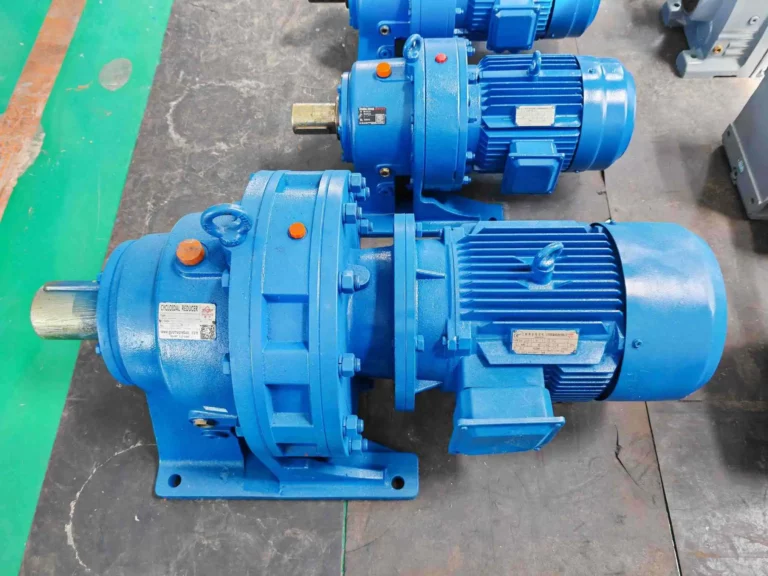
For the relevant configuration, review our Серия GR Спиральный двигатель and confirm the selected model against the installation requirements.
Apply the product boundary
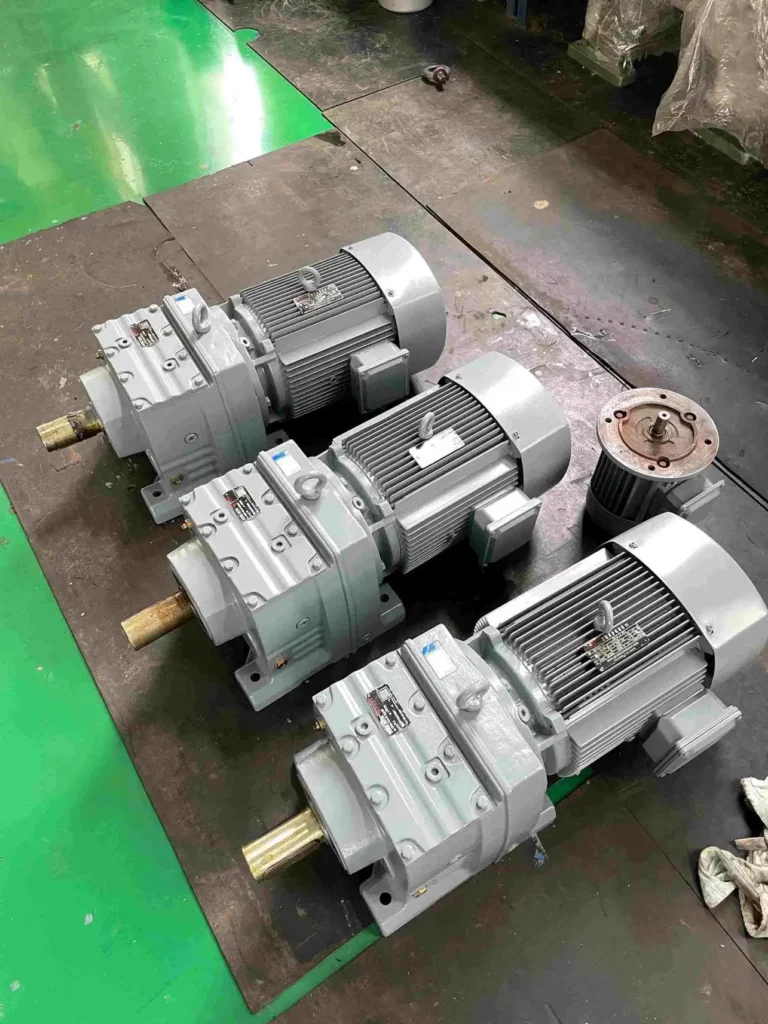
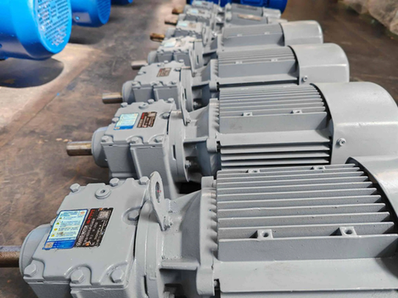
The GR Series is a helical-gear reducer motor family. Its product data covers modular configuration, multiple mounting and output arrangements, and selection by power, ratio, speed, torque, and external loads. Quiet operation depends on gear accuracy, alignment, lubrication, housing stiffness, and the real duty cycle.
Which Design Details Matter Most?
Locate the mechanical disturbance
A change in tone with change in rotational speed is a separate problem from a loose panel rattling at some operating condition. Check the mounting and the coupling, not the teeth. If the noise started after some maintenance, compare the current alignment, oil, and general assembly to the previous ‘before’ condition.
Verify the load inputs
The working-condition factor is a function of service duty, operating time, and start/stop cycles. It is selected separately from motor power, output speed, output torque, ratio, and maximum radial service load. The maximum radial service load must be checked at the point where the gear, pulley or sprocket is subjected to load.
How Should Lubrication and Thermal Behavior Be Managed?
Define a repeatable acceptance test
Details regarding measurement position, machine speed, loading, ambient conditions, and running time should be fixed and kept unchanged for the following measurements. It is not sufficient to note one acoustic value; acceptance records should also contain temperature and vibration values.
A Commissioning log should be kept recording the relevant information from the drawing, including the revision number, model number of installed item, lubricant, etc. An unexpected event should be fully described and action taken. Agreement should be reached as to who releases the drive back to production after any correction has been carried out. An unresolved issue can easily get lost when responsibility for an item is transferred from installation to operators.
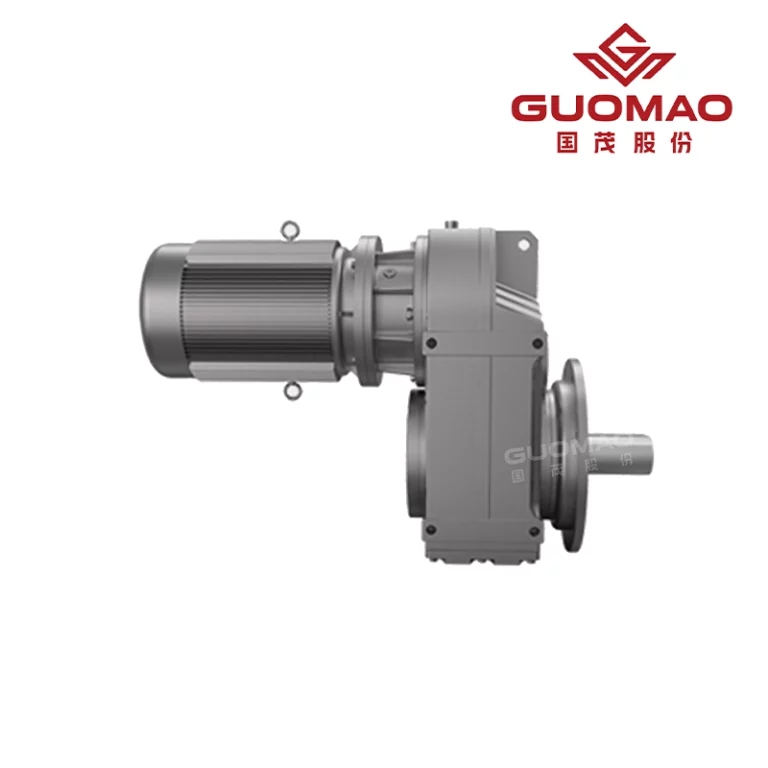
If this arrangement does not fit the machine, compare the Серия GF спиральный шарнир-мотор с параллельным валом as an alternative during layout review; do not transfer ratings or operating assumptions between product families.
Review the installed system
For the model in question, choose the lubricant, grade, level, cooling, and sealing options and run the model at no load, then at part load, and then gradually increase to full load running. Measure oil and bearing temperature, vibration, sound, leakage, and used lubricant during the running-in period. Also check the thermal capacity separately from the mechanical torque capacity. The thermal capacity of a bearing is affected by power loss and by the bearing’s operating history.
How Can Noise Be Diagnosed?
Choose the arrangement before the ratio
Coaxial motor connection, offset shafts, and right angle boxes all solve different space problems. Choose the geometry of your application first and then compare reduction ratios. Changing to a different configuration later in the design process can require a new coupling, new foundation, and even new guards, despite the output speed having been fixed as a requirement.
Set the monitoring routine
Check lubrication, oil level, cooling, sealing, foundation, alignment, noise, vibration, leakage, and temperature as per the documentation of the reducer selected and as installed.
The inspection plan for the reducers includes checking the lubricant and lubricant level as well as the cooling, the seals, the foundation, and the alignment. Additionally, noise, vibration, leaks, and temperature are checked. The single check has to be in line with the actual installation and the relevant documents for the delivered unit.
When Is a Helical Gear Reducer the Right Choice?
Make maintenance access part of noise control
It is also important to allow sufficient space to inspect fasteners, oil level, and to replace seals without having to dismount adjacent plant. Whilst a drive may appear to be quiet, this does not mean that a small leak will be easily found. An inspection of the drive must still be carried out in accordance with a written route, and the plant isolated safely before any mechanical work is commenced.
If this arrangement does not fit the machine, compare the GK серия спирального мотор с шерстями as an alternative during layout review; do not transfer ratings or operating assumptions between product families.
Prepare the engineering handover
When reviewing a drive at Guomao, we analyze the operating conditions, including load, total number of hours of operation, and start/stop cycles. For each of the following parameters, we verify the required motor power and, individually, the reduction ratio, the output speed, and the output torque. The maximum allowed radial load must also be verified at the point where the transmission component is subjected to force.
Часто задаваемые вопросы
Q: How should a helical gear reducer be selected?
A: Start with the actual cycle of the machine in question. Check the speed, torque, ratio, shaft loads, mounting, etc. of the model in question and work within its given operating limits.
Q: What information is needed before installing a helical gear reducer?
A: Provide interface drawing, applied loads, operating cycle, ambient conditions, lubrication requirements, and access for inspection and removal.
Q: Can a helical gear reducer be judged by motor power alone?
A: No. Output speed, torque, reduction ratio, external loads, and operating cycle have to be checked separately.
Q: How should a helical gear reducer be commissioned?
A: Start with installation and lubrication checks. Run the machine at staged loads. Take a baseline reading when running under normal production conditions.
Q: What should operators monitor on a helical gear reducer?
A: Monitor temperature, vibration, noise, leakage, and lubricant condition. Compare with previous running at the same rpm and load. Find out changes before increasing running duty.