


Why Planetary Gearbox Efficiency Is Becoming a Core Engineering Metric
What Does Planetary Gearbox Efficiency Actually Measure?
Planetary gearbox efficiency measures how well motor input power changes into output torque and speed. Losses come from gear meshing. They come from bearing friction. They come from lubricant drag. They come from seal resistance. They come from misalignment. And they come from heat.
A planetary gear reducer shares torque through several planet gears instead of one gear pair. This supports compact size. It gives high torque density. And it gives stable transmission.
Why Small Efficiency Losses Become Critical in Continuous-Duty Machinery
In continuous-duty machinery, small losses build up as heat. Heat affects lubricant viscosity. It affects bearing life. It affects seal aging. And it affects gear contact stability.
A low-backlash planetary gearbox used in servo equipment must keep movement stable during repeated acceleration and deceleration. A gearbox used in crushers or hoisting systems must control thermal rise under heavy load.
How Efficiency Connects With Heat, Wear, Motor Sizing, and System Stability
Low efficiency may force engineers to choose a larger motor. This increases system weight. It increases current demand. And it increases installation space. A compact planetary gearbox helps avoid this. It delivers high torque in a smaller structure.
Higher efficiency also supports stable lubrication. It reduces bearing stress. And it gives more predictable gear contact.
How Does a Planetary Gearbox Convert Motor Power Into Usable Torque?
Sun Gear, Planet Gears, Ring Gear, and Carrier: The Load-Sharing Path
A planetary gearbox normally includes a sun gear. It has planetary gears. It has a ring gear. And it has a carrier. The motor drives the input member. The planet gears rotate around the sun gear. Then the carrier delivers reduced speed with increased torque.
This structure distributes load across several contact points. Because of this, the planetary gear transmission can achieve high torque output and smooth operation.
Why Multiple Gear Meshes Improve Torque Density and Power Transmission
A high-torque planetary gearbox transmits large torque in a smaller housing. Several gear contacts share the load. This is useful when machinery must stay compact but still handle heavy resistance.
To keep efficiency stable, tooth geometry must work together with heat treatment. Bearing support must work together with lubrication and assembly accuracy.
How Coaxial Compact Design Supports Space-Limited Industrial Machinery
Many industrial machines need smaller drive packages. Automated production cells need them. Compact construction machinery needs them. Conveying systems need them. Marine equipment needs them too. All require high torque within a limited space.
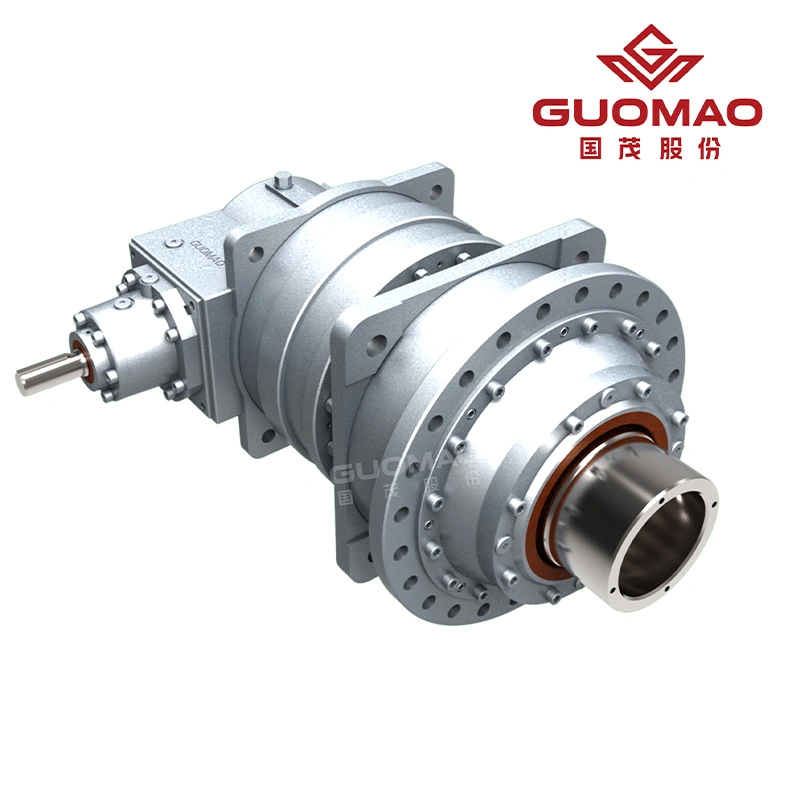
A coaxial planetary gearbox supports this need. Input and output shafts are often aligned. This simplifies the layout. And it reduces coupling complexity.
What Factors Affect Planetary Gearbox Efficiency in Real Working Conditions?
Stage Count, Gear Ratio, and Compounded Mechanical Losses
Each gear stage adds mechanical loss. A single-stage planetary gearbox is usually more efficient than a multi-stage unit. But high reduction ratios often require additional stages.
Engineers should select the ratio based on the input speed. They should consider output speed. They should look at working torque. They should check peak torque. They should check the start-stop frequency and duty cycle.
Gear Tooth Geometry, Surface Hardness, and Helical Meshing Quality
Gear tooth quality directly affects planetary gearbox efficiency. Accurate tooth contact reduces sliding loss. It reduces vibration. It reduces noise. And it reduces uneven load distribution.
Bearing Arrangement, Lubrication, Seal Drag, and Heat Dissipation
Bearings help maintain gear alignment under load. Weak bearing support can shift gear contact. This increases friction. And it reduces efficiency.
Load Level, Duty Cycle, Backlash, and Operating Temperature
A gearbox may perform well under test conditions. But it may behave differently under shock load. It changes with frequent reversals. It changes with high ambient temperature. Or it changes with long operating hours.
Where Will High-Efficiency Planetary Gearboxes Matter Most in Future Machinery?
Robotics, Servo Automation, and Machine Tool Motion Control
Robotics and servo automation require a fast response. They need low backlash. And they need repeatable positioning. In these systems, planetary gearbox efficiency affects motor response. It affects acceleration behavior. It affects temperature stability. And it affects motion accuracy.
A low-noise planetary gearbox also helps reduce vibration in machine tools and automated production equipment.
Construction Machinery, Hoisting Systems, and High-Torque Low-Speed Drives
Construction machinery and hoisting systems need compact gearboxes. These must handle high torque and impact load. A high-torque planetary reducer provides large output torque in a small drive package.
Lower internal loss helps control temperature under repeated load changes.
Crushing, Mixing, Marine, and Heavy-Duty Industrial Equipment
Crushers, mixers, and marine machinery often face high resistance and variable load. These conditions test gear mesh quality. They test bearing support. They test lubrication. And they test housing rigidity.
A heavy-duty planetary gearbox must maintain efficiency under practical stress, not only under ideal test conditions.
Renewable Energy and High-Speed Compact Drive Systems
Future machinery will include more renewable energy equipment. It will have compact drive modules. And it will have high-speed electromechanical systems. Efficient planetary gear transmission can help reduce package size while maintaining power density.
As motors become smaller and control systems become smarter, the gearbox must not become the weak point in the drive chain.
How Should Engineers Select a Planetary Gearbox for Efficiency and Reliability?
Match Output Torque, Input Speed, Ratio, and Duty Cycle Before Comparing Efficiency
Before comparing catalog efficiency values, engineers should define output torque. They should define peak torque. They should define input speed and output speed. They should define the reduction ratio. They should define the duty cycle. They should define start-stop frequency and load type.
Key checks include torque range and speed range. They include gear ratio and stage count. They include radial load and axial load. They include backlash and torsional rigidity. They include the lubrication and protection level. And they include installation space.
Check Backlash, Torsional Rigidity, Noise, and Thermal Stability
High nominal efficiency is not enough if backlash is excessive or rigidity is weak. In servo systems, small mechanical errors become positioning errors. In heavy-duty systems, weak torsional stiffness may cause vibration and impact loading.
A high-efficiency planetary gearbox should provide smooth meshing. It should have a stable temperature. And it should give predictable performance across the expected load range.
Verify Gear Material, Heat Treatment, Bearing Support, IP Rating, and Maintenance Access
Engineers should verify gear material. They should check surface hardness and heat treatment. They should check the bearing support and sealing design. They should check the protection rating and maintenance access.
How Can Guomao Planetary Reducers Support Efficiency-Focused Machinery Design?
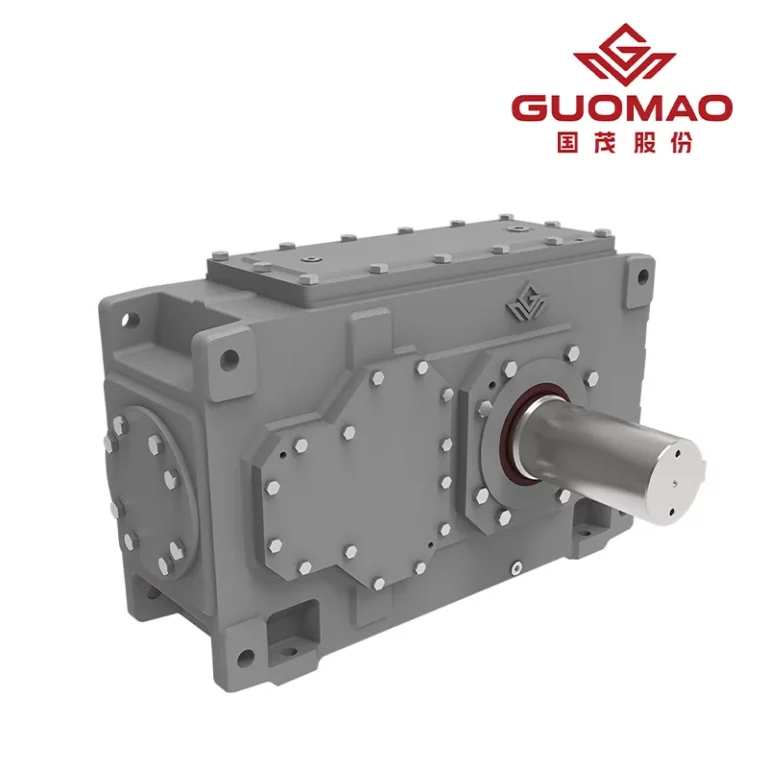
Engineering Mechanical Planetary Gearbox for High-Torque Heavy-Duty Applications
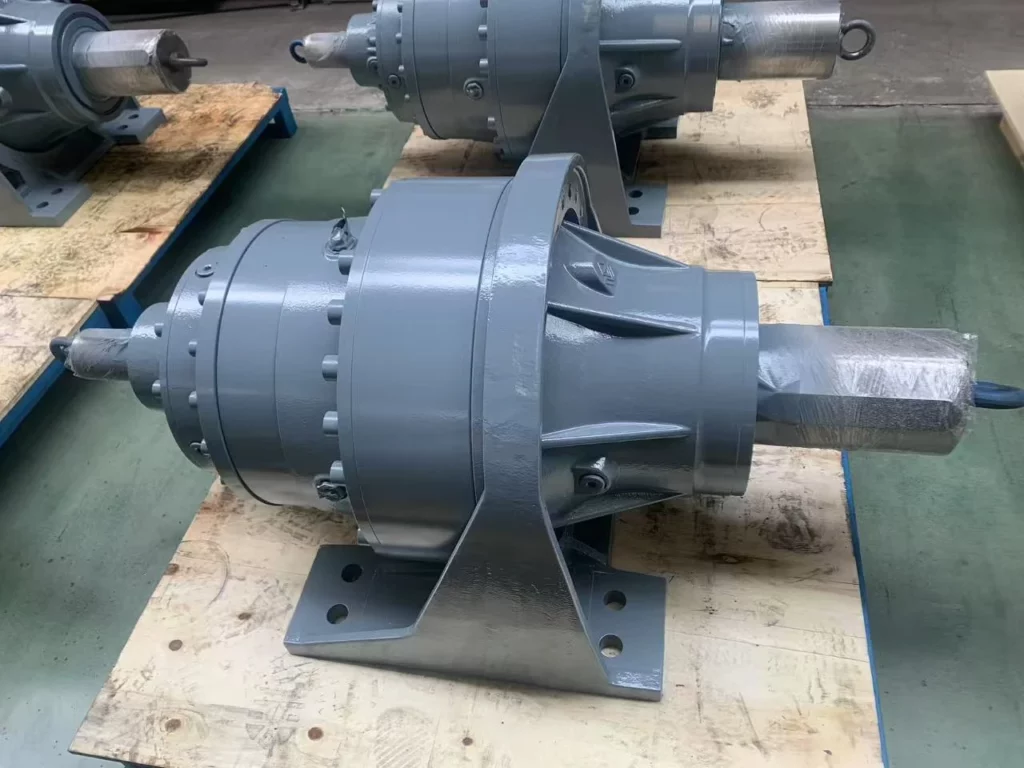
When machinery requires high torque in a compact structure, our Engineering Mechanical Planetary Gearbox is designed for heavy-duty use. It features a small volume. It has a large torque. It has a compact planetary design. It adapts to high-speed drives. And it can replace imported brands with the same model.
Its power range covers 0.37–540 kW with speed ratios from 3.4 to 2500. It is used in mixing and crushing industries. It is used in asphalt mixing. It is for crushers and road construction machinery. It is for tower cranes and rotary drilling rigs. It is for hoisting machinery and water conservancy machinery. It is for marine machinery and engineering ship applications.
Precision Planetary Reducer for Low-Backlash and High-Rigidity Motion Systems
Our Precision Planetary Reducer is suitable for systems that require accuracy. It needs stiffness. It needs low noise. And it needs a long fatigue life. It supports industrial robots. It supports machine tools. It supports semiconductor equipment. And it supports aerospace-related motion systems.
For servo-driven machinery, this precision planetary reducer helps connect motor performance with stable mechanical output.
Application-Based Selection: From Torque Density to Long-Term Efficiency Stability
Different machines place different stress on the gearbox. A crusher, robot joint, machine tool axis, paver, and marine drive system do not need the same gearbox design.
For this reason, planetary gearbox efficiency should be evaluated together with torque density. It should be checked with bearing support and gear hardness. It should include lubrication and backlash. It should include the protection level and duty cycle.
FAQ
Q: What Is Planetary Gearbox Efficiency in Industrial Machinery?
A: Planetary gearbox efficiency means how much motor input power is converted into usable output torque and speed. It affects heat generation. It affects motor sizing. It affects bearing life. It affects lubrication stability. And it affects long-term transmission performance.
Q: Why Is Planetary Gearbox Efficiency Important for Heavy-Duty Equipment?
A: Planetary gearbox efficiency is important because heavy-duty equipment often works under high torque. It works under shock load. And it works under long duty cycles. Higher efficiency reduces mechanical loss and heat buildup in crushers. It helps mixers and hoisting machinery. It helps construction machinery and marine equipment.
Q: How Does a High-Efficiency Planetary Gearbox Reduce Heat?
A: A high-efficiency planetary gearbox reduces heat by lowering gear mesh loss. It lowers bearing friction. It lowers lubricant drag. And it lowers misalignment-related resistance. Gear accuracy helps. Hardened gear surfaces help. Bearing support helps. And suitable lubrication helps control power loss.
Q: Is a Precision Planetary Reducer Always Better Than a Standard Planetary Gearbox?
A: A precision planetary reducer is better for low backlash. It is better for high rigidity. It gives smooth motion. And it gives accurate positioning. A heavy-duty planetary gearbox is more suitable for large torque. It handles impact resistance. And it provides compact power transmission