

What Determines Planetary Gearbox Efficiency in Manufacturing Systems?
In today’s manufacturing systems, planetary gearboxes see common use. They offer a small size and strong torque output. However, achieving consistent planetary gearbox efficiency depends on many mechanical and thermal factors. These factors work together instead of depending on a single design element.
From an engineering view, efficiency comes mainly from internal friction losses, lubrication behavior, and load distribution across gear stages. In high-duty industrial environments such as extrusion mixing and material handling, even a small efficiency drop can lead to large energy loss over continuous operation cycles.
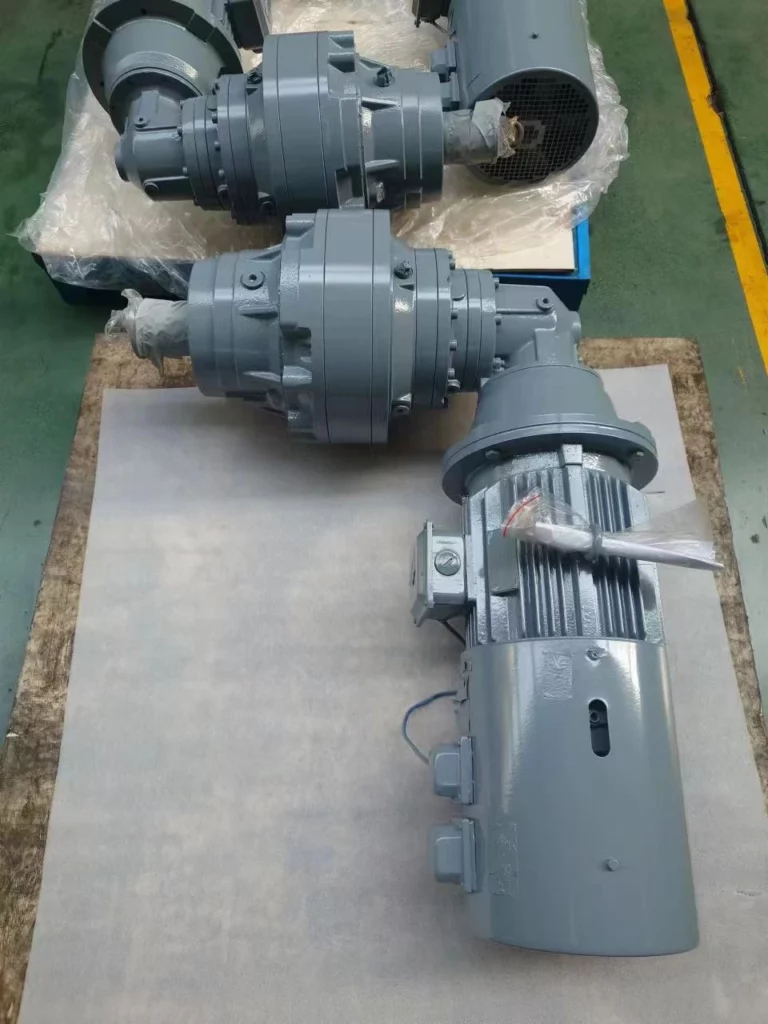
Mechanical Loss Sources in Planetary Gearbox Efficiency
Mechanical losses inside a planetary gearbox mainly come from several areas.
- Gear meshing friction between the sun gear, planet gears, and the ring gear
- Rolling bearing resistance under combined axial and radial loads
- Seal friction at high rotational speeds
- Misalignment-induced micro-sliding between contact surfaces
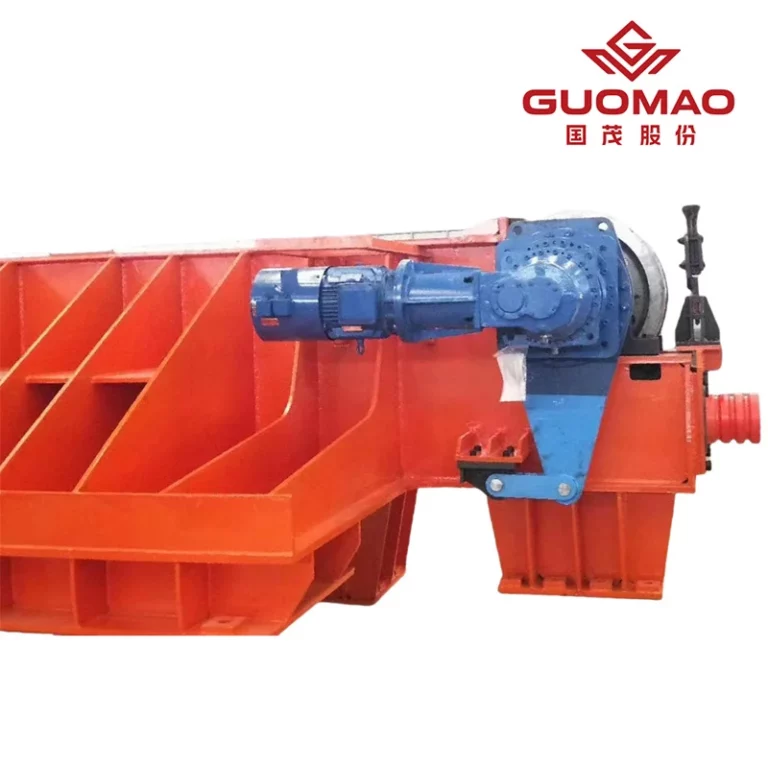
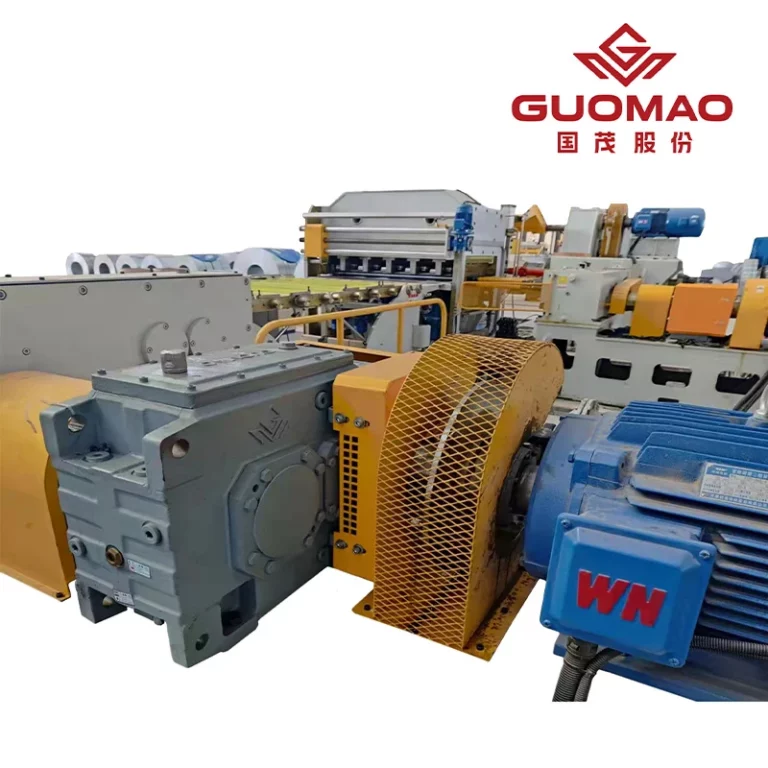
In high-precision designs such as those used in Guomao planetary reducer systems, gears are manufactured from high-strength alloy steel. They go through carburizing and precision grinding. These steps clearly reduce surface roughness and improve contact efficiency.
Lubrication and Churning Losses in High-Speed Operation
Lubrication is a key factor affecting planetary gearbox energy efficiency in manufacturing systems. Too much lubricant or the wrong viscosity can raise drag torque. On the other hand, not enough lubrication increases wear and heat generation.
Key loss mechanisms include several items.
- Oil churning resistance in high-speed rotation
- Viscosity-dependent drag at gear interfaces
- Temperature-induced lubrication instability
In industrial gear systems using CKD220 or CKD320 gear oils, viscosity stability plays an important role. It helps maintain consistent efficiency under varying thermal loads.
How Do Planetary Gearbox Efficiency Losses Affect Industrial Energy Consumption?
Efficiency losses inside a planetary gearbox do not stay isolated. They spread through the entire drive system. In manufacturing environments, this has a direct effect on motor load thermal stability and long-term operational energy consumption.
Heat Generation and Thermal Efficiency Limits in Continuous Manufacturing
During continuous operation, especially in extrusion and heavy-load processing lines, energy losses inside the gearbox turn into heat. This leads to several results.
- Higher internal oil temperature
- Reduced lubrication film strength
- Increased thermal stress on gear teeth
Guomao gearboxes come with optional cooling coils and forced lubrication systems. These help maintain thermal balance under high-load operation. They ensure stable industrial gearbox efficiency optimization even in demanding environments.
Motor Overload and System-Level Efficiency Mismatch
When gearbox efficiency decreases, the upstream motor must make up for the extra resistance. This often results in several effects.
- Increased motor current draw
- Reduced overall system efficiency
- Higher thermal load on electrical components
In practical manufacturing systems, even a 2–3% efficiency loss in the gearbox can affect total energy consumption. This becomes clear when systems run continuously over long production cycles.
Which Design Factors Improve Planetary Gearbox Efficiency in High-Load Applications?
Improving efficiency is not only about reducing friction. It requires optimizing load distribution, structural rigidity, and transmission geometry at the same time.
Load Sharing Mechanism in Multi-Planet Gear Systems
One of the main advantages of planetary systems is multi-point load sharing. In high-performance designs, several benefits appear.
- Torque is distributed across multiple planet gears
- Contact stress per gear is clearly reduced
- System stability improves under shock loading
In Guomao’s precision planetary gearbox series, high machining accuracy ensures uniform load distribution. This directly contributes to higher planetary gear reducer efficiency under heavy load conditions.
Gear Ratio Optimization and Multi-Stage Configuration
Transmission ratio selection has a direct impact on efficiency. Higher ratios increase torque output, but they may also add stage losses.
Key engineering considerations include several points.
- Selecting optimal single-stage vs multi-stage configurations
- Balancing torque density and efficiency loss
- Matching gearbox ratio with motor speed characteristics
For example, the Guomao precision planetary reducer series is designed to maintain high efficiency across a wide range of transmission ratios. It does this by minimizing internal friction losses across stages.
Material Strength and Surface Hardening Technology
Material selection directly influences long-term efficiency stability.
- Carburized and quenched alloy steel improves wear resistance
- High surface hardness reduces micro-pitting and friction loss
- Precision grinding ensures smoother gear meshing behavior
These material technologies are essential for maintaining consistent planetary gearbox efficiency in continuous manufacturing operations.
How to Calculate and Evaluate Planetary Gearbox Efficiency in Real Manufacturing Equipment
Efficiency evaluation in real-world applications requires more than theoretical formulas. It must reflect dynamic operating conditions, load variation, and thermal effects.
Input-Output Power Method for Efficiency Measurement
The most practical method is simple.
- Efficiency = Output Power / Input Power × 100%
However, in industrial systems, accuracy depends on several conditions.
- Real load conditions vs rated load
- Measurement stability during continuous operation
- Torque fluctuations in cyclic processes
In extrusion systems where Guomao planetary gearboxes are commonly applied, load variation must be considered. This helps avoid overestimating efficiency performance.
Torque-Speed Relationship in Manufacturing Lines
Torque and speed behavior directly reflect gearbox efficiency.
- Higher torque under constant input speed indicates improved transmission efficiency
- Load fluctuations affect instantaneous efficiency curves
- Axial thrust in screw-driven systems influences gearbox stress distribution
Guomao’s gearbox designs integrate large thrust bearings at the output stage. These handle axial forces generated during screw operation. They improve system stability and maintain efficiency consistency.
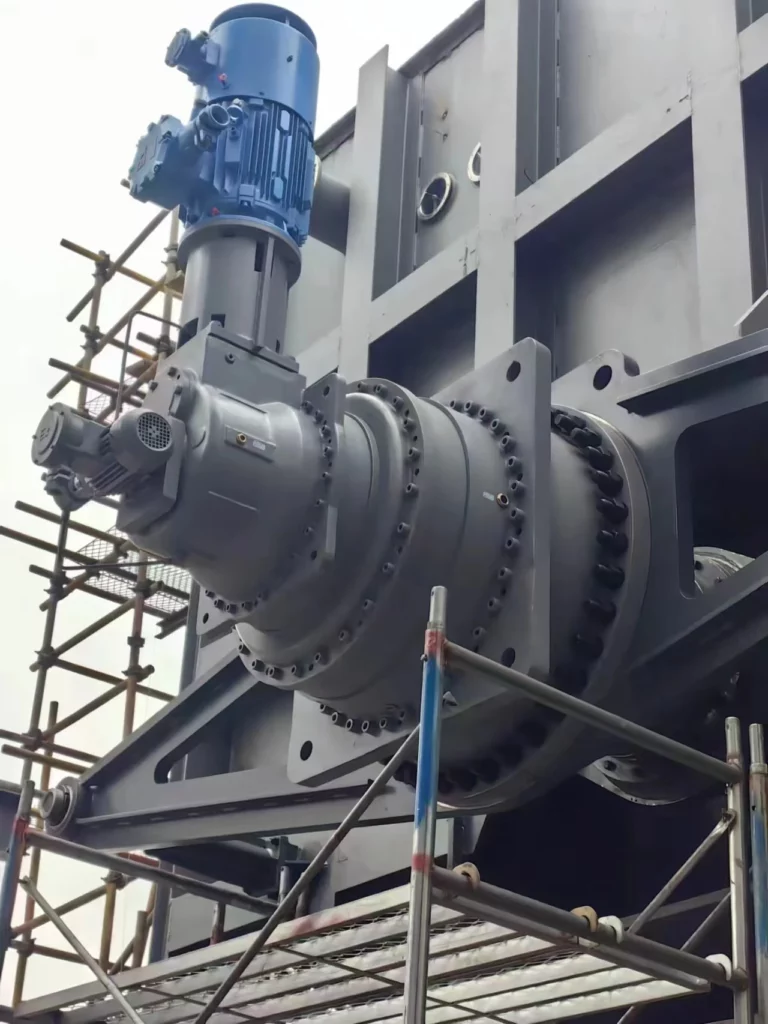
How Lubrication, Cooling, and Maintenance Improve Planetary Gearbox Efficiency
Long-term efficiency is not only determined at the design stage. It depends heavily on operational management.
Lubrication Oil Selection and Temperature Stability
Lubrication performance directly affects friction and heat generation.
- CKD220 oil is suitable for moderate thermal loads
- CKD320 oil is preferred for heavy-duty continuous operation
- Stable viscosity ensures consistent lubrication film formation
In Guomao systems, lubrication design follows operating conditions ranging from -40°C to 50°C. This ensures stable efficiency across diverse industrial environments.
Forced Lubrication and Cooling System Efficiency Control
In high-load manufacturing applications, passive lubrication is not enough. Therefore, several steps become necessary.
- Forced lubrication ensures continuous oil delivery to critical contact zones
- Cooling coils reduce thermal buildup in the gearbox housing
- Controlled oil pressure (0.1–0.4 MPa range) stabilizes lubrication flow
These systems clearly reduce thermal efficiency degradation during long operating cycles.
Maintenance Strategies for Long-Term Efficiency Retention
To maintain stable planetary gearbox efficiency over lifecycle operation, industrial maintenance typically includes several actions.
- Regular inspection of gear wear patterns
- Lubricant contamination monitoring and replacement
- Bearing condition evaluation under load
- Vibration analysis for early fault detection
Preventive maintenance ensures that efficiency degradation remains gradual instead of sudden. This protects overall system performance.
FAQ
Q: What factors have the biggest impact on planetary gearbox efficiency in manufacturing systems?
A: The most influential factors include gear meshing, friction, lubrication, viscosity, bearing resistance, and thermal management. Load distribution and material hardness also play a critical role in long-term efficiency stability.
Q: How does lubrication affect planetary gearbox efficiency?
A: Lubrication controls friction and heat generation. Incorrect viscosity increases drag losses. Proper oil selection, such as CKD220 or CKD320, maintains stable film formation and reduces mechanical resistance.
Q: Why does planetary gearbox efficiency drop under heavy load conditions?
A: Under heavy load, increased contact stress, higher oil temperature, and micro-deformation of gear surfaces can increase energy losses. These changes reduce overall efficiency.
Q: How can cooling systems improve planetary gearbox efficiency?
A: Cooling systems reduce internal temperature. They stabilize lubricant viscosity and prevent thermal deformation of gears. This helps maintain consistent transmission efficiency during continuous operation.
Q: Which Guomao planetary gear reducer models are suitable for high-efficiency industrial applications?
A: Models such as the Guomao precision planetary gearbox series and high-torque configurations designed for extrusion and heavy machinery applications are optimized for stable efficiency under continuous load conditions.