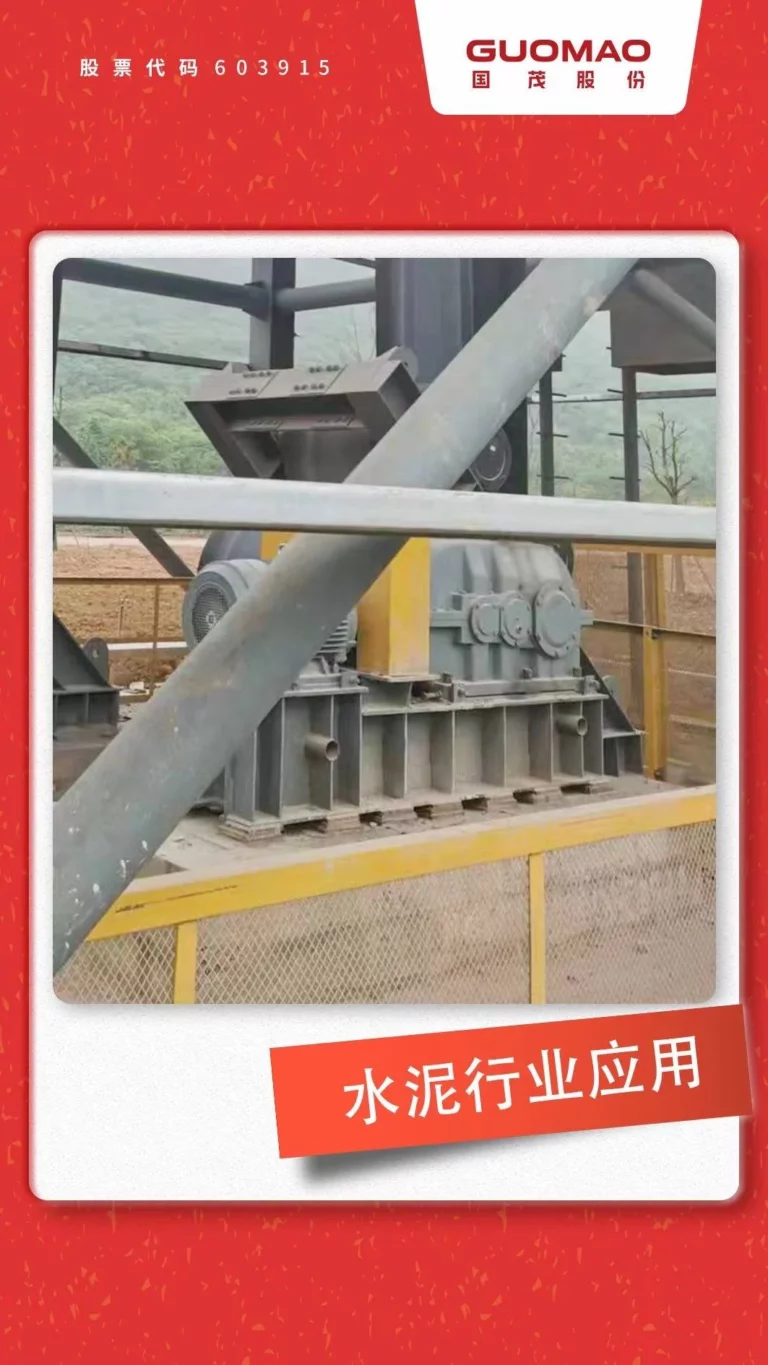

Picking between a vertical-shaft industrial gearbox and a parallel-shaft industrial gearbox influences the power path. It also changes shaft alignment, foundation layout, lubrication, cooling, and maintenance access.
A useful 工业齿轮箱 selection guide should start with shaft geometry. It must then check torque, service factor, external loads, and thermal capacity. The best design transfers power with the fewest extra interfaces.
What Is the Difference Between Vertical-Shaft and Parallel-Shaft Industrial Gearbox Designs?
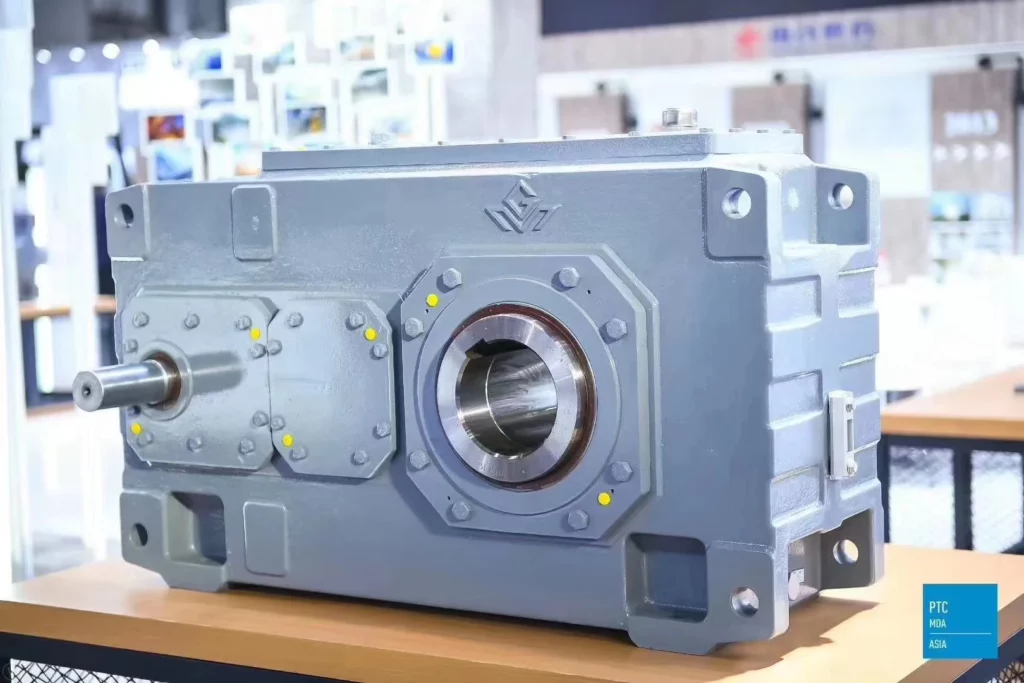
How Does an H-Parallel Industrial Gearbox Arrange the Input and Output Shafts?
An H-并联工业齿轮箱 keeps the input and output shafts parallel. It transfers power through helical gear stages. This option works when the motor and driven shaft remain on parallel centerlines.
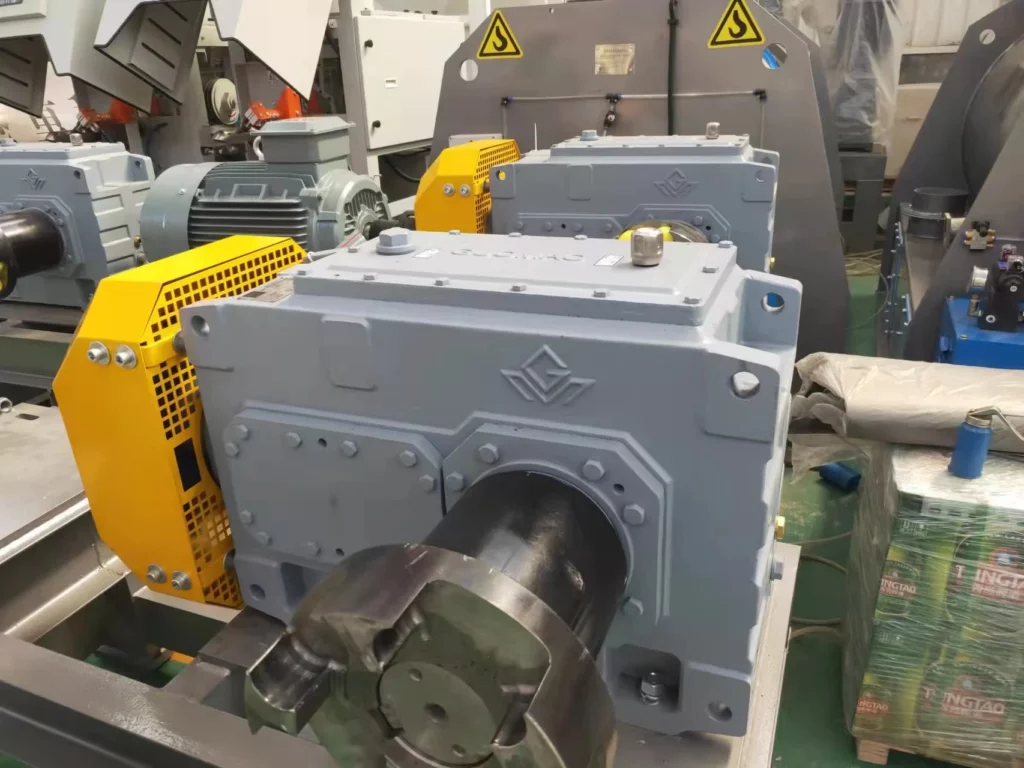
How Does a B-Vertical Industrial Gearbox Create a 90-Degree Power Path?
A B-Vertical industrial gearbox places the input and output shafts at 90 degrees. A bevel gear pair changes the transmission direction. Helical stages provide speed reduction at the same time.
Why Is Shaft Arrangement Different from Industrial Gearbox Mounting Position?
Shaft arrangement describes the relationship between the input and output shafts. Mounting position describes how the housing is installed.
Both configurations can be installed horizontally or vertically. This works when the oil level, seals, bearings, and lubrication system are set up correctly. A B-Vertical Industrial Gearbox does not have to stand vertically.
H-Parallel vs B-Vertical Industrial Gearbox: What Are the Key Mechanical Differences?
How Do Helical and Bevel Gear Arrangements Affect Power Transmission?
Helical gears provide smooth engagement. They do this by spreading the load across several tooth sections. In an H configuration, they maintain a parallel power path. In a B configuration, a bevel gear pair redirects power by 90 degrees.
A straight power path may simplify alignment. A right-angle layout may eliminate external shafts or additional couplings.
How Do Efficiency, Heat Generation, and Operating Noise Compare?
Precision-ground gears and low-noise profiling improve meshing quality. Helical gear-pair efficiency can reach 98.5%. Bevel gear-pair efficiency can reach 97.5% in Guomao HB configurations.
Thermal capacity must be checked separately from torque capacity. Heavy loading or restricted airflow may require a fan. It may also need external oil circulation or an air cooler.
How Do Housing Layout and Shaft Position Affect Equipment Integration?
| 工程因素 | H-Parallel design | B-Vertical design |
| Power path | Parallel centerlines | 90-degree centerlines |
| Main benefit | Straight drive train | Compact direction change |
| Alignment focus | Parallel shafts | Right-angle interfaces |
| Main concern | Overall drive length | Lubrication and access |
This vertical vs parallel industrial gearbox comparison should evaluate the complete drive system. It should not focus on housing dimensions alone.
How Do Installation Conditions Affect Industrial Gearbox Selection?
How Do Equipment Layout and Driven-Shaft Position Determine the Industrial Gearbox Design?
Begin at the driven shaft. Then work backward toward the motor. Record shaft height, orientation, coupling space, nearby structures, and permitted motor position.
Choose an H layout when parallel centerlines create a simple drive train. Select a B layout when a 90-degree input reduces installation length or removes an intermediate component.
How Do Foundation Accuracy, Shaft Alignment, and Coupling Position Affect Installation?
Engineers should verify several items. These include foundation flatness and housing support. They must check the shaft center height and angular alignment. The coupling position relative to the bearings needs review. Mounting-bolt loading requires attention. Pipe strain from lubrication systems must be considered.
Misalignment creates bearing reactions. These reactions may not appear in the motor-power calculation.
How Does Horizontal or Vertical Mounting Affect Industrial Gearbox Lubrication?
Mounting position changes, which gears and bearings enter the oil bath. It also affects where oil collects. In addition, it changes breather, drain, and level-indicator positions.
A horizontal splash-lubricated configuration may require modified oil levels or forced circulation when mounted vertically. Confirm the mounting position before finalizing the industrial gearbox lubrication system.
What Cooling, Sealing, and Maintenance Access Should Be Considered?
Cooling capacity must match power loss, duty cycle, and ambient conditions. Available Guomao configurations include fans, external oil circulation circuits, and air coolers.
Reserve space for oil inspection, filter replacement, coupling checks, and seal maintenance. Restricted service access can increase downtime.
Which Applications Suit H-Parallel or B-Vertical Industrial Gearbox Designs?
When Is an H-Parallel Industrial Gearbox Better for a Straight Power Path?
The H configuration is suitable when power travels along parallel centerlines. It also fits when sufficient installation length is available. Applications include belt conveyors, bucket elevators, crushers, stacker-reclaimer mechanisms, and traveling drives.
Its parallel layout can simplify alignment. It can also reduce direction-changing components.
When Is a B-Vertical Industrial Gearbox Better for a 90-Degree Power Path?
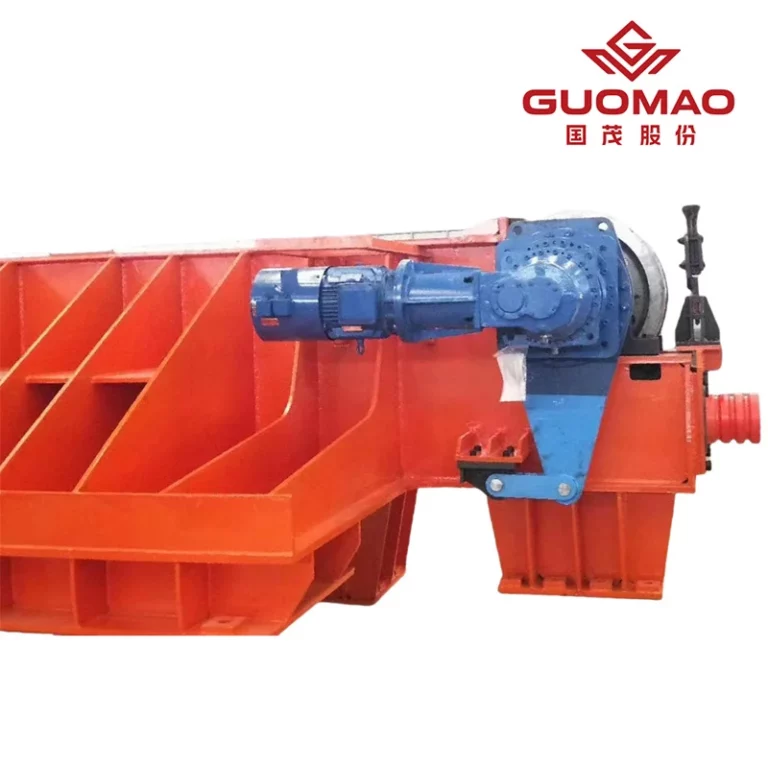
The B configuration is preferable when the motor and driven shaft face different directions. It can simplify layouts around mixers, cranes, conveyor head drives, and machinery with restricted longitudinal space.
The B series is evaluated by Guomao as a system layout solution. The key question is whether the internal 90-degree turn reduces external complexity.
How Do Mixing, Hoisting, and Conveying Applications Affect Industrial Gearbox Layout?
- An industrial gearboxfor mixing machinery must account for continuous torque, material density, shaft reactions, and mounting position.
- An industrial gearboxfor hoisting machinery must be checked for frequent starts, reversing, and transient torque.
- An industrial gearboxfor conveying machinery must consider starting resistance, material buildup, shock loading, and pulley loads.
The application alone does not determine H or B. Shaft geometry and operating loads must be evaluated together.
How to Choose Between an H-Parallel and B-Vertical Industrial Gearbox
Define Input Power, Output Torque, Speed, and Transmission Ratio
Use the actual motor speed and the required driven-machine speed to calculate the ratio. Then determine the continuous and peak output torque.
Selecting an industrial gearbox from motor power alone is unreliable. Machines with the same power may have different inertia, starting torque, and duty cycles.
Evaluate Duty Cycle, Shock Load, Start-Stop Frequency, and Industrial Gearbox Service Factor
The industrial gearbox service factor should reflect operating hours, load variation, starts per hour, reversing, and transient peaks.
Bearing life can exceed 50,000 hours when the service factor is above 1.4. It can exceed 100,000 hours when it exceeds 1.6 according to Guomao HB data. Service factor is a life-design input rather than a catalog margin.
Verify Radial Loads, Axial Loads, Bearing Loads, and Shaft Connections
Pulleys, sprockets, gears, and offset couplings create external shaft loads. Their magnitude and application point must be checked against bearing and shaft capacity.
Solid or hollow shafts, keys, shrink discs, and coupling reactions must also be verified. A unit may meet torque requirements but remain unsuitable because of excessive overhung load.
Confirm Shaft Arrangement, Mounting Position, Lubrication, and Cooling
The final configuration should close four connected decisions.
- Parallel or 90-degree shaft path
- Horizontal or vertical mounting
- Splash or forced industrial gearboxlubrication
- Natural, fan-assisted, or external cooling
These items are treated by Guomao as one configuration package. This approach prevents oil-distribution problems and installation redesign.
What Industrial Gearbox Selection Mistakes Should Engineers Avoid?
Confusing a B-Vertical Industrial Gearbox with Vertical Mounting Only
“Vertical” identifies the product’s shaft-layout family. It does not mean the housing has only one mounting orientation.
Selecting an Industrial Gearbox Based Only on Motor Power
Motor power does not describe peak torque, reversing, operating hours, or machine inertia. Output torque and duty data should determine capacity.
Ignoring Service Factor, Peak Loads, and External Shaft Loads
Catalog torque is only one design limit. Service factor, pulley loads, axial reactions, and bearing life may require a different size or shaft arrangement.
Overlooking Lubrication, Alignment, and Maintenance Clearance
Incorrect oil distribution, foundation distortion, misalignment, or inaccessible service points can cause premature problems. This can happen even when nominal selection is correct.
常见问题解答
Q: How do I choose between a vertical-shaft 工业齿轮箱 and a parallel-shaft 工业齿轮箱?
A: Match the shaft arrangement to the machine layout first. Use a parallel design for aligned centerlines. Choose a vertical or right-angle design when power must turn 90 degrees. Then verify torque, service factor, mounting position, lubrication, and cooling.
Q: Can a parallel-shaft 工业齿轮箱 be mounted vertically?
A: Yes. The oil level, lubrication route, breathers, seals, and bearings must be configured for vertical mounting. The H-Parallel industrial gearbox supports horizontal or vertical installation.
Q: Is a vertical 工业齿轮箱 always a right-angle 工业齿轮箱?
A: Not always. “Vertical” can describe shaft orientation, product classification, or mounting position. In the Guomao B-Vertical industrial gearbox, the input and output shafts are arranged at 90 degrees.
Q: What 工业齿轮箱 service factor is needed for heavy-duty applications?
A: The required value depends on operating hours, shock severity, starts, reversing, and load variation. Heavy-duty mixing, hoisting, and conveying duties generally require a higher service factor than uniform operation.
Q: Does a right-angle 工业齿轮箱 have lower efficiency than a parallel-shaft 工业齿轮箱?
A: A bevel direction-change stage has different meshing conditions. Total efficiency depends on stage count, ratio, speed, load, and lubrication. Guomao helical gear-pair efficiency can reach 98.5%. Bevel gear-pair efficiency can reach 97.5%.