


Конический редуктор с косозубыми шестернями способен передавать значительный крутящий момент благодаря компактной угловой компоновке, однако заявленный в каталоге крутящий момент сам по себе не гарантирует производительность в полевых условиях. Постоянная нагрузка, ударные нагрузки, рабочая температура, соосность и тип приводного механизма — все это определяет диапазон рабочих характеристик. Для высокомоментных промышленных приводов наилучший результат достигается путем подбора редуктора в соответствии с профилем нагрузки и проверки сохранения механических и термических запасов после установки.
Что на самом деле требуется от конического косозубого редуктора при высоких крутящих моментах?
Разделение постоянного крутящего момента и пикового крутящего момента
Пиковый крутящий момент описывает кратковременное событие, тогда как постоянный крутящий момент представляет собой нагрузку, которую редуктор должен выдерживать без неприемлемого повышения температуры или ускоренного износа. Привод может выдержать короткий импульс для устранения заклинивания, но перегреться, если низкая нагрузка продолжается в течение нескольких часов. Поэтому выбор следует начинать с определения скорости вращения двигателя, требуемой выходной скорости, рабочего крутящего момента, пикового крутящего момента, времени работы и продолжительности каждой перегрузки.
Двигатель и инвертор также имеют значение. Частотно-регулируемый привод может обеспечивать высокий крутящий момент на низких оборотах, но снижение скорости вращения вентилятора двигателя может ограничивать охлаждение. Аналогично, двигатель с высокой пусковой мощностью может подвергать шестерни, шпонки, муфты и ведомый вал более резким переходным процессам, чем предполагает номинальная мощность.
Учитывайте ударные нагрузки, запуск, реверсы и рабочий цикл.
Коэффициент запаса прочности — это не просто декоративный показатель безопасности. Он преобразует реальное поведение машины в расчетный запас. Конвейеры с неравномерной загрузкой, смесители, сталкивающиеся с изменением плотности материала, и подъемники, запускающиеся под нагрузкой, создают различные схемы напряжений, даже если их средний крутящий момент схож. Частые реверсы приводят к возникновению люфтов и повторяющимся нагрузкам на корни зубьев.
Полезный профиль нагрузки включает в себя записи о запусках в час, частоте реверсирования, распределении нагрузки, возможных остановках, условиях окружающей среды и суточном времени работы. Эта информация помогает инженерам отличать редкий аварийный пик от повторяющейся производственной нагрузки. Модульные редукторы следует проектировать с учетом этого профиля, а не только мощности двигателя.
Механические и тепловые ограничения, определяющие реальную производительность.
Контакт зубьев, жесткость вала, подшипники и соосность корпуса.
Высокий крутящий момент передается через контакт зубьев, но окружающая конструкция определяет, останется ли нагрузка равномерно распределенной. Прогиб вала, зазор в подшипнике, жесткость корпуса и деформация при монтаже могут сместить зону контакта к кромке зуба. В результате возникает концентрация напряжений, шум, нагрев и сокращение срока службы подшипников или зубчатых передач, даже если расчетный крутящий момент кажется приемлемым.
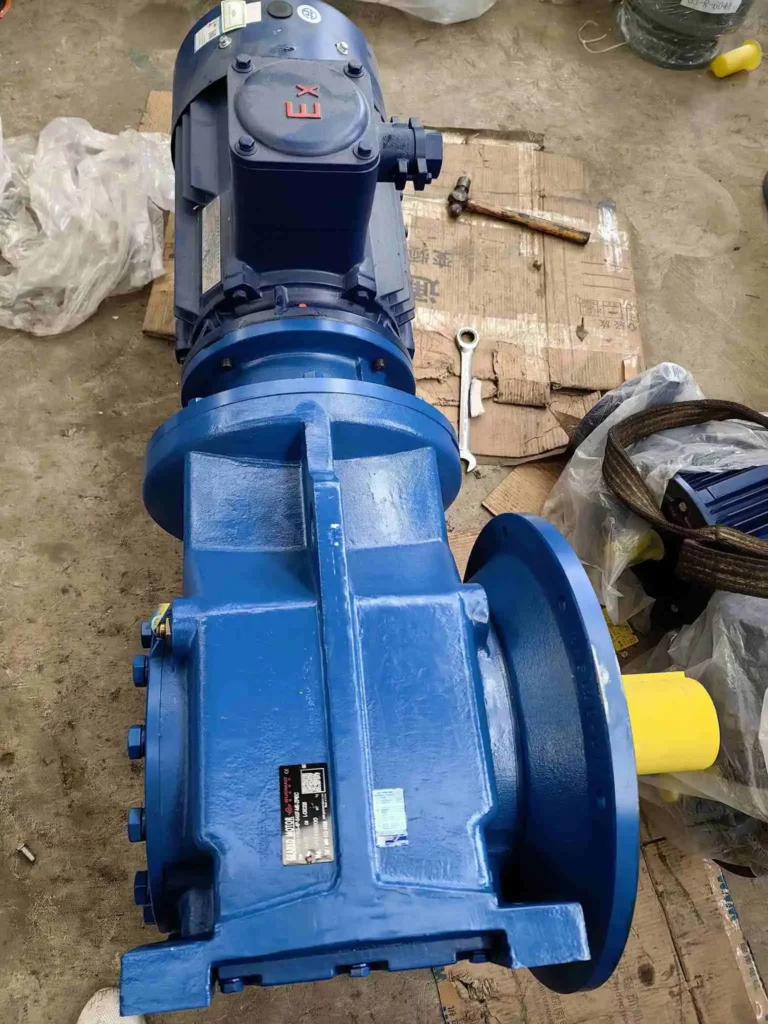
А GK серия спирального мотор с шерстями Используется два винтовых и один конический вал с перпендикулярными входным и выходным валами. Модульная конструкция и варианты валов позволяют адаптировать станок к различным компоновкам, но основание, фланец, муфта и ведомый вал должны обладать достаточной жесткостью для сохранения соосности под нагрузкой.
Выделение тепла, состояние масла, температура окружающей среды и холодопроизводительность.
Каждое зацепление шестерен и подшипника приводит к определенным потерям. При непрерывной работе эти потери преобразуются в тепло, которое должно отводиться через корпус, масло, воздушный поток или вспомогательную систему охлаждения. Коробка передач может обладать достаточной механической крутящей способностью, но при этом быть недостаточно мощной с точки зрения тепловых характеристик для работы в горячем, закрытом помещении с медленным потоком воздуха.
Вязкость масла должна обеспечивать стабильную пленку при рабочей температуре без чрезмерных потерь на перемешивание. Уровень масла, положение при установке, состояние сапуна, трение уплотнения и загрязнение — все это влияет на результат. Разумный выбор оставляет запас по температуре для предотвращения загрязнения, сезонных изменений температуры и естественного старения масла, вместо того чтобы предполагать идеальные лабораторные условия.
Как модульные редукторы соответствуют требуемой рабочей точке
Настройте передаточные числа в зависимости от скорости вращения двигателя и выходного крутящего момента.
Передаточное отношение должно обеспечивать требуемую скорость вращения машины, сохраняя при этом двигатель в практическом рабочем диапазоне. Чрезмерное передаточное отношение может увеличить количество ступеней, потери, габариты и отраженную инерцию. Слишком малое передаточное отношение может потребовать использования двигателя избыточной мощности или подвергнуть компоненты, расположенные ниже по потоку, воздействию чрезмерной скорости. Полезный вопрос заключается не просто в том, «Какое передаточное отношение доступно?», а в том, «Какая схема ступеней обеспечивает требуемый крутящий момент с приемлемой эффективностью и тепловым запасом?»
Выберите модули крепления, вала и интерфейса, не ослабляя пути передачи нагрузки.
Модульность создает ценность, когда стандартные решения позволяют решить реальную проблему сопряжения. Варианты крепления — опора, фланец, вал, полый вал, цельный вал и рычаг крутящего момента — изменяют способ передачи усилий в конструкцию машины. Инженеры должны проверить радиальные и осевые нагрузки, реакции сцепления, посадку вала, доступ для демонтажа, а также способность монтажной поверхности выдерживать полный крутящий момент без деформации.
Проверка диапазон промышленных редукторов Это помогает отделить выбор интерфейса от основных требований к производительности. Выбранные модули должны упрощать установку и обслуживание, обеспечивая при этом прямой и жесткий путь передачи нагрузки.
Планируйте смазку и охлаждение как часть модульного комплекта.
Смазку и охлаждение следует выбирать вместе с редуктором, а не добавлять после появления перегрева. Ориентация при монтаже изменяет распределение масла, а низкая скорость вращения выходного вала может уменьшить разбрызгивание смазки в некоторых областях. Высокая температура окружающей среды, ограниченный поток воздуха или непрерывная работа могут оправдать принудительную смазку, внешний охладитель или дополнительный контроль. Эти решения являются частью архитектуры привода.
Выбор оптимальной архитектуры привода для диапазона крутящего момента
Когда модульный редукторный двигатель является наиболее практичным решением
Компактный редукторный двигатель с косозубыми шестернями часто является практичным выбором, когда требуемый крутящий момент, передаточное число, способ крепления и тепловые характеристики соответствуют стандартизированному семейству. Он уменьшает количество отдельных интерфейсов и может упростить компоновку машины. Выбор все еще требует полного профиля работы, особенно если двигатель работает на низких оборотах или часто запускается.
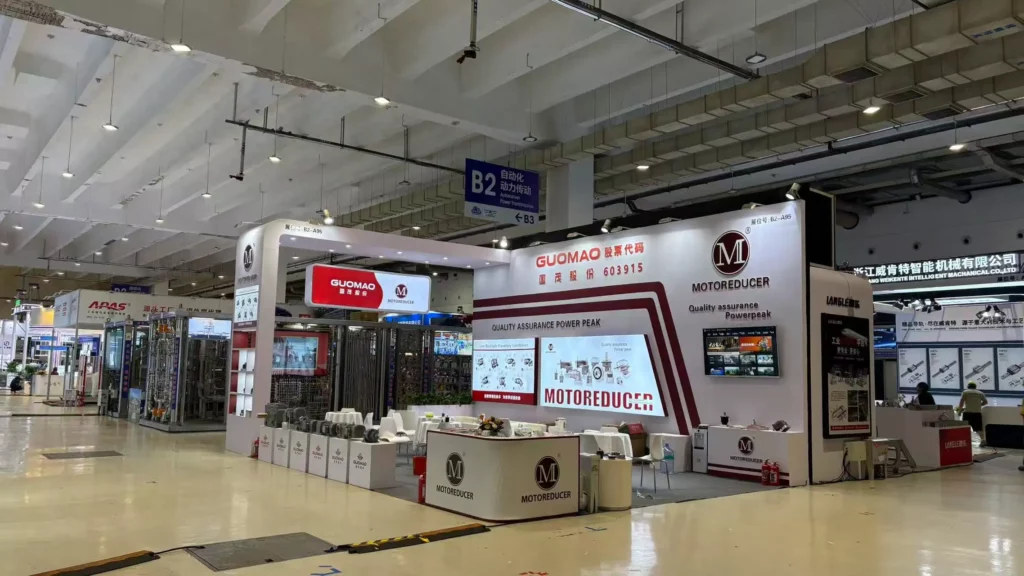
Компания Guomao приняла участие в Международной выставке интеллектуального оборудования в Азиатско-Тихоокеанском регионе 2026 года, проходившей с 16 по 19 июля. Выставочная площадка связала модульное приводное оборудование с более широким контекстом автоматизации, управления и интеллектуального оборудования. Представленные нами конфигурации сделали центральный тезис статьи наглядным: производительность зависит от того, как редуктор, двигатель, монтажный интерфейс и приводное оборудование работают как единая система.
Когда необходима тяжелая промышленная коническая косозубая коробка передач
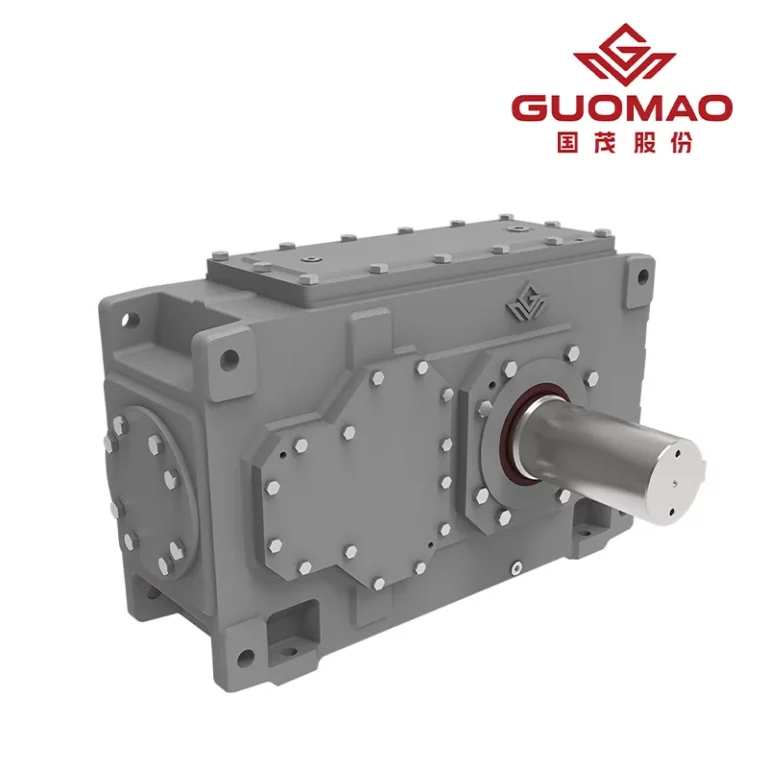
Для крупного технологического оборудования может потребоваться отдельный промышленный редуктор с большей жесткостью корпуса, более крупными подшипниками, расширенными возможностями охлаждения и большей гибкостью монтажа. B-вертикальная промышленная коробка передач В нем используется вал с углом поворота 90 градусов и пары косозубых и конических зубчатых передач для работы с высоким номинальным крутящим моментом. Заявленный диапазон выходного крутящего момента достигает 950 кН·м, что значительно превосходит возможности компактных редукторных двигателей.
Изменение архитектуры должно определяться постоянным крутящим моментом, интенсивностью ударов, нагрузками на подшипники, теплоемкостью и доступом для обслуживания, а не только крутящим моментом. Физически больший редуктор не исправит слабое основание, неподходящее соединение или неполную систему смазки.
Проверка работоспособности до и после ввода в эксплуатацию.
Проверьте коэффициент запаса прочности, тепловой запас и защиту от перегрузки.
Перед запуском сравните выбранную номинальную мощность редуктора со всеми указанными рабочими параметрами. Подтвердите настройки защиты от перегрузки двигателя, пределы тока инвертора, момент торможения, несущую способность муфты и максимальный момент сопротивления приводимого в движение механизма. Защита от перегрузки должна прерывать нештатные ситуации до того, как заклинивание перерастет в длительное термическое или механическое событие.
Установите базовые показатели температуры, вибрации, шума и уровня масла.
Данные о вводе в эксплуатацию предоставляют группам технического обслуживания справочную информацию, которую не может предоставить каталог. Необходимо регистрировать стабилизированные температуры корпуса и масла, вибрацию в повторяющихся точках, уровень шума при работе, ток двигателя и любые начальные утечки. Измерения следует проводить при известной нагрузке и скорости, чтобы последующие сравнения оставались информативными.
Используйте изменения тенденций для планирования проверок до того, как снизится допустимый крутящий момент.
Однократное измерение редко позволяет судить о состоянии редуктора. Повышение температуры может указывать на ухудшение смазки, перегрузку, смещение или недостаточное охлаждение. Увеличение вибрации на частоте зацепления шестерен может свидетельствовать об изменении контакта или соосности, а увеличение тока двигателя может указывать на проблему в технологическом процессе вне редуктора.
Таким образом, самым мощным высокомоментным приводом является не просто устройство с наибольшей номинальной мощностью. Это правильно сконфигурированная система с достаточным механическим и тепловым запасом, проверенными интерфейсами и базовыми данными, которая позволяет принимать обоснованные решения по техническому обслуживанию.
Часто задаваемые вопросы
В: Каким образом модульные зубчатые передачи улучшают характеристики конических и косозубых редукторов при высоком крутящем моменте?
А: Модульные редукторы позволяют подбирать передаточные числа, способы крепления, интерфейсы валов, варианты смазки и системы охлаждения в соответствии с режимом работы. Их преимущество заключается в выборе модулей, которые сохраняют соосность и жесткость цепи передачи нагрузки, а не просто в максимальном увеличении количества доступных конфигураций.
В: Какой коэффициент запаса прочности следует использовать для конического редуктора с косозубыми шестернями в высокомоментных промышленных приводах?
А: Требуемый коэффициент запаса прочности зависит от количества часов работы, интенсивности ударов, пусков, реверсов, колебаний нагрузки и рисков, связанных с применением. Инженерам следует использовать метод расчета, предложенный производителем редуктора, и предоставлять полные данные о режиме работы, а не применять одно универсальное значение ко всем машинам.
В: Требуется ли дополнительное охлаждение для конической зубчатой коробки передач при длительной работе с высоким крутящим моментом?
A: Дополнительное охлаждение необходимо, когда выделяемое тепло превышает естественное рассеивание корпуса при фактической температуре окружающей среды, воздушном потоке, положении при установке и рабочем цикле. Одна лишь механическая крутящая способность не гарантирует непрерывную работу редуктора без перегрева.
В: Как следует вводить в эксплуатацию модульные редукторы в режиме реверсирования?
А: В ходе ввода в эксплуатацию необходимо проверить направление вращения, работу тормозов, переходы люфта, соосность муфты, уровень смазки, пределы перегрузки и температуру в обоих направлениях. Также следует зафиксировать базовые показания вибрации и тока при сопоставимых прямых и обратных нагрузках.
В: В каких случаях в промышленном приводе следует использовать большой конический редуктор вместо мотор-редуктора?
А: Отдельный промышленный редуктор целесообразен в тех случаях, когда постоянный крутящий момент, ударные нагрузки, внешние нагрузки на вал, тепловая потребность, потребности в охлаждении или эксплуатационные требования превышают практический диапазон компактного редукторного двигателя. Решение должно приниматься после полного анализа режима работы системы.