

Understanding Parallel Shaft Gearbox Architecture in Industrial Drive Systems
Mechanical Layout of a Parallel Shaft Gearbox and Power Flow Path
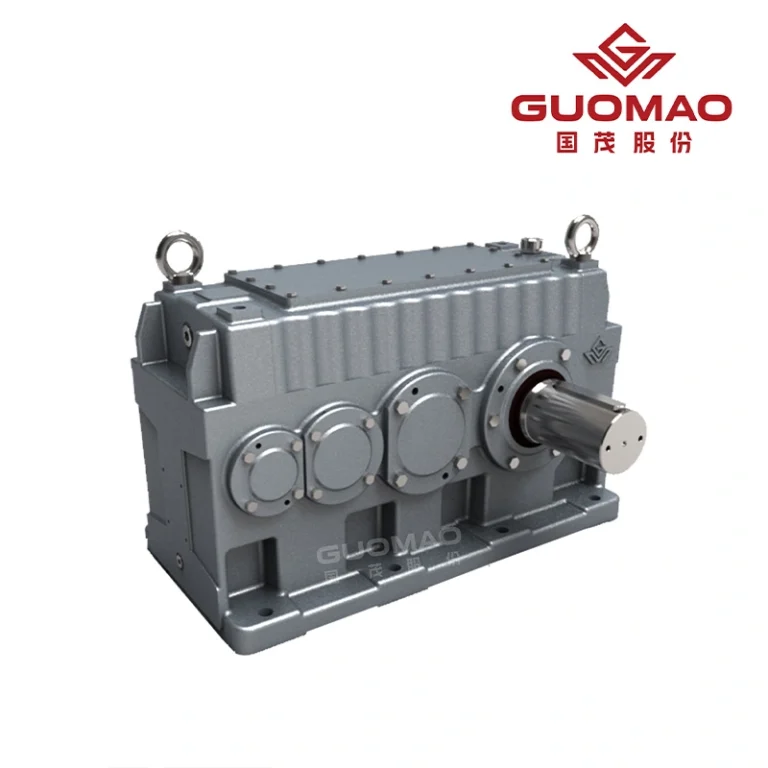
A parallel shaft gearbox is characterized by aligned input and output shafts that transmit torque through multi-stage helical gears in a straight-line configuration. This structural simplicity reduces directional losses and supports compact integration into industrial drive systems such as conveyors, mixers, and lifting equipment.
Helical gear stages inside a parallel shaft gearbox provide smoother meshing and higher contact ratios than spur gears. As a result, vibration and noise levels are reduced, and load distribution across the gear face becomes more uniform. This design improves bearing life and ensures stable torque transmission in continuous-duty environments.
How Parallel Shaft Gearbox Design Influences Torque Density and Efficiency
Parallel shaft gearbox layout affects torque density. It does so by fine-tuning gear shape and material strength. Hardened and carefully ground helical gears handle more torque in a small case. This matters when space is tight, but torque needs stay high.
Efficiency in a parallel shaft gearbox tops 95%. It comes from less slide rub and tuned tooth shapes. In power-heavy fields ready for world build needs like CONEXPO-CON/AGG 2026, power-saving drive setups are now a main goal. They are not just extra.
Parallel Shaft Gearbox vs Other Industrial Gearbox Types
Comparing Parallel Shaft Gearbox and Helical-Bevel Gear Units
Parallel shaft gearbox configurations are ideal for inline installations where space optimization and structural simplicity are priorities. Helical-bevel units offer directional flexibility but often increase layout complexity in long production lines.
In high-torque conveyor systems, a parallel shaft gearbox provides strong radial load capacity without the added structural considerations of a 90-degree drive arrangement. Therefore, mechanical layout often determines the correct choice.
When to Choose a Parallel Shaft Gearbox Over Planetary or Worm Gear Drives
Parallel shaft gearbox solutions are preferred in heavy-duty, moderate-speed applications requiring high torque and durability. Planetary gearboxes offer compact torque multiplication but may introduce higher maintenance complexity in large industrial frames. Worm gear drives typically exhibit lower efficiency and higher thermal buildup under heavy loads.
For big goods-moving systems, units like the H-Parallel industrial Gearboxes offer a good mix. They blend high planned torque, flexible case, and easy upkeep.
Cost-of-Ownership Analysis for Industrial Parallel Shaft Gearbox Solutions
Parallel shaft gearbox full cost ties to lasting strength and work time. It is not just the first buy price. Long bearing life, standard spare parts, and set fixed times cut stop time. They lower the total run cost.
Key checkpoints include:
- Bearing fatigue life
- Lubrication and cooling requirements
- Ease of inspection and seal replacement
Buying checks should have long-term trust over quick savings.
Key Technical Parameters in Parallel Shaft Gearbox Selection
Torque Rating and Service Factor in Parallel Shaft Gearbox Sizing
Parallel shaft gearbox sizing begins with torque calculation and service factor evaluation. Nominal torque must exceed required output torque after accounting for shock loads, start-stop cycles, and continuous operation hours.
Typical service factors:
- Light load: 1.2–1.4
- Moderate shock: 1.4–1.6
- Heavy impact: ≥1.6
The right service factor pick makes bearing life top 50,000 hours in factory settings.
Speed Ratio Optimization for Parallel Shaft Gearbox Applications
Parallel shaft gearbox ratio pick sets the final output speed. It also shapes heat work. Multi-stage helical setups cover wide ratios. They keep high efficiency.
Exact ratio match between motor speed and driven gear ensures even run in belt lines, bucket lifts, and mix systems.
Thermal Power and Cooling Considerations in Industrial Parallel Shaft Gearbox Systems
Parallel shaft gearbox heat control is key in steady, tough work. Heat from gear contact must be shed well. This stops oil breakdown.
Common cooling setups include:
| Cooling Method | Типичное применение |
| Natural cooling | Moderate load |
| Cooling coil | Higher thermal demand |
| Forced oil circulation | Heavy-duty, high ambient temperature |
Good heat check guards, gear, teeth, and bearings from early wear.
Radial and Axial Load Capacity in Parallel Shaft Gearbox Design
Parallel shaft gearbox radial load capacity must account for belt or chain-driven forces acting on the shaft extension. Bearing selection should consider both transmitted torque and external loads to prevent fatigue failure.
Right alignment at setup keeps side load in check. It spreads even over the bearing setup.
Engineering Standards and Reliability Factors of Parallel Shaft Gearbox Systems
International Gear Load Calculation Standards Applied to Parallel Shaft Gearbox Design
Parallel shaft gearbox build uses rules like DIN 3990 and ISO 6336. They figure allowed stress and wear life. Following these rules gives steady work. It also aids swapping with like factory units.
Gear Material, Heat Treatment, and Precision Level in Industrial Parallel Shaft Gearbox Manufacturing
Parallel shaft gearbox durability depends heavily on material quality and heat treatment. High-strength alloy steel gears, carburized to surface hardness around HRC58–62, provide excellent resistance to pitting and bending fatigue.
Precision grinding to grade 6 accuracy enhances meshing smoothness and reduces operational vibration.
Assembly Precision and Modular Configuration of Parallel Shaft Gearbox Units
Parallel shaft gearbox performance in the field reflects assembly precision achieved during manufacturing. Controlled housing tolerances ensure shaft parallelism and bearing seating accuracy.
In Гумао engineering practice, modular design enables flexible installation forms and torque scalability. The H Series Industrial Gearbox exemplifies this modular concept by offering wide torque ranges while maintaining standardized motor interfaces.
Industrial Applications Where Parallel Shaft Gearbox Performance Is Critical
Parallel Shaft Gearbox in Conveying Machinery and Bulk Material Handling
Parallel shaft gearbox systems are widely used in conveyors and elevators due to strong radial load resistance and stable torque delivery. In mining and cement industries, consistent speed control minimizes mechanical shock and material loss.
А Цилиндрический редуктора ZY Series gives high load holding. It offers sure work in such hard spots.
Heavy-Duty Parallel Shaft Gearbox in Mixing and Agitation Systems
Parallel shaft gearbox jobs in mixed systems need even torque under changing thickness levels. Steady helical contact cuts shake pass. It guards the built parts.
Parallel Shaft Gearbox Use in Hoisting and Lifting Equipment
Parallel shaft gearbox options are key in cranes and moving parts. Reverse and jolt loads happen often there. Strong bearing pick and careful gear build aid safe long run.
Parallel Shaft Gearbox Installation, Operation, and Maintenance Considerations
Installation Guidelines for Parallel Shaft Gearbox Alignment and Foundation Stability
Parallel shaft gearbox installation must ensure stable foundations and precise shaft alignment. Misalignment increases bearing stress and seal wear, reducing service life.
Lubrication Strategy for Long Service Life of Parallel Shaft Gearbox Units
Parallel shaft gearbox oil plan shapes lasting strength. Factory closed gear oils like CKD220 or CKD320 fit common picks by load and heat.
Forced oil systems run between 0.1 and 0.4 MPa. They hold a steady oil film thickness.
Preventive Maintenance Planning for Industrial Parallel Shaft Gearbox Systems
The parallel shaft gearbox early fix plan covers oil check, shake watch, and seal review. Spotting odd sounds or heat rises early stops surprise stops in key factory lines.
Evaluating a Parallel Shaft Gearbox Supplier for Industrial Projects
Parallel shaft gearbox seller check should lead with built skill and make accuracy. Tech help for odd torque needs and flexible setups is vital for hard factory jobs.
At Guomao, build steps stress full-load proof, flexible make control, and close follow of DIN and ISO rules. This ensures steady torque work and full life trust.
Часто задаваемые вопросы
Q: How to choose the right parallel shaft gearbox for heavy-duty industrial drive systems?
A: Pick by output torque, service factor, speed ratio, and heat hold. Check against known load math rules. This ensures long work time and a safe run.
Q: Which brand of parallel shaft gearbox is recommended for large industrial projects?
A: Factory users often pick makers with strong torque hold, flexible build skill, and proven test systems. Guomao’s H Series Industrial Gearbox fits high planned torque. It gives sure factory work.
Q: Parallel shaft gearbox vs planetary gearbox – which is better for conveyors?
A: Parallel shaft gearboxes handle side loads better. They offer a simpler fix in belt systems. Planetary units give a small size for set layouts.
Q: What are the key parameters in parallel shaft gearbox sizing?
A: Output torque, speed ratio, service factor, thermal power, radial load, and installation direction are the main points that shape right sizing.
Q: What maintenance schedule is recommended for an industrial parallel shaft gearbox?
A: Steady oil checks, shake watch, seal review, and timed bearing check are advised. Set times by load strength and work setting.