


Por qué el ruido de las cajas de engranajes industriales es importante en los sistemas de transmisión de servicio pesado.
El ruido en las cajas de engranajes industriales sirve como una señal temprana de problemas de ingeniería. Es más que un simple problema acústico. En sistemas de transmisión de alta resistencia, un ruido anormal puede indicar un error en el engranaje, desgaste de los cojinetes, fallas en la lubricación, desalineación, vibraciones en la base o sobrecarga. Si el ruido se presenta junto con calor o vibraciones, se debe inspeccionar la caja de engranajes. Esta revisión se realiza antes de que se produzcan daños secundarios.
¿Qué ruidos son normales en la caja de cambios y cuáles son anormales?
El sonido normal de una caja de cambios es constante y está relacionado con la velocidad y la carga de la transmisión. Los ruidos anormales varían, volviéndose más agudos, fuertes, irregulares o incluso más sensibles a la carga. Existen diversos sonidos de advertencia que puede producir una caja de cambios, como zumbidos, rechinidos, golpeteos, traqueteos e incluso retumbos.
¿Por qué el ruido, la vibración y el calor suelen aparecer juntos?
Las vibraciones y el ruido de la caja de cambios suelen tener el mismo origen mecánico. Un mal contacto, la fricción o la holgura pueden generar una fuerza dinámica. Esta fuerza, a su vez, eleva la temperatura y los niveles de vibración.
¿Qué causa el ruido en las cajas de engranajes industriales?
Mayoría caja de cambios industrial El ruido puede ser causado por engranajes, cojinetes, lubricación, instalación o condiciones de carga.
Problemas de engranajes: desgaste de los dientes, holgura y mal contacto.
Un contacto inadecuado entre los dientes, un juego excesivo, un desgaste como picaduras y rayaduras, o una precisión insuficiente de los engranajes pueden provocar un ruido de zumbido y vibraciones cíclicas en la caja de cambios.
Problemas en los rodamientos: holgura, fatiga y contaminación.
La holgura en los cojinetes, la fatiga o la contaminación por partículas pueden provocar ruidos sordos. Esto también puede causar inestabilidad en el soporte del eje y afectar aún más el engranaje.
Fallo de lubricación: Nivel bajo de aceite, viscosidad incorrecta o aceite sucio.
Un nivel bajo de aceite, una viscosidad incorrecta, aceite sucio o oxidado pueden reducir la resistencia de la película lubricante. Esto puede provocar un aumento del roce, del calor y del desgaste.
Desalineación, montaje flojo y vibración de los cimientos.
La desalineación del acoplamiento, los pernos flojos, las bases débiles o las placas base inestables pueden amplificar el ruido de las cajas de engranajes industriales. Esto puede ocurrir incluso cuando las piezas internas no están gravemente dañadas.
Cómo diagnosticar el ruido de la caja de cambios antes de que falle.
Para realizar un diagnóstico eficaz del ruido de una caja de cambios, es necesario combinar la escucha, la inspección, la comprobación de la temperatura, el análisis del aceite y el análisis de las vibraciones.
Identifica los tipos de ruido: zumbidos, rechinidos, golpes y traqueteos.
El zumbido suele indicar problemas de engranajes. El rechinido puede indicar lubricación deficiente o daños en la superficie. El golpeteo puede señalar una carga de impacto o holgura. El ruido sordo generalmente se relaciona con los cojinetes.
Compruebe el estado del aceite, la temperatura, los acoplamientos y los sujetadores.
Inspeccione el nivel y el color del aceite, la posible contaminación, la temperatura de la carcasa, la alineación del acoplamiento, los pernos de montaje y los cambios de carga recientes. Realice estos pasos antes de abrir la caja de engranajes.
Utilice la monitorización de vibraciones para detectar fallos precoces en la caja de cambios.
La monitorización de vibraciones para detectar fallos en la caja de cambios ayuda a identificar cambios en el engranaje o en el estado de los cojinetes. Esto se realiza antes de que el fallo sea visible.
Soluciones de diseño para reducir el ruido de las cajas de engranajes industriales
Mejora la precisión de los engranajes y el contacto entre los dientes para un acoplamiento más suave.
La alta precisión de los engranajes y el contacto estable reducen los errores de transmisión. Además, disminuyen el impacto del engranaje.
Refuerza la rigidez de la carcasa y la estabilidad de la instalación.
Las carcasas rígidas, los cimientos estables y el apriete adecuado de los pernos ayudan a reducir la resonancia y la vibración estructural.
Seleccione la caja de cambios adecuada según la carga, la relación de transmisión y el ciclo de trabajo.
La selección correcta debe tener en cuenta el par motor, el factor de servicio, la velocidad de entrada, la velocidad de salida, la carga radial, la frecuencia de arranque y parada, la lubricación y la refrigeración.
Aplicación de perfiles de engranajes de bajo ruido en el diseño de cajas de engranajes para servicio pesado
El diseño de la caja de engranajes industrial de bajo ruido utiliza un perfil dentado optimizado. Esto suaviza el acoplamiento de los engranajes bajo par motor elevado.
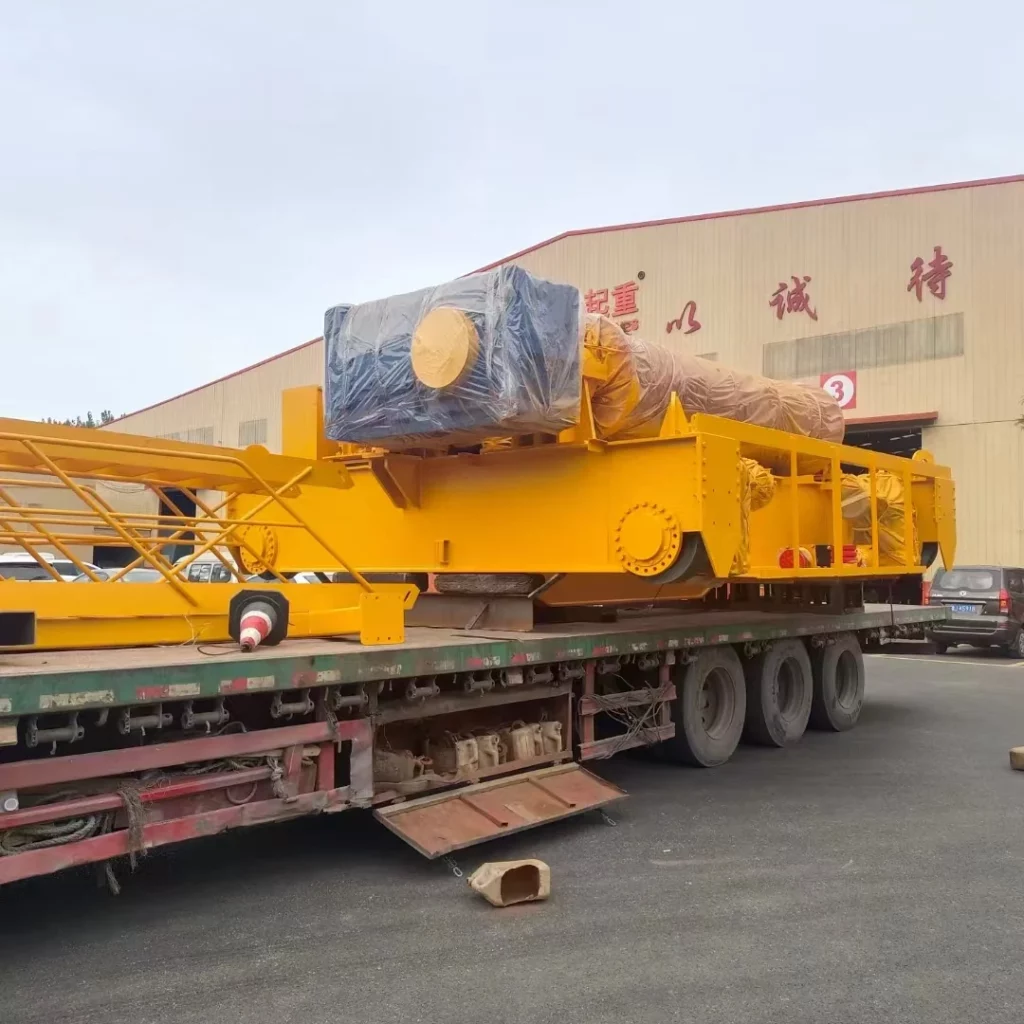
Consejos de mantenimiento para controlar el ruido de las cajas de engranajes industriales.
Los buenos consejos para el mantenimiento de cajas de engranajes industriales se centran en mantener las condiciones reales de funcionamiento lo más cerca posible de las hipótesis de diseño.
Elabore un programa de lubricación en función de la carga y la temperatura.
Las comprobaciones de aceite deben reflejar la carga, la temperatura, el ciclo de trabajo y el entorno. No deben basarse únicamente en un tiempo fijo.
Prevenga fugas de aceite, fallas en los sellos y contaminación.
El desgaste de los sellos, la obstrucción de los respiraderos y la entrada de polvo o agua pueden degradar el lubricante. Estos problemas aumentan el ruido de los engranajes y los cojinetes.
Vuelva a comprobar la alineación y el montaje después de la instalación o la revisión.
La alineación y el montaje deben verificarse después de la instalación, la revisión y la estabilización térmica.
Ejecutar pruebas sin carga y con carga escalonada durante el arranque.
Las pruebas sin carga y con carga escalonada ayudan a identificar si el ruido está relacionado con la velocidad, con la carga o con la instalación.
Lista de verificación para la resolución de problemas de ruido en cajas de engranajes industriales
Tipo de ruido vs. posible causa
| Tipo de ruido | Posible causa |
| Gimoteo | Engranaje, holgura, contacto de los dientes |
| Molienda | Fallo de lubricación, desgaste de engranajes o cojinetes |
| Golpes | Carga de choque, problema de acoplamiento, holgura |
| Retumbando | Desgaste o contaminación de los cojinetes |
| Muy | Montaje suelto o vibración de los cimientos |
Punto de inspección frente a acción correctiva
Revise el lubricante, los cojinetes, los engranajes, los acoplamientos, los sellos, los sujetadores y la base. Las medidas correctivas pueden incluir el cambio de aceite, la corrección de la alineación, el apriete de los pernos, la inspección de los cojinetes o el ajuste de la carga.
Cuándo supervisar, ajustar o detener la máquina.
Un nivel de ruido bajo y estable puede requerir solo monitorización. Un aumento rápido del ruido, el sobrecalentamiento, los ruidos de fricción, los golpes, las vibraciones intensas o la presencia de partículas metálicas en el aceite requieren parada e inspección.
Cómo las cajas de engranajes de las series H y B de Guomao permiten un funcionamiento silencioso
En Guomao, abordamos el ruido de las cajas de engranajes industriales mediante la precisión de los engranajes, la capacidad de carga, la precisión del montaje, la estructura de la carcasa, la configuración de la lubricación y la idoneidad de la instalación.
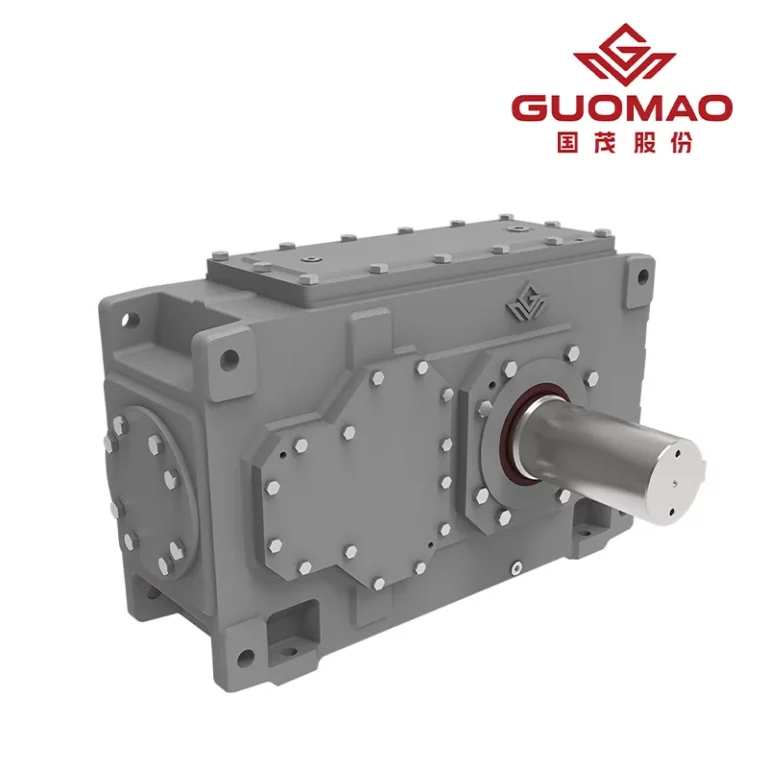
Caja de engranajes industrial serie H para accionamientos de servicio pesado con ejes paralelos
El Caja de cambios industrial H-paralela Se trata de una caja de engranajes de alta resistencia con ejes paralelos. El cálculo de la capacidad de carga de sus engranajes helicoidales cumple con las normas GB/T3480, DIN 3990 e ISO 6336. Gracias a su precisión de dientes de grado 6 y su tecnología de perfilado de bajo ruido, permite un engranaje más suave y un funcionamiento estable en sistemas de carga pesada continua.
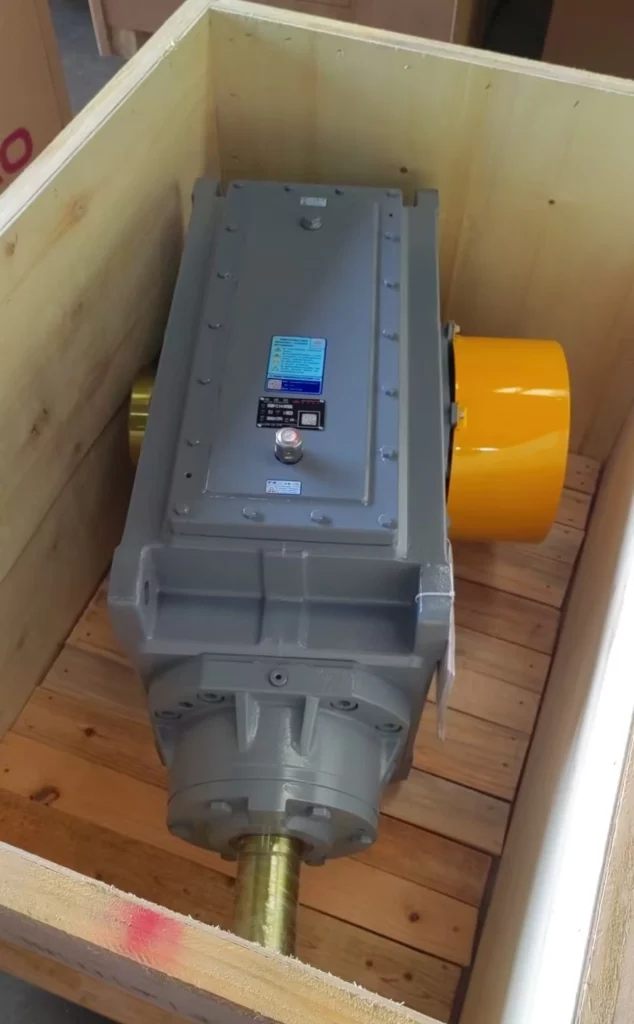
Caja de engranajes industrial serie B para transmisión de servicio pesado en ángulo recto
El Caja de cambios industrial vertical b-vertical Utiliza una disposición de ejes de 90 grados para la transmisión de servicio pesado en ángulo recto. El cálculo de la capacidad de carga de sus engranajes cónicos cumple con las normas DIN 3991 e ISO 10300. La precisión de los engranajes de grado 6 y su perfil de bajo ruido contribuyen a un acoplamiento suave, donde la dirección del par y el diseño compacto son importantes.
Dónde encajan las cajas de engranajes de las series H y B en sistemas industriales sensibles al ruido
Las cajas de engranajes de las series H y B son adecuadas cuando el control del ruido de la caja de engranajes de servicio pesado depende de la capacidad de par, la disposición del eje, la relación, la lubricación, la refrigeración y la estabilidad de la instalación correctas.
Preguntas frecuentes
P: ¿Qué causa el ruido en las cajas de engranajes industriales bajo carga?
A: Existen varias causas de ruido en las cajas de engranajes industriales cuando están bajo carga. Algunas posibles causas son: engranajes desgastados, mal acoplamiento de los dientes, holguras incorrectas en los cojinetes, lubricación inadecuada, cargas excesivas y alineación incorrecta de los acoplamientos.
P: ¿Qué suele significar un zumbido procedente de una caja de cambios industrial?
A: El ruido de zumbido en la caja de engranajes industrial podría deberse a defectos en el engranaje de los dientes, holgura, error de engranaje, desgaste de la superficie, desequilibrio o película de lubricación inadecuada.
P: ¿Con qué frecuencia se debe realizar el mantenimiento de la caja de cambios para evitar ruidos anormales?
A: El mantenimiento de la caja de cambios se realizará en función de la carga, las horas de funcionamiento, el estado del aceite, la temperatura, la vibración y el entorno.
P: ¿Cuándo debería ser necesario detener la máquina debido a un ruido anormal en la caja de engranajes industrial?
A: El ruido anormal en la caja de engranajes industrial requiere una parada cuando aparece con sobrecalentamiento, vibración fuerte, rechinidos, golpeteos, partículas de metal en el aceite o un aumento rápido del ruido.