

What Is a Coaxial Helical Gearbox and How Does It Improve Transmission Efficiency
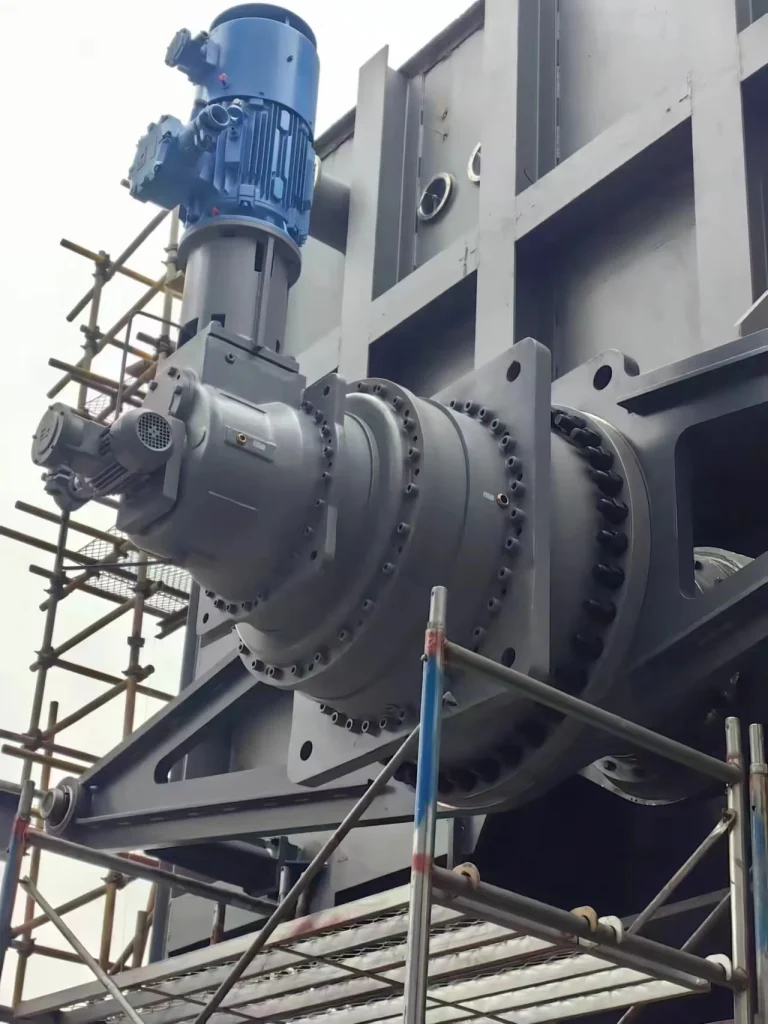
A coaxial helical gearbox serves as a basic factory gear reducer. In this setup, the input shaft and output shaft line up on the same axis. This arrangement lets the turning force pass through a set of slanted gears. It gives strong output with little power waste. Factory workers often use coaxial helical gearboxes in goods-moving setups, lifting tools, and machine assembly lines. They pick them for the small size and good power pass.
These units bring clear power-saving gains. This holds true in steady work tasks where power use matters a lot.
Key Structural Characteristics of Coaxial Helical Gearboxes
Several main build parts help the work of coaxial helical gearboxes.
- Coaxial shaft layout – ensures a direct path for torque transmission
- Helical gear teeth – provide gradual engagement for smoother rotation
- Compact gearbox housing – offers high torque density in a small footprint
- High-strength materials – ensure durability under continuous load
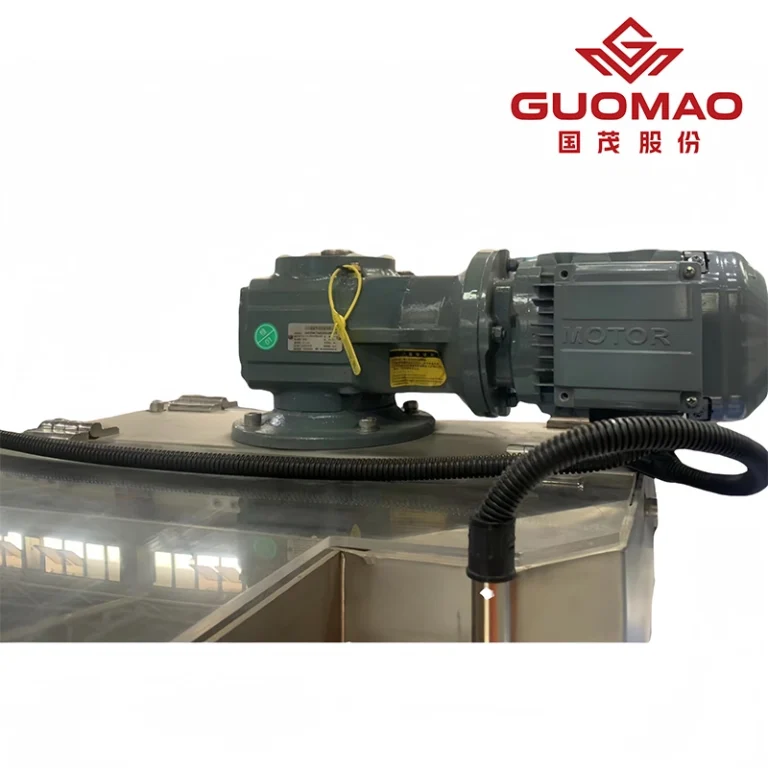
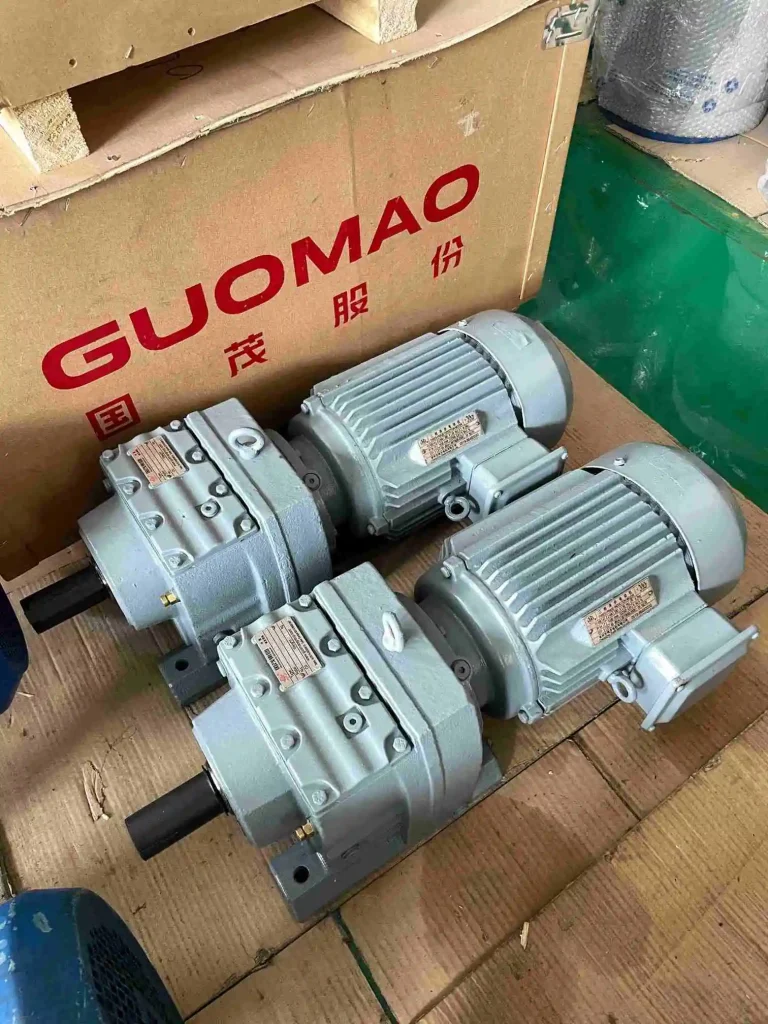
One such option is the Guomao Motor de engranaje helicoidal de la serie GR. It joins a motor and gearbox into one. This gives easy setup choices and broad drive ratios. Its slanted gear drive assures good, quiet run in hard tasks.
Why Helical Gear Meshing Delivers Higher Efficiency
Slanted gears link bit by bit. This cuts sudden loads and lowers rubbing. It also makes turning force passes steadier. Such a smooth link boosts work rate. It does this by cutting power waste in drive tasks. This matters for high-load, steady work. Coaxial helical gearboxes often reach work rates over 95%. They make little heat.
What Design Factors Affect Coaxial Helical Gearbox Efficiency
Several built parts shape the work rate. These include gear shape, support setups, and oil systems.
Gear Geometry and Tooth Profile Optimization
Gear shape matters a lot for work rate. This covers the slant angle and touch rate. A bigger slant angle boosts tooth cover. It lowers stress and spreads the load better. That raises the work rate. Fine grinding and hardening smooth the tooth face. This cuts the rug.
Bearing Arrangement and Shaft Alignment
The right support choice and shaft line-up assure a smooth turn. They also cut the rub. Wrong line-up or weak support can raise a block. This lowers the full work rate.
Lubrication Systems and Thermal Control
Good oil cuts, rubs, and keeps the right running heat. Strong oils lower heat build and wear. They hold the gearbox work rate over time.
How Efficient Are Coaxial Helical Gearboxes in Industrial Applications
Coaxial helical gearboxes stand out for their strong work rate. This helps in factory tasks where power use counts.
Typical Efficiency Ranges for Helical Gear Stages
| Gearbox Configuration | Eficiencia típica |
| Single-stage helical gearbox | 97–98% |
| Two-stage gearbox | 95–96% |
| Three-stage gearbox | 94–95% |
Work rate shifts with load setup, oil, and turn speed.
Comparison With Other Industrial Gearbox Types
When set against other gearbox kinds.
- Worm gearboxes have lower efficiency due to friction from sliding contact.
- Planetary gearboxes provide compact solutions with efficiency similar to helical gearboxes.
- Parallel shaft gearboxes are efficient but may require more space for installation.
Coaxial helical gearboxes mix small size, work rate, and output well. This makes them right for steady run systems.
How Coaxial Helical Gearboxes Reduce Industrial Energy Consumption
Coaxial helical gearboxes help cut power use a lot. They do this by lowering waste in factory drive setups.
Mechanical Power Loss in Industrial Drive Systems
Power waste often comes from.
- Friction between gear teeth
- Bearing resistance
- Lubrication losses
Smart gearbox build cuts these wastes. Thus, more motor power reaches the load well.
Efficiency Benefits in Conveyor, Mixing, and Material Handling Systems
Better gearbox work rate affects fields with steady tasks directly. These cover belt lines, mixing units, and machine assembly lines. By cutting power waste, these setups run cheaper. They bring real savings as time goes on.
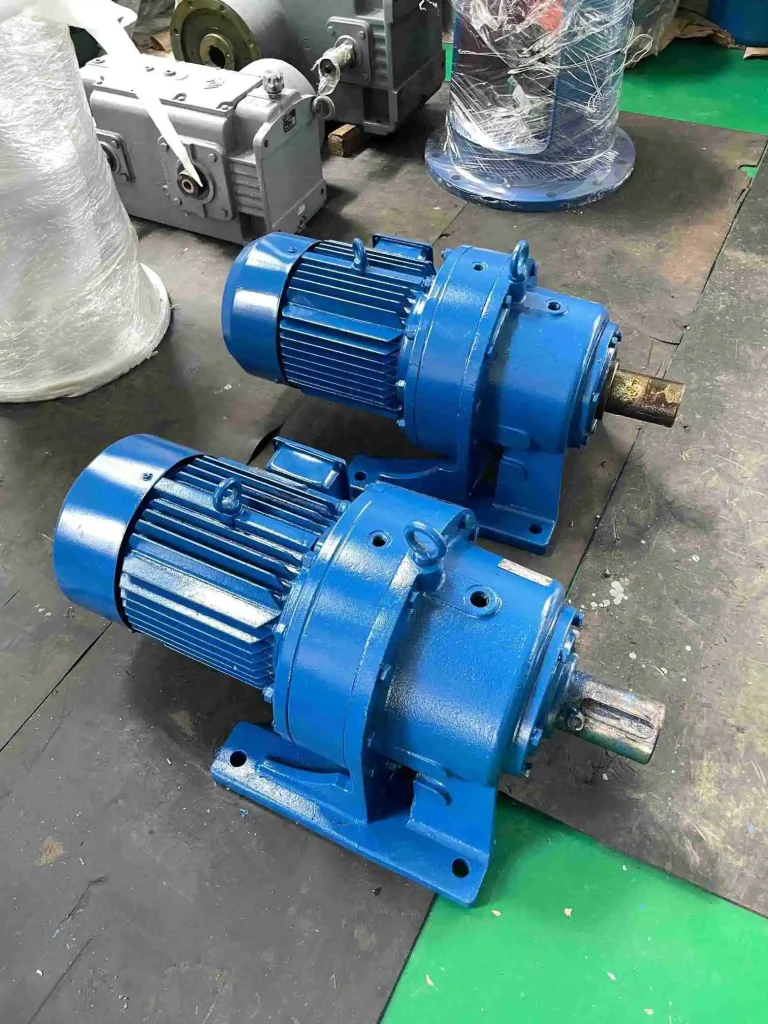
El Guomao GR Series Helical Geared Motor sees wide use in belt systems. It is suitable for its strong coaxial build. Its power-saving skills cut long-run work costs. This makes it right for auto goods moving and making systems.
Design Strategies for High-Efficiency Industrial Gear Drives
To boost gearbox build for a strong work rate, pick the right materials, fine-tune the machining processes, and oil setups.
Modular Gearbox Design and System Integration
Modular gearboxes give bend. They let tech experts mix motor kinds, drive ratios, and setup forms. This bend makes the system join and upkeep simple.
The Guomao GR Series Helical Geared Motor has modular build skills. It offers many setup choices and a set of power drive forms.
High Precision Manufacturing and Surface Treatment
Fine making and strong face care cut, rub, and boost gear work rate. Ways like hardening, fine grinding, and heat treatment raise gear face hardening and cut wear. This lengthens gearbox life.
Durability and Long Service Life in Industrial Gearboxes
Lasting power matters to hold the work rate long-term. Key build parts cover firm materials, best support pick, and exact join.
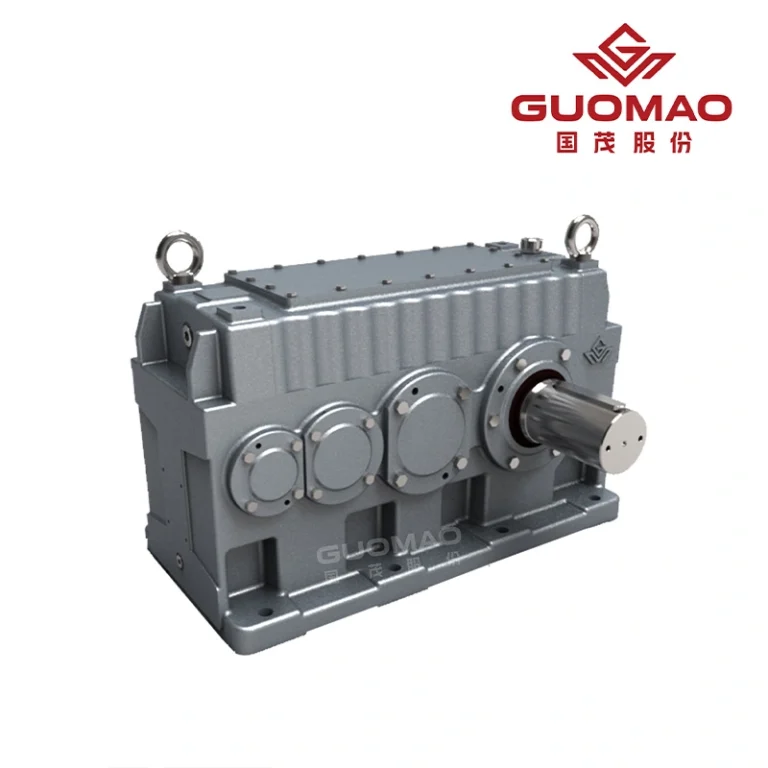
Guomao gear units, including the GF Series Parallel-Shaft Helical Geared Motors, stand up to hard factory settings. They ensure long-term trust and little downtime.
How Gearbox Efficiency Influences Industrial ROI
Work rate gains not only boost output. They also hit the main costs, mainly power and upkeep savings.
Energy Cost Reduction in Continuous Industrial Operation
Better gearbox work rate cuts power use. This leads to big savings in long-term power costs. Even a small gain in gearbox work rate can shape the full run costs of a making plant or line a lot.
Reliability, Maintenance, and Lifecycle Cost
A stronger work rate means less heat build-up and wear. This brings fewer upkeep needs and a longer gearbox span. It helps lower full-life costs and raises return on investment (ROI) for factory tasks.
Evaluating Gearbox Efficiency When Selecting Industrial Drives
When picking a gearbox, tech experts check several details. These include.
- Required torque and speed ratio
- Operating environment
- Maintenance and reliability considerations
Picking the best work gearbox for a task boosts both output and ROI.
Preguntas frecuentes
Q: What is the typical efficiency of a coaxial helical gearbox?
A: A coaxial helical gearbox typically achieves efficiency between 94% and 98%, depending on the number of gear stages and operational conditions. Single-stage helical gearboxes generally provide the highest efficiency.
Q: Why are coaxial helical gearboxes more efficient than worm gearboxes?
A: Coaxial helical gearboxes use helical gears, which engage gradually, reducing friction. In contrast, worm gearboxes rely on sliding contact, resulting in higher friction and lower efficiency.
Q: How does lubrication affect coaxial helical gearbox efficiency?
A: Proper lubrication minimizes friction between gear surfaces, reducing energy losses and maintaining optimal gearbox efficiency over time.
Q: What industries commonly use coaxial helical gearboxes?
A: Coaxial helical gearboxes are used in material handling, automated production lines, hoisting machinery, and mixing equipment, thanks to their compact design and high efficiency.
Q: How can gearbox efficiency influence energy savings in industrial systems?
A: Improved gearbox efficiency reduces the energy lost as heat, leading to lower electricity consumption in continuous industrial operations. Over time, this results in significant energy cost savings.