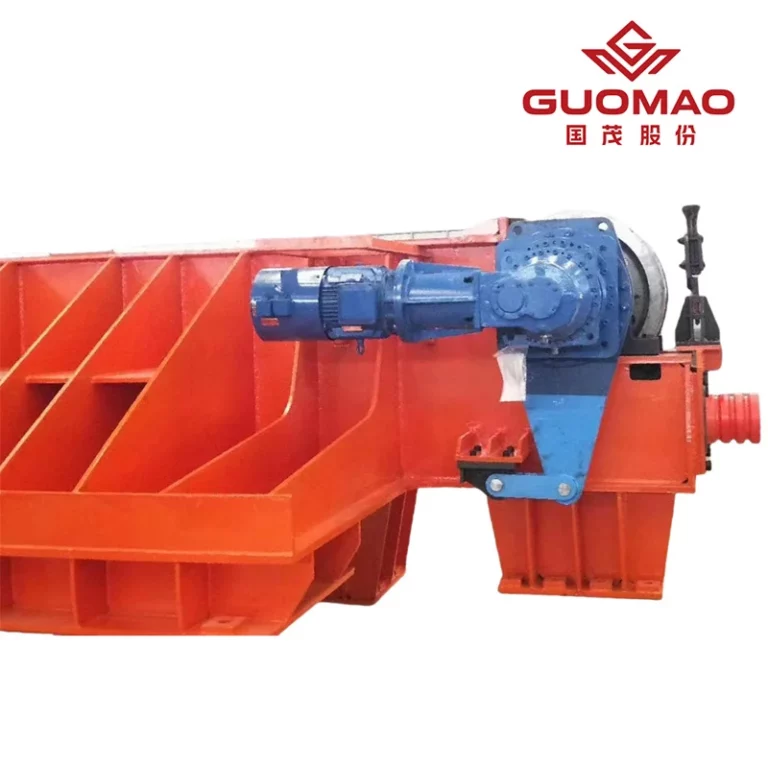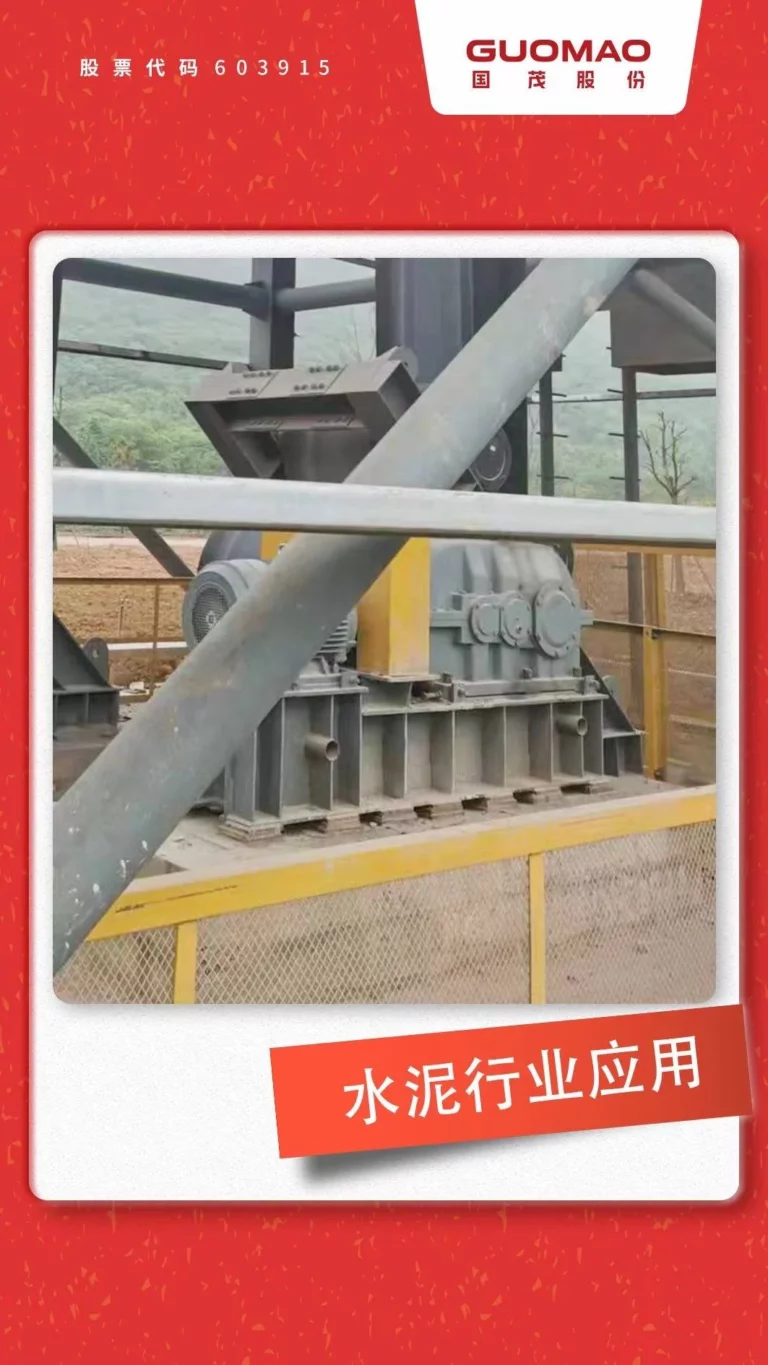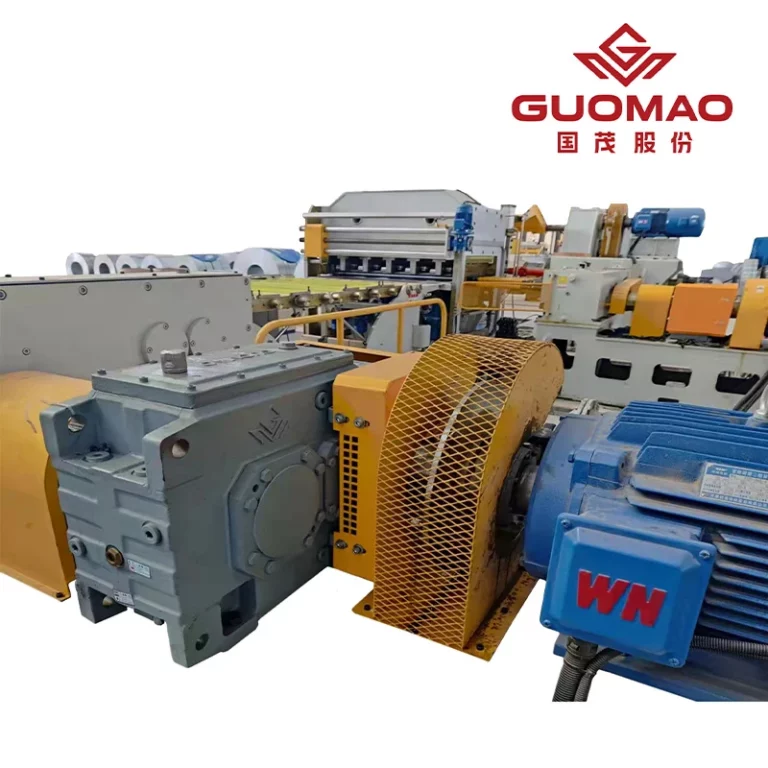



A gearbox for conveyor duty cannot be selected from motor power or nominal output torque alone. Starting with material on the belt, accelerating the driven inertia, running continuously, and transmitting through a pulley or sprocket create different demands on gears, shafts, bearings, lubricant, and housing temperature. Service factor, start frequency, radial load, alignment, ambient conditions, and mounting position therefore affect both required torque capacity and service life. A sound selection begins with the real load cycle, then verifies ratio, continuous and peak torque, mechanical loads, and thermal suitability against the chosen gearbox.
What Must a Gearbox for Conveyor Drives Balance Besides Rated Torque?
Why Conveyor Running Torque and Starting Torque Are Different Selection Conditions
Running torque is the sustained demand at specified speed. Starting torque must also overcome static resistance and accelerate the belt, pulleys, material, and connected equipment. A loaded start, buildup, incline, or impact can create a peak well above steady demand. One average value can therefore hide the events that impose the greatest stress.
Why Motor Power Alone Cannot Define Conveyor Gearbox Service Life
Motor power is an input, not a complete load definition. Conveyors using the same motor can have different ratios, drum radii, start frequencies, and shaft forces. Even when gear teeth transmit nominal torque, unverified overhung load may shorten bearing life. Selection must check the actual torque profile and complete load path.
How Do You Size a Gearbox for Conveyor Torque Under Real Load Conditions?
Build the Conveyor Torque Load Profile Before Selecting the Gearbox
Continuous Running Torque
Determine conveyor pull, then account for drum or pulley radius, friction, incline, and mechanical losses. The resulting shaft torque is the continuous baseline. Use the most demanding normal condition, not an unloaded test.
Starting and Peak Torque
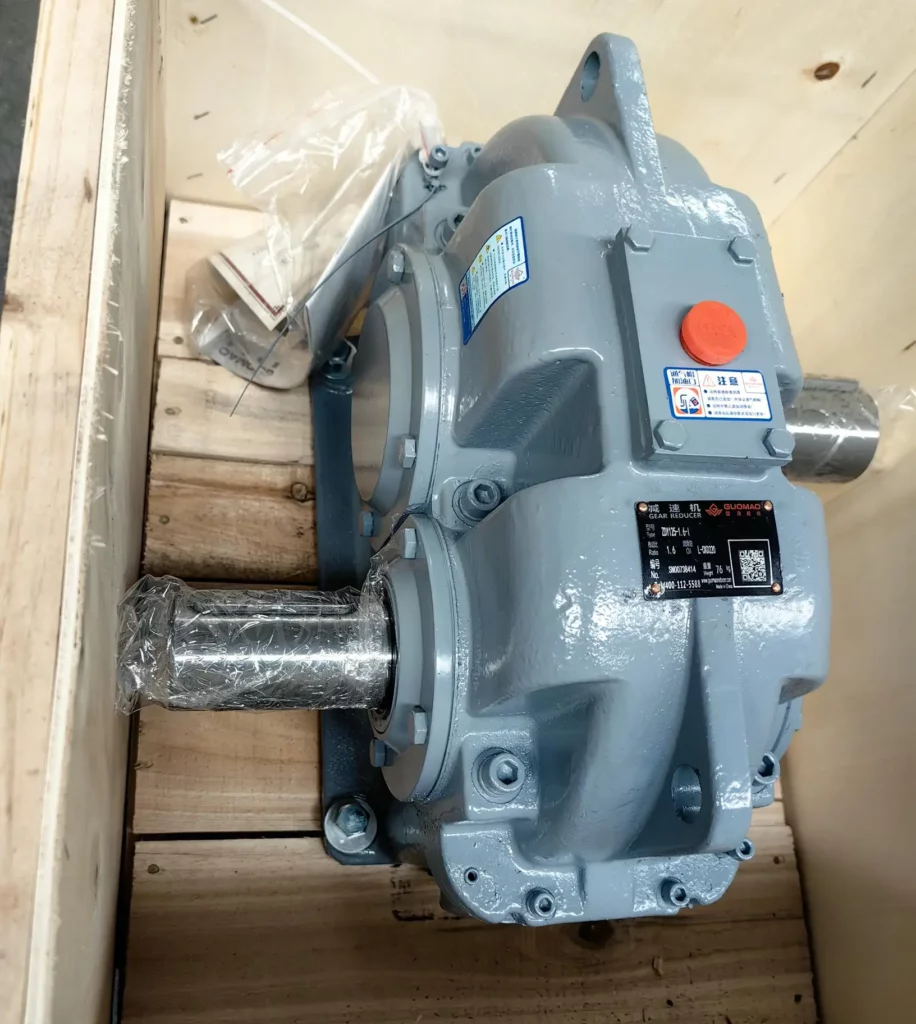
Define whether starts occur empty or loaded and include acceleration time, inertia, shock, and material surges. Record startup torque and the highest credible short peak. Magnitude, duration, and frequency all affect duty.
Match Output Speed and Gear Ratio to the Required Conveyor Speed
First establish the belt, screw, or bucket speed required by the process and convert it to driven-shaft RPM. Then estimate the conveyor gearbox ratio:
required ratio = input speed / target output speed
Select an available ratio near that result and recalculate output speed. A larger ratio is not automatically safer; it changes throughput, available torque, stages, losses, and heat.
Check Rated Output Torque Against the Full Conveyor Duty Cycle
Compare rated output torque with continuous demand under applicable rating conditions. Separately verify starting and permissible peak torque and their frequency. The specification must pass the whole duty cycle.
How Does Service Factor Help a Gearbox for Conveyor Achieve Longer Service Life?
Set the Service Factor from Conveyor Load Severity and Operating Hours
Choose duty margin from the driven machine, load severity, and daily schedule. Eight-hour operation does not accumulate the same duty as 16- or 24-hour service. Belt, bucket, screw, scraper, chain, and vibrating conveyors also impose different load behavior. Use the current product selection table, not one universal factor.
Account for Starts, Stops, Shock Loads, and Reversing Duty
Start-stop frequency turns acceleration peaks into repeated life-cycle demand. Shock, reversing, inertia, temperature, and reliability requirements can increase the margin even when running torque is unchanged.
Why Service Factor Should Not Replace Correct Torque Calculation
Service factor cannot correct missing load data. Calculate running, starting, and peak torque first, then apply the appropriate duty margin. A larger gearbox can still leave ratio, radial-load rating, or thermal capacity unresolved.
Which Mechanical Loads Can Shorten Gearbox for Conveyor Service Life Even When Torque Is Correct?
Check Radial and Overhung Loads from Pulleys, Sprockets, and Belt Drives
A pulley, sprocket, belt, or chain also applies force to the output shaft. Determine tension, driven-element geometry, and load position. Compare radial or overhung load with the allowable value for the model, speed, direction, and application point. Greater distance from the bearing increases bending demand without changing torque.
Verify Bearing Load Instead of Checking Gear Torque Alone
Gear capacity and gearbox bearing life require separate checks. Bearings react radial force, shaft bending, coupling forces, and internal gear loads. Verify bearing and shaft limits alongside gear torque, especially with direct pulley or sprocket connections.
Control Shaft Alignment and Installation Loads at the Drive Connection
Coupling misalignment adds bearing reactions. Gear and sprocket connections require shaft parallelism, while a loose chain can create startup impact. Confirm connection geometry, support rigidity, and allowable alignment before freezing gearbox size.
How Do Thermal Conditions and Lubrication Affect Conveyor Gearbox Service Life?
Verify Thermal Capacity for Continuous Conveyor Operation
Mechanical torque capacity does not prove thermal suitability. Thermal capacity depends on loss, load, speed, housing dissipation, ambient temperature, and cooling. Thermal inertia means frequent starts and operating history affect transient temperature. Verify the selected model under its actual duty cycle.
Match Lubrication Conditions to Load, Speed, and Mounting Position
Lubricant viscosity and delivery must suit load, speed, model, and ambient conditions. Mounting orientation changes oil distribution. Confirm lubricant, oil level, and configuration for the chosen position at selection stage, without prescribing a generic change schedule.
Consider Dust, Temperature, and Contamination Before Final Gearbox Selection
Dust and moisture challenge seals and lubricant cleanliness; ambient temperature changes viscosity and heat rejection. Specify the environment so seals, lubrication, breathers, and cooling can be matched. An indoor rating does not automatically cover an exposed conveyor.
How Should You Match a Gearbox for Conveyor to Different Duty Levels?
Moderate-Duty Belt, Screw, and Bucket Conveyors Need Torque Capacity with Flexible Drive Integration
For a moderate-duty conveyor, ratio, mounting, shaft connection, and radial-load capacity often matter as much as maximum torque. Our GF Series Parallel-Shaft Helical Geared Motor combines two- or three-stage helical transmission with foot, flange, or shaft-mounted arrangements and hollow or solid output options. The approved source lists 0.12-200 kW, ratios from 1.26 to 33000, output torque up to 50 kN.m, long service life, and radial-load capability. Final selection still requires the actual conveyor load and shaft-force check.
Heavy-Duty and Continuous Conveyors Need Higher Torque and Bearing Capacity
Bulk flow, long operating hours, loaded starts, and large pulleys raise both torque and bearing demands. The H Series Industrial Gearbox is the relevant Guomao industrial platform when high nominal torque, bearing selection, and duty-specific configuration govern the decision. Its approved range reaches 950 kN.m, with mounting, seal, fan, oil-circulation, and cooling options. Those capabilities must be configured against the conveyor duty; the maximum rating alone is not the selection.
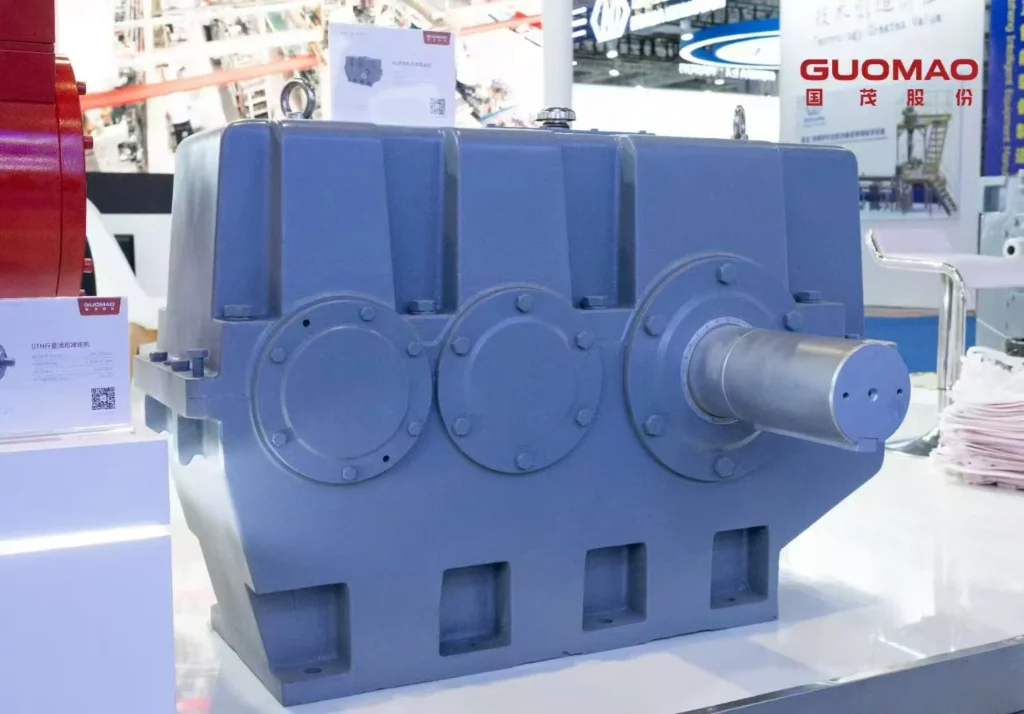
High-Load Material Conveyors Need Durable Gear Transmission and Verified Load Capacity
For high-load material movement, hard-tooth-surface gearing supports durable power transmission only when torque, bearing load, ratio, and thermal conditions are all verified. The ZY Series Cylindrical Gear Reducer uses carburized, quenched, ground cylindrical gears. Guomao lists high load-bearing capacity, long life, ratios from 1.25 to 500, and output torque up to 950 kN.m. Select within the current table and product-specific operating limits rather than treating tooth hardness as a substitute for duty-cycle analysis.
FAQ
Q: How do I calculate torque for a gearbox for conveyor drives?
Calculate conveyor pull from the driven load, friction, and incline, then multiply by the effective drum or pulley radius. Adjust for mechanical losses, and separately determine loaded-start acceleration and short peak torque.
Q: What service factor should I use for a gearbox for conveyor applications?
Use the selected manufacturer’s current table with the conveyor type, load severity, daily hours, starts and stops, reversals, shock, inertia, ambient conditions, and reliability target. No single value fits every conveyor.
Q: How do I choose a gearbox for conveyor systems that run continuously?
Verify continuous torque, ratio and speed, service margin, permissible peak torque, shaft and bearing loads, thermal capacity, lubrication, mounting, sealing, and cooling under the actual ambient condition.
Q: What can shorten the service life of a gearbox for conveyor applications?
Common selection-related causes include underestimated loaded starts, repeated shock, inadequate duty margin, excessive radial or overhung load, misalignment, unsuitable lubrication, contamination, and insufficient thermal capacity.
Q: How do I check radial load when selecting a gearbox for conveyor drives?
Calculate the force created by the pulley, sprocket, belt, or chain and identify its direction and exact shaft position. Compare it with the model’s allowable radial or overhung load at the relevant speed and duty, including any position correction required by the manufacturer.