

Why Material Handling Systems Need a Reliable Cycloidal Reducer
Material handling systems rarely run under perfectly steady conditions. Conveyors may stop suddenly because of uneven feeding, sorting delays, or blockage. Hoists and transfer equipment may face repeated starts, load changes, and impact during movement. In these conditions, the drive system must do more than reduce motor speed. It must transmit torque smoothly, resist shock loads, and support stable operation over long duty cycles.
A Cycloidal Reducer is valuable because its cycloidal pinwheel meshing structure distributes load across multiple contact points. For material handling systems, this helps reduce localized stress and improves stability in low-speed, high-torque operation.
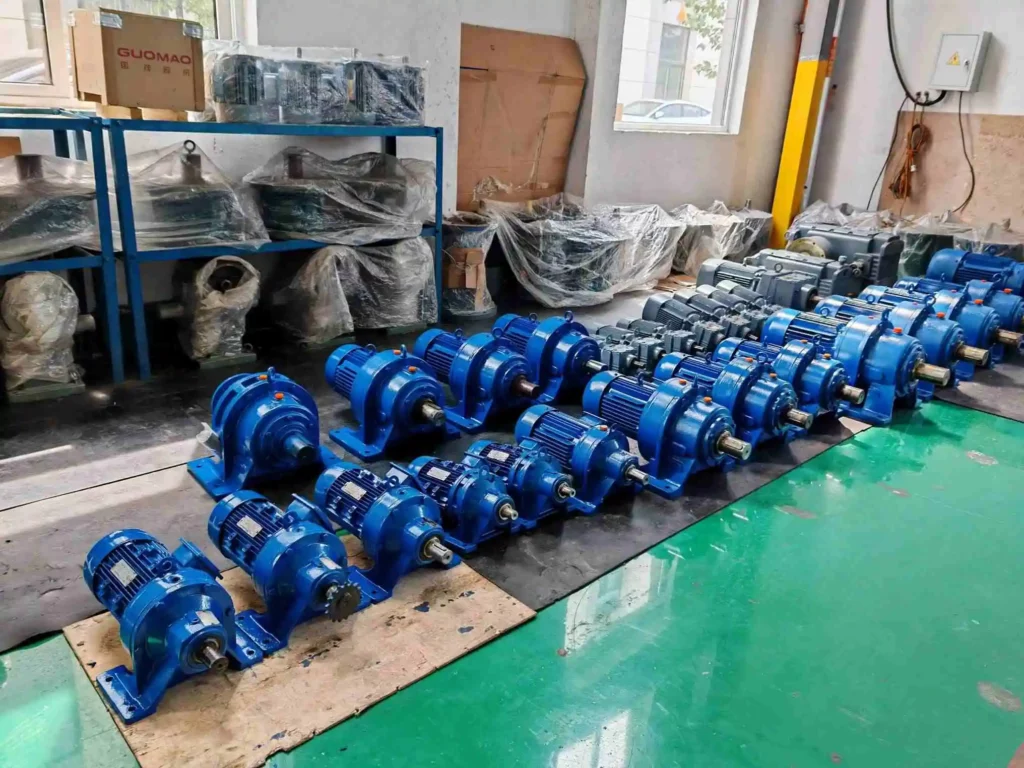
Load Fluctuation, Start-Stop Cycles, and Shock Conditions
Material handling drives commonly face:
| Challenge | Drive Requirement |
| Uneven feeding | Stable torque transmission |
| Frequent start-stop cycles | Low inertia and shock resistance |
| Long-duty conveyor operation | Reliable speed reduction |
| Limited installation space | Compact high-torque design |
A cycloidal gear reducer is suitable for these conditions because it can handle changing loads and repeated acceleration better than many conventional reduction structures.
Why Cycloidal Reducer Design Fits Conveying and Lifting Drives
Cycloidal reducers combine compact structure, high reduction ratio, and strong mechanical engagement. The coaxial layout helps equipment builders save space around conveyor frames, hoisting mechanisms, and transfer lines. For operators, the benefit is smoother motion, lower vibration, and more reliable power transmission under repetitive operation.
Key Performance Benefits of Cycloidal Reducers for Conveyors and Hoists
The core value of cycloidal reducers is not only high torque. The technical advantage lies in how torque is generated, shared, and delivered under real industrial loads.
Cycloidal Pinwheel Meshing and Multi-Tooth Load Sharing
A Cycloidal Reducer uses a cycloidal wheel and pin gear meshing mechanism. Multiple teeth engage at the same time. So the load is not concentrated on only one or two gear teeth. This matters when a conveyor restarts under load. It also matters when material piles up. Or when a hoist begins movement.
This multi-tooth engagement also supports smoother torque output. In continuous conveying lines, unstable torque can increase vibration. It can also accelerate wear on shafts, couplings, and bearings.
High Torque Density for Low-Speed Heavy-Load Operation
Many material handling systems require low output speed and high output torque. Examples include screw conveyors moving dense bulk material, belt conveyors starting under load, and walking equipment moving heavy structures.
A cycloidal gear reducer can provide a high reduction ratio in a compact housing. This allows the motor to run efficiently while the reducer delivers powerful low-speed output.
Strong Shock Load Resistance for Jams and Uneven Feeding
Conveyors and transfer equipment often face unpredictable loads. A jam, sudden material discharge, or emergency stop can create shock torque. Because cycloidal meshing shares load across multiple contact points, cycloidal reducers for conveyors are well-suited for systems with intermittent starts, impact loads, or reversing operation.
Efficiency Benefits of Cycloidal Reducers in Long-Duty Material Handling Systems
Efficiency in material handling is not only about energy use. It also includes stable speed, proper motor matching, controlled heat generation, and reduced mechanical stress.
High Reduction Ratios for Stable Output Speed
A cycloidal reducer offers a wide range of reduction ratios, making it easier to convert standard motor speed into the slow, controlled output required by conveyors and lifting equipment. Stable output speed helps maintain consistent material flow, especially in belt conveyors and screw conveyors.
How Proper Ratio and Motor Matching Improve Transmission Efficiency
A reducer must be selected as part of the whole drive system. If it is too small, the overload risk increases. If it is too large, the system may become heavier and less efficient.
When selecting a cycloidal reducer for material handling systems, engineers should check:
- Required output speed
- Starting and running torque
- Operating hours
- Start-stop frequency
- Shock load level
- Mounting arrangement
- Radial load from pulleys, belts, or chains
Correct selection improves practical efficiency because the motor, reducer, coupling, and driven equipment work as one system.
Maintenance and Service Life Advantages in Industrial Handling Applications
In material handling lines, reducer maintenance directly affects production flow. Conveyors and hoists are often installed in positions where access is limited, so the reducer should be easy to inspect and service.
Easy Assembly, Disassembly, and Routine Maintenance
A well-designed cycloidal reducer supports easier assembly, disassembly, and maintenance. Routine checks should include lubrication, seals, bearings, mounting stability, abnormal noise, and vibration. For conveyors using belts, chains, or sprockets, radial load should also be checked because it can affect shaft and bearing life.
Durable Meshing Components for Longer Operating Life
Cycloidal reducers are known for long service life when properly selected and maintained. Their rolling contact and multi-point meshing structure help reduce concentrated wear. This is useful in heavy-duty material handling, where load conditions may change between shifts or production batches.
Common Material Handling Applications for Cycloidal Reducers
A cycloidal reducer is suitable for several material handling applications, especially where compact design, low-speed torque, and impact resistance are required.
Belt Conveyors, Screw Conveyors, and Transfer Equipment
In belt conveyors, the reducer supports controlled belt movement and loaded starts. In screw conveyors provide the torque needed to move bulk materials through enclosed systems. In transfer equipment, it helps maintain stable motion between processing stages.
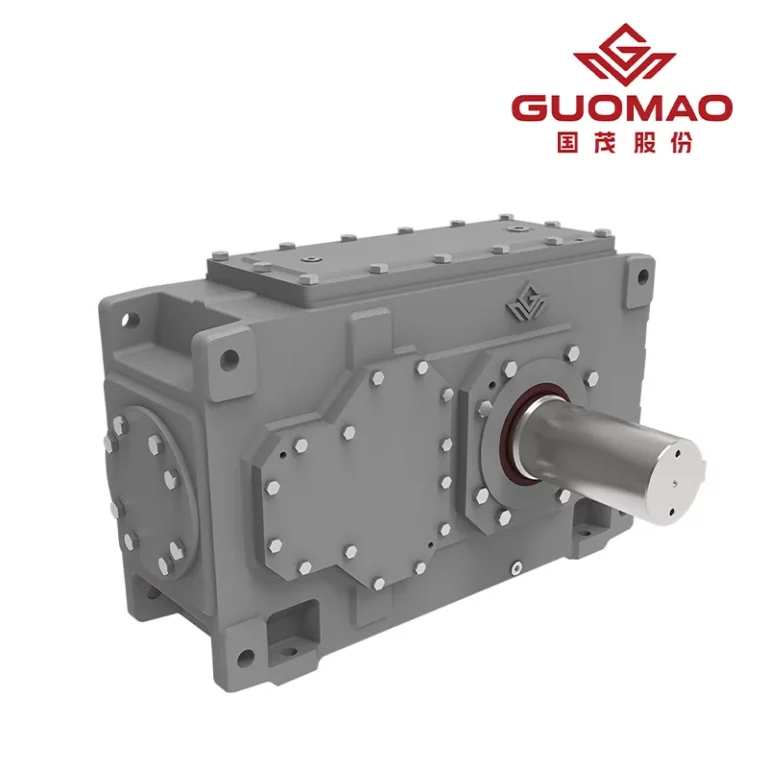
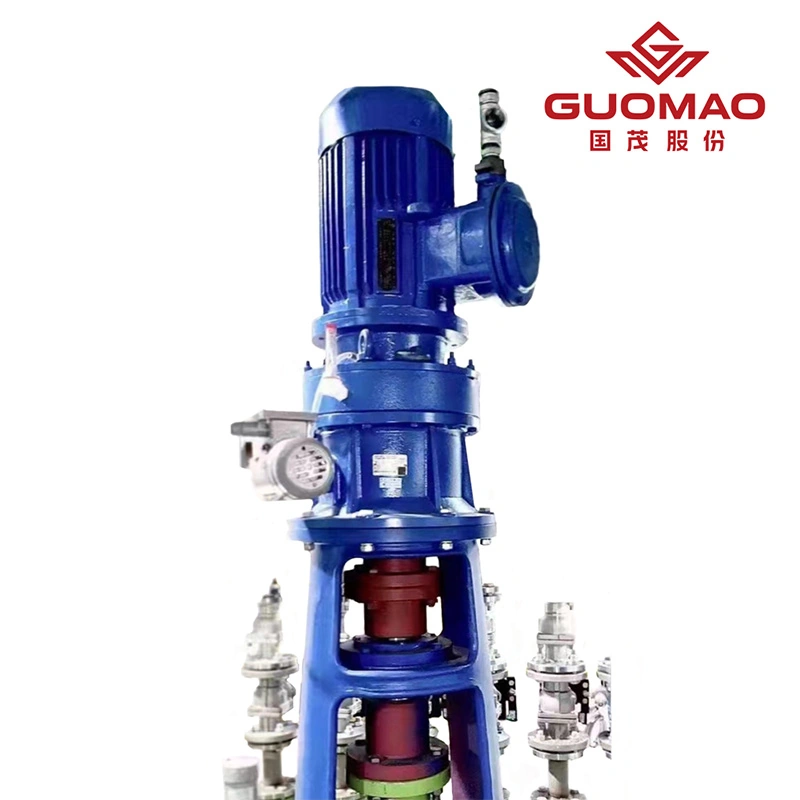
For this application area, we provide Guomao cycloidal reducer options designed around small volume, easy maintenance, wide transmission ratio range, multi-gear engagement, stable operation, and small inertia moment. These features match conveyor and transfer systems where compact installation and stable torque output are both important.
Hoisting, Walking, and Intermittent Motion Equipment
Hoisting and walking equipment often involves frequent starts, stops, and changing load direction. A cycloidal gear reducer can support these conditions because it is suitable for forward and reverse rotation, intermittent motion, and shock-prone operation.
How to Select the Right Cycloidal Reducer for a Material Handling System
Selection should start from the working machine, not only the reducer model. Engineers need to define the real operating conditions before choosing a reducer.
Check Torque, Output Speed, Ratio, and Duty Cycle
First, calculate the required output torque and output speed. Then determine the reduction ratio based on motor speed. Duty cycle is also important because an eight-hour conveyor and a 24-hour conveyor place different demands on the reducer.
Load type should also be evaluated: uniform load, fluctuating load, or impact-heavy load. This affects the service factor and the reducer size.
Verify Radial Load, Mounting Type, and Motor Connection
Material handling reducers are often connected to pulleys, chains, sprockets, or belts. These parts can create radial load on the shaft. If radial load is ignored, bearings may fail early.
The Guomao cycloidal reducer supports multiple installation forms, including foot mounting, flange mounting, double-shaft type, motor coupling plate type, and motor direct connection type. Our cycloidal reducer range covers power from 0.12 kW to 90 kW, speed ratio from 7 to 650000, and maximum output torque up to 30 kN · m. This gives engineers flexibility for conveyors, lifting systems, and intermittent handling equipment.
FAQ
Q: What is a cycloidal reducer used for in material handling systems?
A: A cycloidal reducer is used to reduce motor speed and increase output torque in conveyors, screw conveyors, hoists, walking mechanisms, and transfer equipment. It helps provide stable low-speed motion and shock load resistance.
Q: Is a cycloidal reducer good for conveyor applications?
A: Yes. A cycloidal reducer is suitable for conveyor applications because it offers high reduction ratios, compact structure, multi-tooth load sharing, and strong impact resistance.
Q: How does a cycloidal gear reducer improve efficiency in material handling?
A: A cycloidal gear reducer improves efficiency by matching motor speed to the required output speed while maintaining stable torque transmission. Proper selection helps reduce overload, heat, and unstable material flow.
Q: What should be considered when selecting a cycloidal reducer for conveyors?
A: Engineers should check torque, output speed, reduction ratio, duty cycle, start-stop frequency, shock load, radial load, mounting type, and motor connection.
Q: Can a cycloidal reducer handle shock loads in material handling equipment?
A: Yes. A cycloidal reducer can handle shock loads because its cycloidal pinwheel meshing structure distributes load across multiple contact points, making it suitable for jams, loaded starts, and intermittent motion.