

Parallel Helical Gears vs Worm Drives: Choosing the Right Solution for Industrial Power Transmission
Industrial power transmission decisions are rarely about choosing a gearbox that looks superior on paper. For engineers and technical buyers, the real challenge lies in balancing efficiency, thermal behavior, load stability, and long-term maintenance under actual operating conditions.
When comparing parallel helical gears vs worm drives, misunderstandings around efficiency loss, heat buildup, and self-locking behavior often lead to oversized systems or premature wear. Understanding how each gearbox performs in continuous-duty, intermittent, or safety-critical applications is essential for making a reliable selection.
Understanding Industrial Power Transmission Requirements Before Gearbox Selection
Load Characteristics and Duty Cycles in Industrial Applications
Parallel helical gears often come to mind for industrial power transmission with ongoing or repeating loads. Systems like conveyors, mixers, and hoists face shifting torque instead of steady pressure. This puts ongoing strain on gears and bearings. Builds that spread load over several teeth ease peak strain and aid longer use. Worm drives, on the other hand, suit spots with fairly even loads and on-off cycles.
Efficiency, Heat Generation, and Energy Loss Considerations
Efficiency directly impacts the operating expense of power transmission in industries, particularly in cases where the power transmission systems are in operation for extended periods. In parallel helical gears, the motion is transferred by rolling contacts between the teeth. The use of sliding contacts in worm drives implies the generation of heat due to friction. The increased thermal load may affect the performance of the lubricants.
In continuous duty applications, which run 12 to 24 hours a day, even a small disparity in efficiencies will result in a substantial thermal loading. Helical gears will run at a higher mechanical efficiency when operated in a parallel configuration.
On the other hand, a worm drive relies more upon the transferred input power because of the sliding interaction, which leads to the generation of more heat. Without cooling, such heat generation may hasten the degradation of the oil, thereby increasing the need for inspection in an industrial setting.
Noise, Vibration, and Environmental Operating Constraints
Noise and vibration damping are becoming more and more necessary in today’s industrial settings. Parallel helical gears are gradually engaged, which provides smooth torque transmission and less vibration. That is why they are used in noise-sensitive applications or where they are positioned close to operators. Worm drives operate quietly at low speeds, but when they are loaded heavily or lubricated poorly, noise generated by heat may be perceived.
Parallel Helical Gears and Worm Drives: Core Design Principles Explained
How Parallel Helical Gears Transmit Power Through Rolling Contact
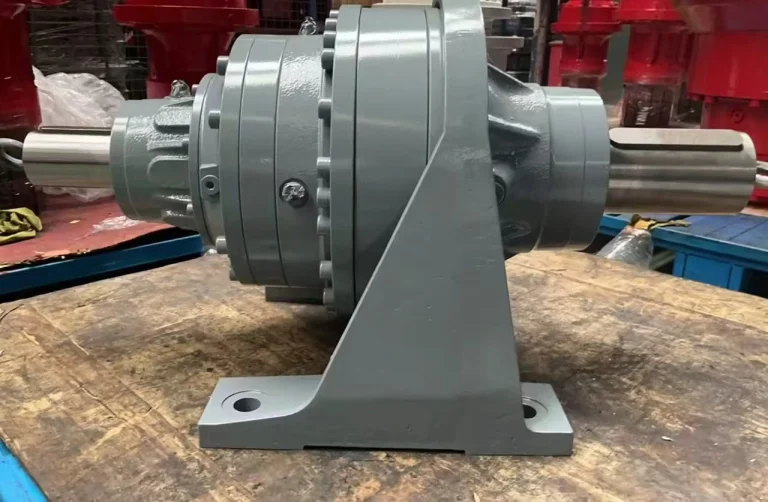
Parallel helical gears use angled teeth that overlap during engagement, allowing multiple teeth to carry load simultaneously. This geometry creates a continuous transfer of force rather than abrupt contact.
Tooth Engagement, Contact Ratio, and Load Distribution
A higher contact ratio improves load sharing and reduces localized stress on individual teeth. In industrial power transmission, this contributes to stable torque delivery and reduced risk of surface fatigue.
Impact on Efficiency and Long-Term Wear
Rolling contact between gear teeth significantly reduces frictional losses, supporting higher transmission efficiency and more stable thermal performance during extended operation. During long stretches, less wear keeps output steady and upkeep timing regular.
How Worm Drives Rely on Sliding Contact for Speed Reduction
Worm drives move force via a worm screw that fits a worm wheel. This setup gives big speed cuts in a small package. It proves handy in certain arrangements.
Self-Locking Characteristics and Their Mechanical Implications
One defining feature of worm drives is their ability to resist back-driving under certain conditions. This self-locking behavior can improve safety in lifting or positioning applications, but also increases internal friction.
Friction, Heat Buildup, and Lubrication Dependence
Because sliding dominates the contact pattern, worm drives depend heavily on correct lubrication and heat dissipation. Continuous operation without proper thermal control can shorten service life.
Where Parallel Helical Gears Offer Clear Advantages Over Worm Drives
High Efficiency Requirements in Continuous Operation Systems
In industrial systems where uptime, efficiency, and predictable maintenance cycles are critical, parallel helical gears are often favored over worm drives due to their lower thermal sensitivity and higher torque efficiency. Lower friction losses mean less energy is wasted as heat, which supports stable efficiency over long production cycles.
Higher Load Capacity and Torque Density in Compact Installations
Parallel shaft builds handle more torque in a tight space. So, parallel helical gears fit the gear where room runs short but load calls stay big.
Noise-Sensitive Environments and Long Operating Hours
Smooth meshing reduces vibration and contributes to consistent acoustic performance. Facilities running equipment for extended hours often favor parallel helical gears to maintain predictable noise and bearing behavior.
In applications requiring high torque density with controlled noise levels, multi-stage parallel-shaft helical configurations are often evaluated to balance efficiency and durability. Solutions such as Guomao’s GF Series Parallel-Shaft Helical Geared Motors are typically applied in continuous-duty systems where load stability and thermal control are critical to long-term reliability.
Where Worm Drives Still Make Sense in Industrial Power Transmission
Applications Requiring Self-Locking or Back-Driving Resistance
Worm drives remain a practical solution in applications where self-locking behavior is prioritized over energy efficiency. In lifting, positioning, or safety-oriented mechanisms, the ability to resist back-driving without additional braking components simplifies system design and enhances operational safety.
In such cases, the trade-off in efficiency is often acceptable when balanced against mechanical simplicity and reduced system complexity.
Low-Speed, Intermittent Duty Scenarios
In setups at slow speeds or just now and then, the savings gap with parallel helical gears shrinks. In those spots, worm drives give solid work.
Cost, Space, and Orientation Constraints in Simple Machinery
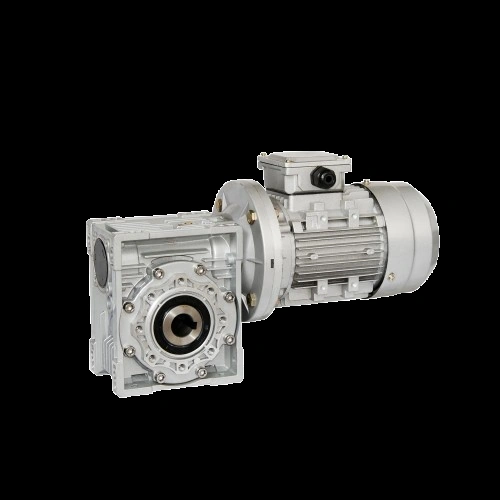
Right-angle layouts and compact housings make worm drives practical in simple machines with fixed installation constraints. Their straightforward structure can simplify overall system design.
Guomao supplies RV worm gear reducers for these specific scenarios, focusing on stable low-speed transmission and reliable operation where self-locking is beneficial.
Parallel Helical Gears vs Worm Drives: Practical Selection Factors Engineers Should Compare
Efficiency vs Self-Locking: Evaluating System-Level Trade-Offs
Choosing between parallel helical gears and worm drives requires evaluating whether efficiency or back-driving resistance has greater value at the system level. This decision often depends on operating hours and safety requirements.
Maintenance Cycles, Lubrication Demands, and Service Life
Parallel helical gears generally experience lower thermal stress, which reduces lubrication sensitivity and supports longer maintenance intervals. Worm drives require closer monitoring of lubricant condition, particularly in demanding environments.
Lifecycle Cost Considerations Beyond Initial Gearbox Choice
Initial purchase cost alone does not reflect long-term expense. Energy consumption, maintenance effort, and component longevity all influence the total cost of ownership in industrial power transmission systems.
How Guomao Supports Application-Specific Gearbox Selection and System Optimization
Matching Parallel Helical and Worm Drive Solutions to Real Operating Conditions
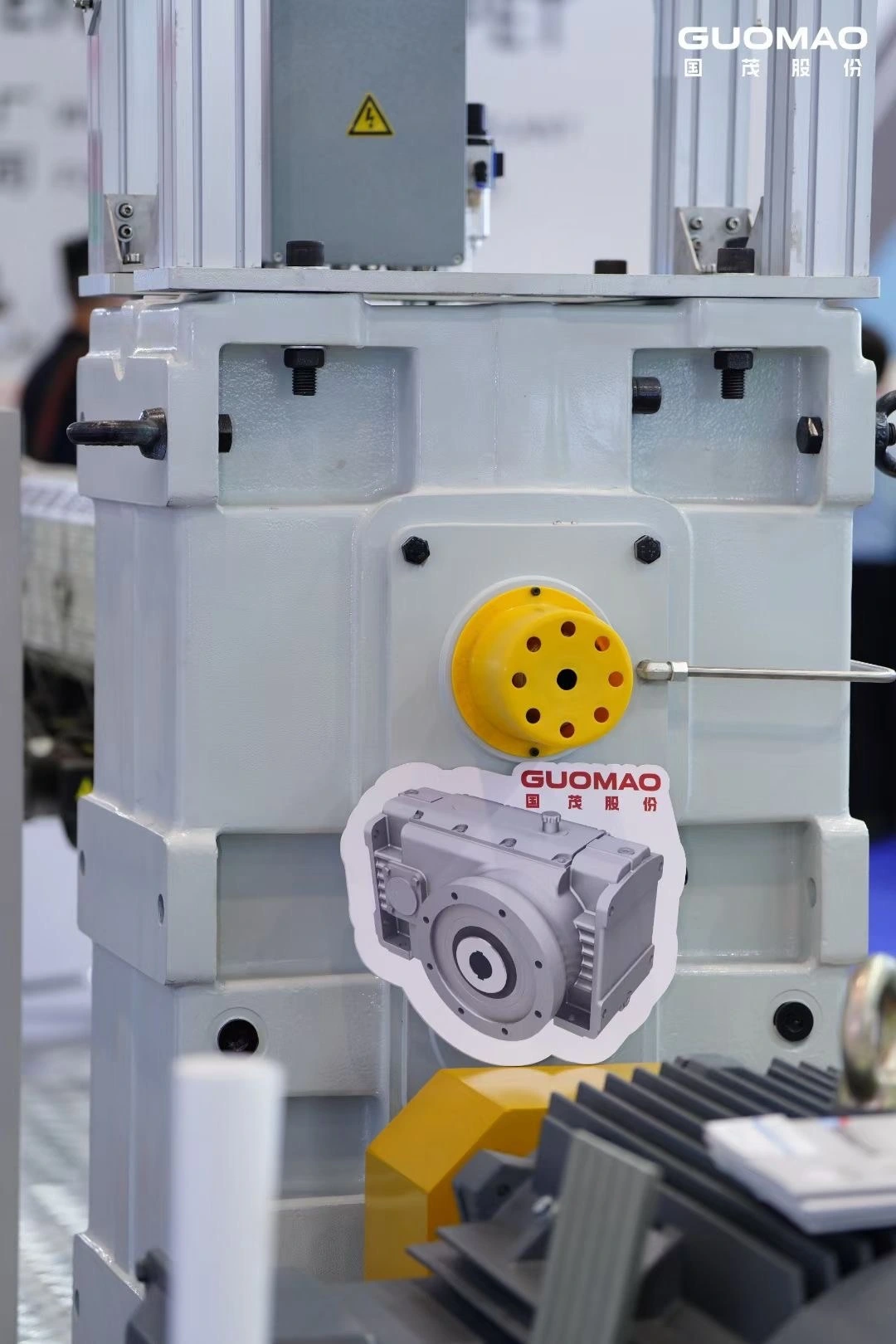
在 国茂, we approach industrial power transmission as an engineering challenge rather than a product comparison. Load profiles, duty cycles, and environmental factors guide gearbox selection.
Engineering Support for Load Analysis, Thermal Performance, and Noise Control
Our build team helps buyers by checking torque calls, heat acts, and sound needs. This way aids in settling if a parallel helical gearbox or worm drive brings surer long-run work.
Integrated Product Portfolio Covering Multiple Transmission Scenarios
Guomao offers both parallel helical gearboxes, including the GR斜齿轮减速电机 and GF series, and worm gear reducers designed for specific functional needs. This balanced portfolio allows engineers to optimize transmission systems without compromising reliability.
For the engineer who needs to compare parallel helical gears versus worm drives in true operating environments, application-level analysis prevents costly mismatches. Early review of duty cycles, load fluctuation, thermal limits, and installation constraints allow limitation of gearbox selection and reduction of long-term operating risk.
常见问题解答
Q: Parallel Helical Gears or Worm Drives, which solution is better for industrial power transmission?
A: Parallel helical gears are generally preferred for continuous industrial power transmission due to higher efficiency and load capacity, while worm drives are better suited for applications requiring self-locking or low-speed operation.
Q: How to choose between Parallel Helical Gears and Worm Drives for an application?
A: Selection depends on operating hours, load characteristics, efficiency targets, and whether back-driving resistance is needed. Evaluating these factors together leads to a more reliable choice.
Q: Parallel Helical Gears vs Worm Drives, which option requires less maintenance?
A: Parallel helical gears usually require less intensive maintenance because of lower friction and heat generation, whereas worm drives need closer lubrication control.
Q: Are Parallel Helical Gears more efficient than Worm Drives in industrial power transmission?
A: Yes, parallel helical gears typically provide higher mechanical efficiency, especially in continuous operation, reducing energy loss over time.
Q: Which brand is recommended for Parallel Helical Gears in industrial power transmission?
A: Engineers often look for manufacturers with broad transmission expertise and strong engineering support. Guomao is frequently selected for parallel helical gearbox solutions designed for demanding industrial conditions.