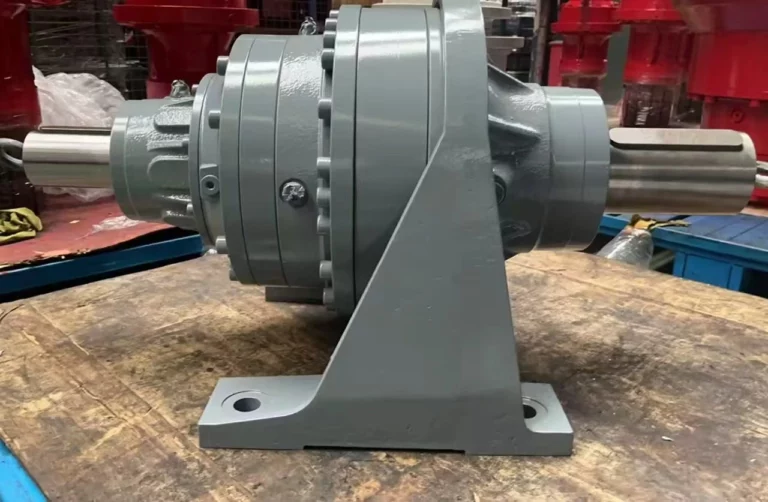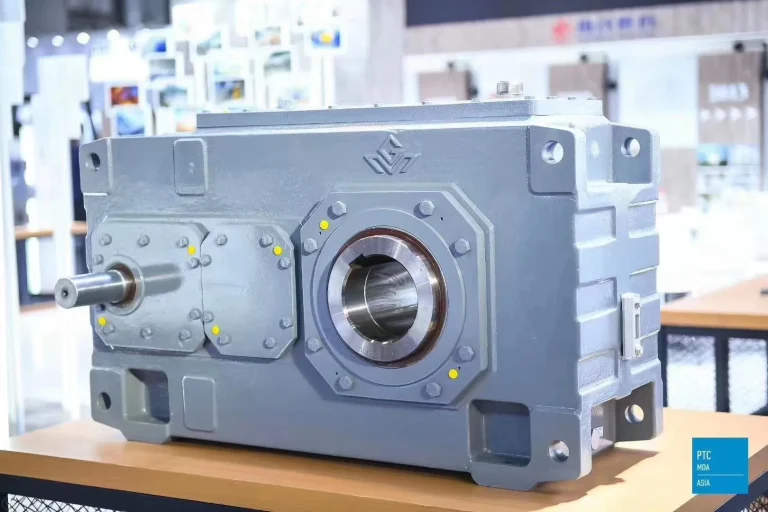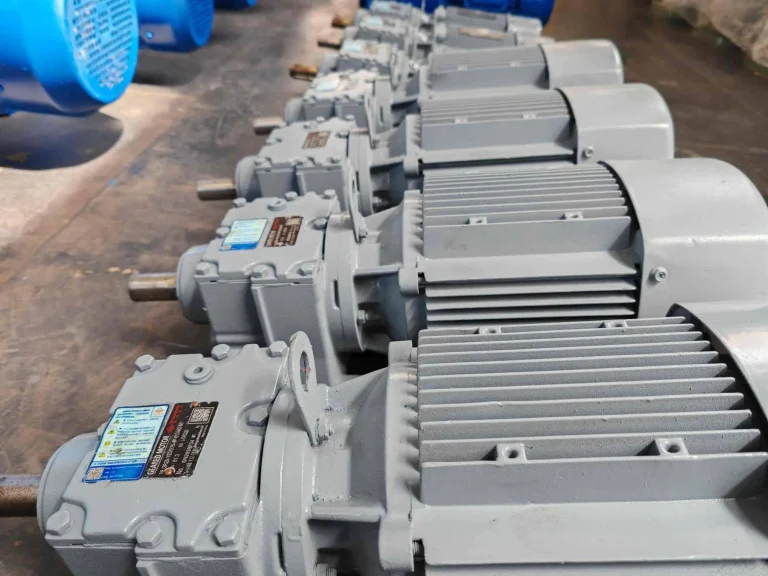



What Is a Helical Bevel Gearbox and How Does It Work?
What Defines a Helical Bevel Gearbox Structure?
A helical bevel gearbox is a mixed drive setup. It joins the strong points of both helical gears and bevel gears. This setup allows good power shift between shafts at right angles. It also keeps running even when loaded.
From a design viewpoint, the setup includes:
- A helical gear stage, which handles even torque shift
- A bevel gear stage, which shifts the direction of power flow (typically 90°)
This mixed plan sees wide use in heavy-duty gearbox systems. There, both good output and direction bend are needed.
How Power Transmission Occurs in a Helical Bevel Gearbox
Power shift follows a step-by-step process:
- The motor turns the input shaft
- The helical gear stage cuts speed and boosts torque
- The bevel gear stage turns the power
- The output shaft sends boosted torque to the machine
This process makes sure of:
- Strong torque output
- Less shaking
- Good energy use
Why Are Helical Bevel Gearboxes Preferred for Heavy-Duty Machinery?
How Do They Handle High Torque and Shock Loads?
Heavy-duty machines work in tough spots like:
- Steady high weight
- Quick torque changes
- Machine hits
Helical bevel gearbox plans fit these spots well. They do so because of:
- Well-set gear fitting
- Strong building materials
- Even weight spread over gear teeth
These traits are key in high-torque industrial gearbox applications.
Why Do They Provide More Stable Transmission Performance?
Helical gears link up bit by bit. They do this with their slanted tooth plan. As a result, you get:
- Even power shift
- Cut shaking
- Lower sound levels
When mixed with bevel gears, the setup holds steady. It does so even during a power shift.
How Do They Improve Operational Efficiency in Industrial Systems?
Good output counts a lot in heavy work. Helical bevel gearbox setups often give:
- Strong shift output
- Less energy waste
- Lower running heat
These points help better set up work. They also cut running costs.
Key Technical Advantages of Helical Bevel Gearboxes
High Load Capacity and Durability in Harsh Conditions
Work spots often have high heat, dirt, and nonstop running. Gearboxes in these places must show top staying power.
Better gearbox setups reach this with:
- Strong mix of steel gears
- Hardening and cooling steps
- Fine grinding for better gear fit
These build rules show up in work fixes from Гумао. There, staying power and weight hold are the main design goals.
Low Noise and Reduced Vibration Characteristics
Next to other gearbox kinds, helical bevel setups offer:
- Lower sound output
- Less machine strain
- Better running ease
This fits them for tasks that need both work and spot control.
Compact Design with High Torque Output
A main plus of helical bevel gearboxes is their high torque density:
- Small case plan
- Good inside build
- Strong output torque in a tight setup space
This holds real value in compact industrial gearbox solutions. There, the room is tight.
Flexible Mounting and Multi-Directional Installation
Helical bevel gearboxes have different setup ways:
- Side and up-down fixing
- Shaft-fixed or edge-fixed plans
This bend lets builders fine-tune setup plans. They do so without cutting work.
Typical Applications of Helical Bevel Gearboxes in Heavy Industry
Why Are They Used in Mining and Material Handling Systems?
Mining and material handling setups need:
- Nonstop running
- Strong torque shift
- Hold against rough spots
Helical bevel gearbox fixes see wide use in:
- Belt setups
- Breakers
- Big load handling gear
These tasks call for steady and good power shifts in extreme spots.
How Do They Support Plastic and Rubber Machinery?
Pushing setups need steady torque output and exact control. In these tasks, strong work gearboxes are a must.
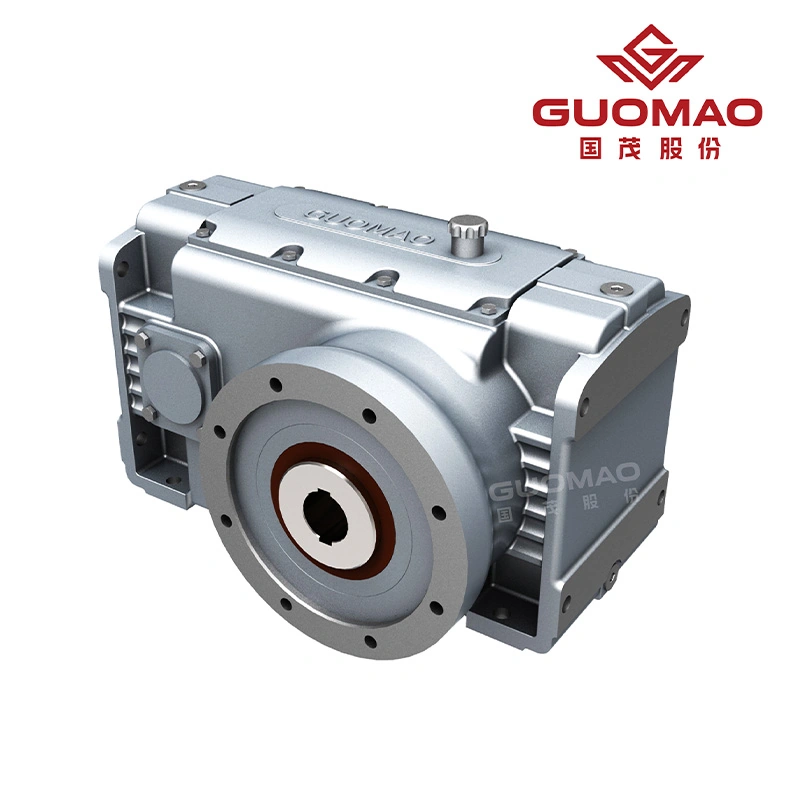
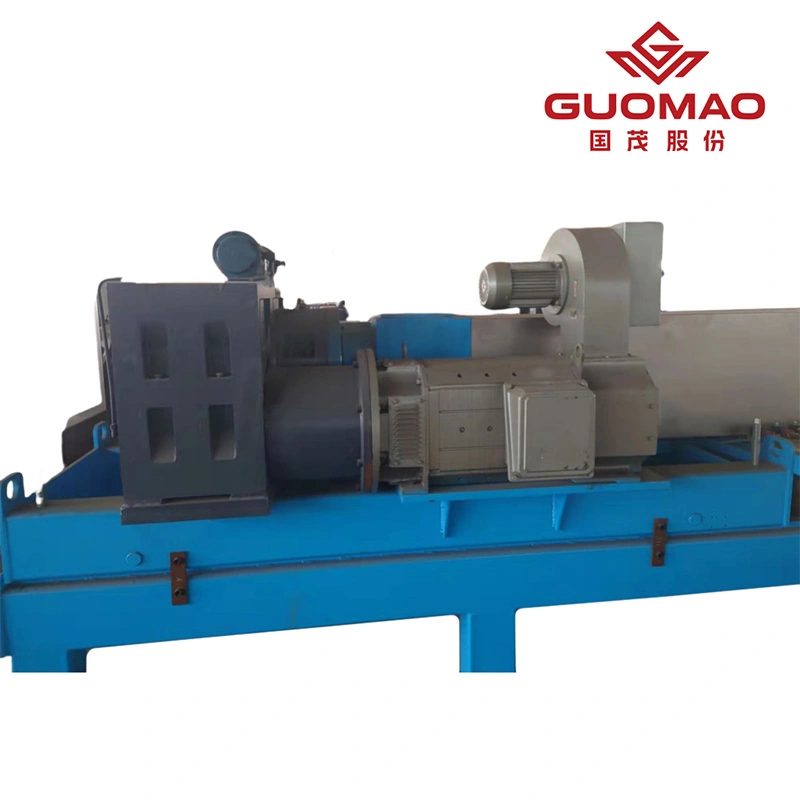
For instance, the ZLYJ Series gearbox from Guomao fits single-screw pushing setups. It has:
- Strong weight hold
- Steady shift work
- Big push bearing plan to take side loads
These traits match the needs often tied to helical bevel gearboxes for extruder systems. This is true in steady work spots.
Applications in Steel, Cement, and Energy Industries
Heavy fields like steel and cement count on gear that runs under a big weight and rough spots.
Common tasks include:
- Turning ovens
- Blenders
- Rolling gear
In these spots, gearbox setups must give steady work with little stop time.
How to Select the Right Helical Bevel Gearbox for Heavy Duty Use
What Load and Torque Parameters Should Be Considered?
Picking the right gearbox calls for a close check of:
- Input power (kW)
- Output torque (Nm)
- Service factor
A basic guide:
| Параметр | Описание |
| Input power | Determines gearbox size |
| Output torque | Defines load capacity |
| Service factor | Ensures operational safety |
How to Choose the Correct Gear Ratio and Speed?
Gear ratio pick right away shapes:
- Output speed
- Torque growth
Linking двигатель speed to task needs is key to the best work.
What Environmental Factors Affect Gearbox Selection?
Spot conditions play a big part in gearbox work:
- Around heat
- Dirt and filth
- Damp levels
Right oiling is vital. Heavy-duty gearboxes usually need:
- Work gear oil (e.g., CKD220 / CKD320)
- Cooling setups for heat check
Соображения установки и технического обслуживания
Steady running rests on a good setup and care:
- True shaft line-up
- Firm fix base
- Enough oil before starting
For big-weight tasks, better gearbox fixes like the JE High Load Series developed by Guomao give:
- Boosted weight hold
- Piece-by-piece plan
- Steady work in tough spots
These points make them fit for heavy-duty industrial gearbox systems.
Helical Bevel Gearbox vs Other Industrial Gearboxes: Which Is Better?
Helical Bevel Gearbox vs Worm Gearbox
| Особенность | Helical Bevel | Червяная коробка передач |
| Эффективность | Высокий | Lower |
| Load capacity | Высокий | Умеренный |
| Heat generation | Низкий | Высше |
Helical bevel gearboxes often get picked for heavy-duty tasks. They win out with better output and staying power.
Helical Bevel Gearbox vs Parallel Shaft Gearbox
Straight shaft gearboxes:
- Give a good line power shift
- Need more setup room
Helical bevel gearboxes:
- Allow right-angle power shift
- Give tighter plans
When Should You Choose a Bevel Helical Gearbox Instead?
A helical bevel gearbox is the top pick when:
- Right-angle power shift is needed
- Strong torque output is required
- Room saving is key
Часто задаваемые вопросы
Q: What is a helical bevel gearbox used for in heavy-duty machinery?
A: A helical bevel gearbox is used to transmit high torque at a right angle in heavy-duty machinery such as conveyors, crushers, and extrusion systems. Industrial gearboxes like the ZLYJ Series are commonly applied in such scenarios due to their ability to handle continuous load and axial forces.
Q: Why is a helical bevel gearbox more efficient than a worm gearbox?
A: Helical bevel gearboxes depend on rolling contact between gear teeth. This cuts down on rubbing and power waste. Worm gearboxes use sliding touch instead. As a result, they show less output and more heat buildup.
Q: How to choose the right helical bevel gearbox for industrial applications?
A: Pick based on input power, output torque, gear ratio, and spot factors. For tough tasks, strong-load gearboxes like the JE High Load Series bring better steadiness and results.
Q: What are the advantages of a bevel helical gearbox in heavy load conditions?
A: Benefits include strong load hold, even power shift, little shaking, good output, and long run time. These make them right for ongoing work tasks.
Q: How long does a helical bevel gearbox last in heavy-duty use?
A: Run time hinges on work factors, oiling, and upkeep. With sound build and care, top work gearboxes run steadily for years in tough spots.