

High-torque machinery rarely fails because the nameplate torque is too small. Problems usually appear when torque, shock loading, heat, speed variation, and installation limits interact. An industrial planetary gearbox can address that combination by distributing load through several meshing gears while keeping the transmission package compact. The real performance question is therefore broader than peak torque: it includes torsional stiffness, gear hardness, protection, ratio selection, thermal behavior, and how accurately the gearbox matches the duty cycle.
Why Planetary Gearboxes Perform Well in High-Torque Systems
Load sharing and torque density
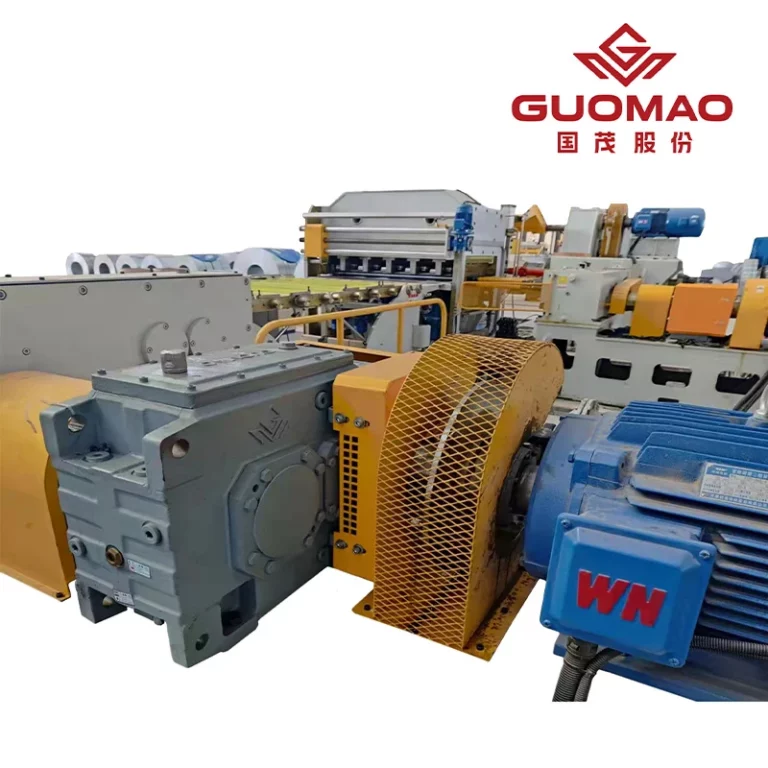
The planetary arrangement uses a sun gear, planet gears, and an internal ring gear. Multiple gear meshes carry the transmitted load at the same time, which helps a planetary gearbox produce high torque from a relatively compact envelope. This is useful where the machine needs substantial output force but has limited room around the drive train.
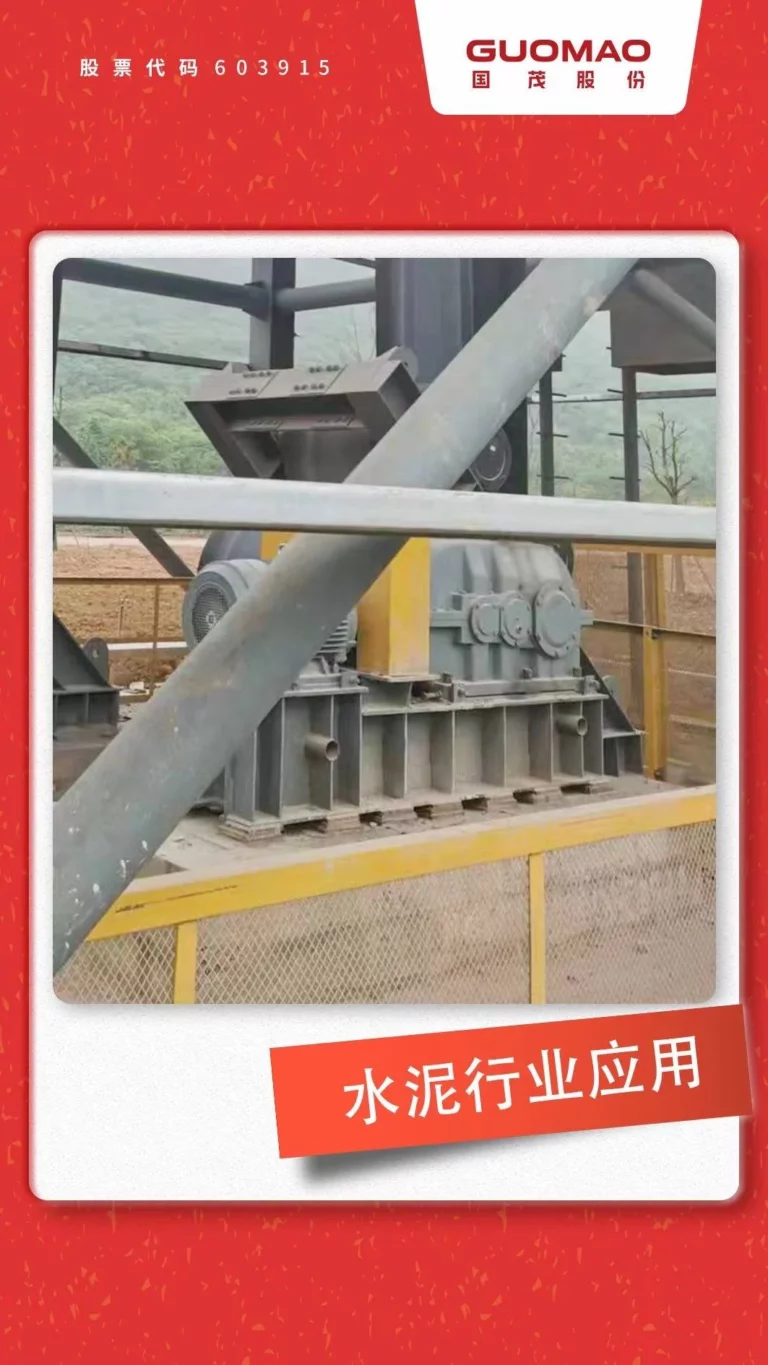
Guomao’s Engineering Mechanical Planetary Gearbox is described for compact, high-torque and high-speed drive requirements. Its published application range includes crushers, road rollers, pavers, tower cranes, rotary drilling rigs, marine machinery, and other demanding equipment. The listed engineering range is 0.37 to 540 kW, with speed ratios from 3.4 to 2500 and maximum output torque stated up to 850,000 N·m. These figures are selection references, not a substitute for checking service factor, duty cycle, speed, and mounting conditions.
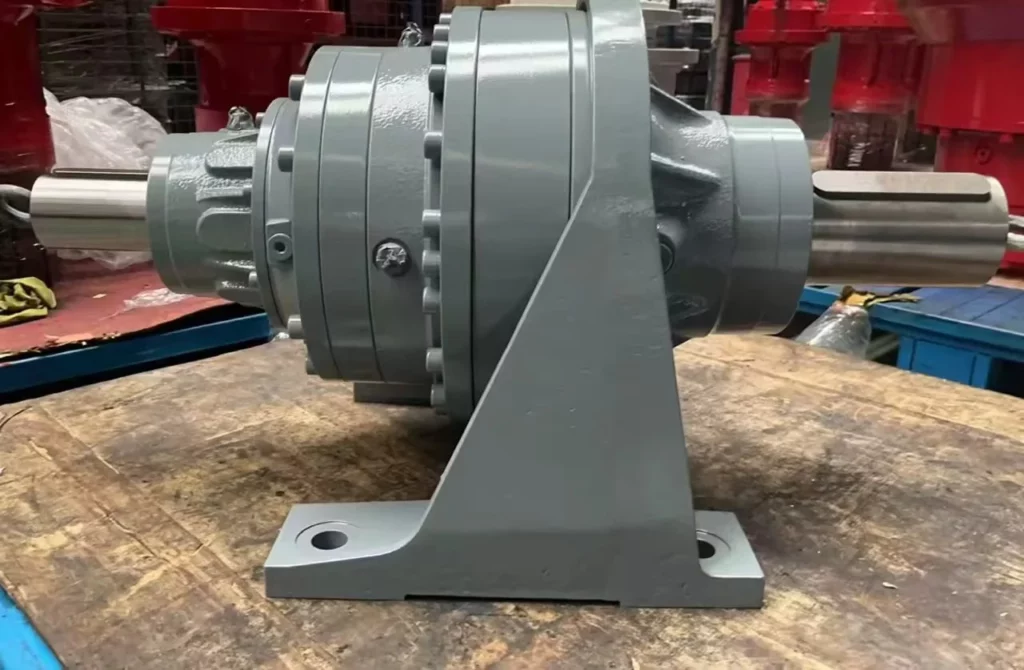
The knowledge base describes the engineering planetary design with a small volume, large torque, compact planetary layout, high-speed drive capability, and compatibility with replacement of imported units of the same model. Those points describe the intended design direction; they do not remove the need to verify the complete machine interface.
Torsional stiffness and shock-load control
Torque spikes are especially important in crushers, drilling equipment, paving machinery, and lifting systems. The product information states that the satellite gears are double-supported with full-complement needle bearings to increase torsional stiffness. A stiffer transmission can help maintain gear alignment when the load changes quickly, although the complete machine still needs correct coupling, lubrication, bearing, and structural design.
In cases of tough operating conditions, other application areas noted in the knowledge base include marine machinery, engineering vessels, water conservation machinery, construction machinery, and lifting machinery. The common need in this case is not an industry classification but a need for a drive that can transmit torque under varying resistance conditions.
Performance Factors That Decide Real-World Results
Material de engranajes y tratamiento superficial
The sun and satellite gears in the published planetary gearbox description are helical-shaped and case hardened to 58–62 HRC. Helical tooth geometry can support smoother engagement, while case hardening gives the tooth surface a harder working layer. Together, these features are relevant to wear resistance and load transmission, but they should be assessed alongside tooth geometry, bearing life, lubrication, and the actual load spectrum.
Protection and operating environment
The published precision planetary gearbox information identifies an IP65 designation. In practical terms, this indicates protection against dust infiltration and water jets directed at the housing from different directions. It does not mean that every installation environment is automatically suitable. Engineers should still confirm ambient temperature, washdown practice, corrosive exposure, mounting orientation, sealing condition, and maintenance access.
The same source describes the spare parts as subject to a quality-control process and identifies ISO9001 certification for the planetary gearbox products. These statements support a controlled manufacturing and inspection context, while the final equipment specification still depends on the selected size and the customer’s operating conditions.
El Ingeniería de la caja de cambios planetaria mecánica is a useful reference when the application prioritizes compact size, high torque, and high-speed drive capability. For a high-torque system, the page should be read together with the machine’s starting torque, acceleration profile, overhung load, and expected operating hours.
Matching an Industrial Planetary Gearbox to the Duty Cycle
Continuous, intermittent, and shock loading
Continuous duty creates a different thermal and fatigue problem from intermittent motion. A gearbox that handles a short peak may still be unsuitable for repeated peaks if heat cannot leave the housing or if bearings see excessive radial and axial loads. Selection should begin with the driven machine’s torque-time curve, not only its average torque.
For impact-heavy equipment, record start-stop frequency, jam events, reversing cycles, load inertia, and any transient torque multiplier. For continuous conveyors or process equipment, record operating hours, required output speed, ambient temperature, lubrication method, and allowable noise. These details help convert a nominal torque requirement into a realistic service requirement.
Speed ratio, efficiency, and thermal margin
Ratio affects output speed, reflected inertia, tooth loading, and motor selection. Very high ratios may require multiple stages or a particular planetary arrangement, while a ratio that is too low can force the motor and gearbox to operate outside their efficient range. Efficiency also changes with load, speed, lubrication, and temperature, so a published rating should be treated as a design input rather than a guaranteed result in every condition.
Selection Checks for High-Torque Applications
Mechanical and installation checks
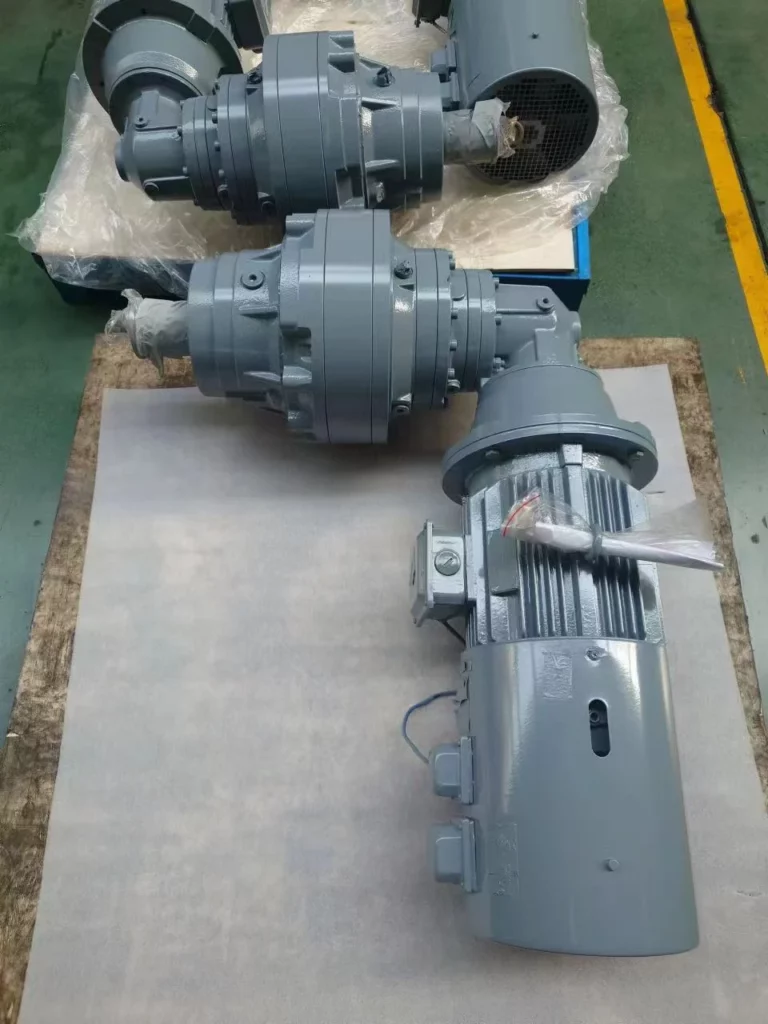
Before ordering, verify output torque, peak torque, ratio, input speed, mounting orientation, shaft arrangement, coupling dimensions, radial load, axial load, and available space. Confirm that the gearbox can be aligned without forcing the housing or shafts into a constrained position. Review the brake, motor, and driven-machine inertia as one system.
For engineering planetary units, the documented application list also includes asphalt mixing, meshing machines, crushers, road rollers, pavers, milling machines, tower cranes, and rotary drilling rigs. Matching the application to the published range helps the selection discussion begin with the right mechanical assumptions.
Precision requirements and service planning
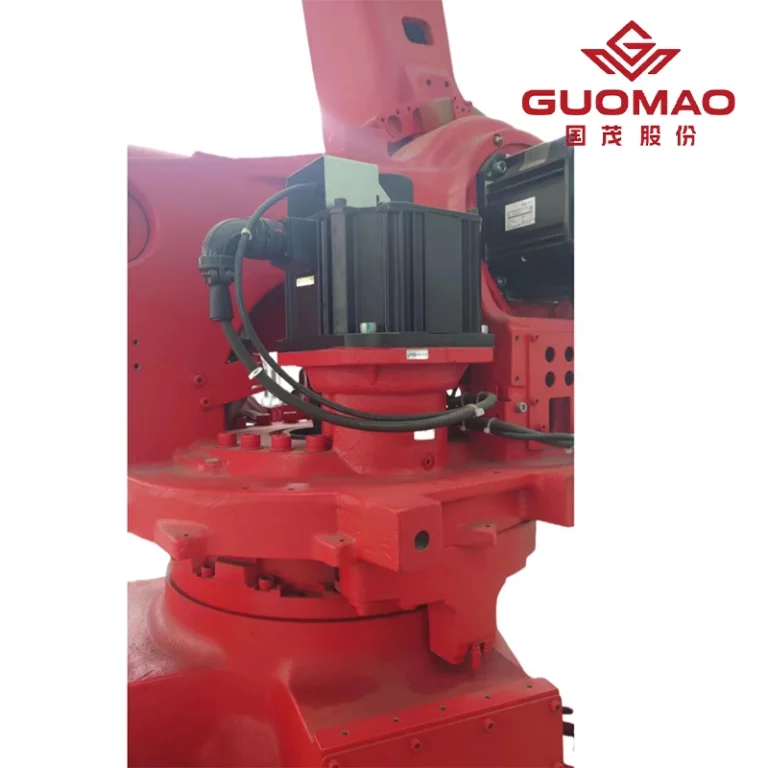
Precision applications may place more emphasis on backlash, repeatability, noise, rigidity, and fatigue life than on maximum torque alone. The Reductor planetario de precisión page is relevant to industrial robots, machine tools, semiconductor equipment, and aerospace-related motion systems. Its published information highlights an S-type gear intended to enhance tolerance, improved fatigue life, increased rigidity, and customizable speed ratios from 30 to 160.
Service planning should cover oil condition, seal inspection, bearing checks, temperature trends, vibration, and unusual noise. A maintenance interval should reflect the real duty cycle and environment rather than a generic calendar alone.
Application review and technical coordination
El Reductor planetario de ingeniería category groups planetary solutions for high-torque and high-speed applications, including crushers, road construction machinery, tower cranes, drilling rigs, and marine machinery. Guomao can support a selection review when the machine data, installation limits, and operating conditions are available. Our team can compare the duty cycle with the relevant planetary gearbox configuration before a final specification is issued.
Preguntas frecuentes
Q: What is an industrial planetary gearbox used for?
A: A planetary industrial gearbox is an instrument used in reducing speed and transmitting torque in machines like construction equipment, cranes, crushing machines, drilling rigs, marine equipment, robots, and machine tools.
Q: Why is a planetary gearbox suitable for high-torque systems?
A: The planetary gearbox distributes the load among several gear meshes, and it has the potential to deliver a high torque density and compact structure if it is well designed.
Q: How do I choose an industrial planetary gearbox?
A: Compare the continuous and peak torques required, input and output speeds, ratio, duty cycle, shock loads, radial and axial loads, mounting requirements, environment, and maintenance.
Q: What affects planetary gearbox performance?
A: Gear geometry, surface hardness, bearing support, lubrication, thermal conditions, alignment, protection level, load spectrum, and service factor all affect performance.
Q: Can a planetary gearbox handle changing loads?
A: It can be suitable for changing loads when its torque capacity, torsional stiffness, bearings, lubrication, and service factor are matched to the machine’s transient and continuous duty.