


Planetary Gearbox Efficiency Fundamentals: How Power Is Transmitted and Lost
What Planetary Gearbox Efficiency Really Measures in Industrial Applications
Planetary gearbox efficiency shows how well input power from a motor changes into useful output torque in actual factory work setups. In building machines, sea gear, and tough lifting tools, a change of just 1–2% in efficiency can affect total energy use, working heat, and upkeep needs over time.
Mechanical efficiency for each stage often hits 97–98% in solid designs. But overall system efficiency needs to include losses from all stages added up. It also covers bearing drag, lubrication pull, and seal rubbing. So, planetary gearbox efficiency works as a changing work measure. It is not just a planned book value.
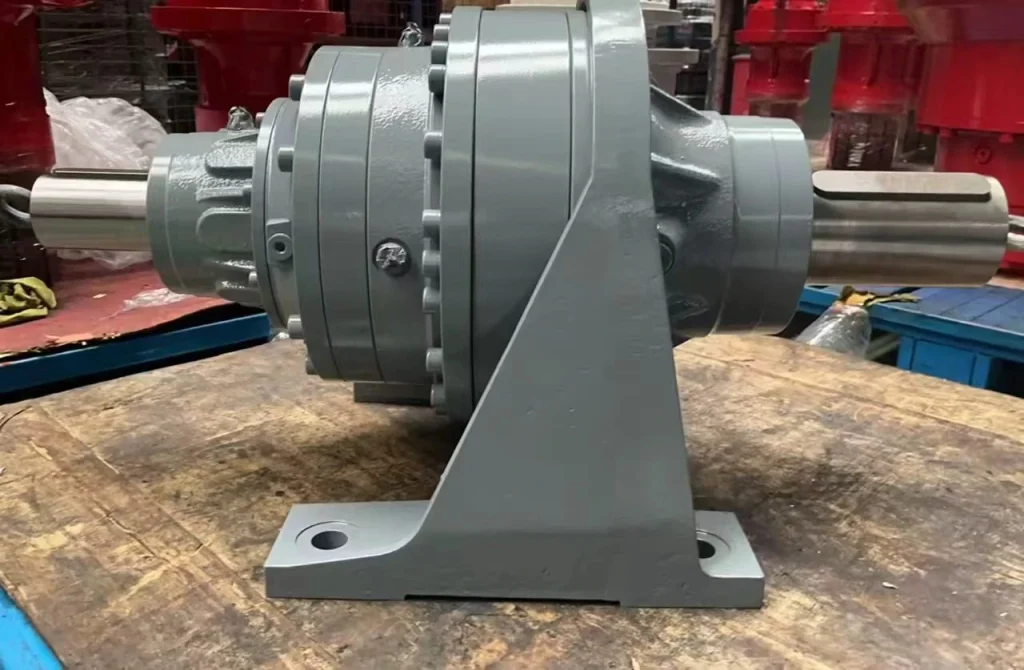
Planetary systems spread torque over several planet gears at the same time. This cuts load focus and boosts frame steadiness. That load-split way explains why planetary build reaches a good torque pack in a small form.
Power Flow Inside a Planetary Gearbox
Planetary gearbox efficiency is directly influenced by how torque flows from the sun gear to the planet gears and into the ring gear. Multiple engagement points create balanced load transfer, reducing localized stress.
When planet gears share torque evenly, torsional stiffness increases, and deformation under load decreases. Reduced elastic deflection maintains optimal tooth contact geometry, which minimizes sliding friction and preserves energy transmission efficiency.
In multi-stage configurations, overall efficiency equals the product of each stage’s performance. Therefore, precision manufacturing at every stage becomes essential to sustaining acceptable system efficiency.
Where Energy Loss Occurs in Planetary Gear Systems
Planetary gearbox efficiency drops mainly from gear fit rub, bearing losses, and lubricant shear pull. Gear rub relies a lot on tooth surface toughness and finish rightness.
Bearing losses originate from rotational drag and preload conditions. Double-supported planet gears reduce misalignment and stabilize meshing alignment, lowering internal resistance.
Lubrication drag increases at higher speeds or excessive viscosity levels. Proper oil selection balances wear protection with minimized fluid resistance, preventing efficiency decline due to overheating or excessive drag.
Key Factors That Affect Planetary Gearbox Efficiency in Real Working Conditions
Gear Design Parameters That Influence Planetary Gearbox Efficiency
Planetary gearbox efficiency improves significantly when helical gear geometry is adopted instead of spur teeth. Helical gears increase contact ratio and enable smoother torque transfer, reducing vibration and friction.
Surface treatment further influences efficiency. Case-hardened gears reaching 58–62 HRC, combined with precision grinding at Grade 6 accuracy, reduce micro-sliding and uneven wear. Such hardened helical configurations are widely used in high-performance planetary reducers to stabilize meshing quality.
Manufacturing tolerances also affect load-sharing accuracy. Uneven planet load distribution leads to localized stress and progressive efficiency loss.
Bearing Configuration and Torsional Rigidity
Planetary gearbox efficiency stays even when twist firmness holds under top torque setups. Planet gear builds with two supports raise firmness and cut angle bend.
Higher firmness keeps steady gear contact even in shock loads. This steadiness matters a lot in tough uses like tower cranes and turning drill tools.
Bearing life over 50,000 hours with the right service factors helps stop efficiency drop from inside wear.
Lubrication Strategy and Thermal Management
Lubrication strategy determines whether planetary gearbox efficiency can be sustained during long operating cycles. Oil bath systems suit moderate speeds, while forced lubrication enhances cooling in high-power applications.
Thermal management has become increasingly important as machinery showcased at events like CONEXPO-CON/AGG 2026 continues to increase power density. Elevated temperature accelerates lubricant breakdown and increases friction, directly reducing efficiency.
Stable cooling systems, controlled oil flow, and appropriate viscosity selection preserve internal operating conditions and maintain consistent energy transmission.
Installation and Alignment Impact on Planetary Gearbox Performance
Installation accuracy directly influences planetary gearbox efficiency in real-world environments. Shaft misalignment introduces additional radial loads that increase bearing friction and internal losses.
Rigid mounting foundations reduce vibration-induced inefficiencies. Elastic coupling between motor and gearbox compensates for minor misalignment and protects the internal gear structure.
Correct installation ensures that design-level efficiency translates into operational performance.
Comparing Planetary Gearbox Efficiency to Other Industrial Gear Systems
Planetary Gearbox vs. Helical Gear Reducer Efficiency
Planetary gearbox efficiency often matches or goes a bit over parallel shaft helical gear reducers per stage. But planetary systems give a higher torque pack in smaller cases.
Small build cuts material use while keeping frame firmness. This plus gets key in moving machines and tight space setups.
Planetary Gearbox vs. Worm Gear Reducer in Energy Performance
Planetary gearbox efficiency significantly surpasses worm gear reducers because planetary systems rely mainly on rolling contact rather than sliding friction. Worm gear designs inherently generate higher friction losses.
Worm gear reducers may work under 90% efficiency. But multi-stage planetary systems often go over 95% total efficiency when built right.
When High Efficiency Is Critical in Heavy-Duty Industrial Applications
Planetary gearbox efficiency matters a lot in uses with nonstop work or high torque runs. Examples cover:
- Hoisting mechanisms
- Marine propulsion support systems
- Maquinaria de construcción
- Large-scale mixing and crushing equipment
In these areas, small efficiency gains bring clear long-term energy savings.
How to Evaluate Planetary Gearbox Efficiency for Your Application
Calculating Expected Planetary Gearbox Efficiency in Multi-Stage Configurations
Planetary gearbox efficiency in systems with several stages needs the addition of math.
Stage EfficiencyNumber of StagesOverall Efficiency
98% 2 96.04%
97% 3 91.27%
This math shows why exact work at each stage shapes the total system.
Matching Torque Density with Real Load Conditions
Planetary gearbox efficiency remains stable only when torque density matches actual load conditions. Nominal torque ratings must be evaluated against peak torque, duty cycles, and shock loads.
Main points covered:
- Service factor (S.F.)
- Radial load constraints
- Continuous vs intermittent operation
The right size stops overload-caused energy loss.
Efficiency vs. Reliability: Finding the Engineering Balance
Planetary gearbox efficiency should not compromise structural reliability. Aggressive downsizing may improve theoretical efficiency but reduce safety margins.
Engineering balance requires adequate bearing life, controlled lubrication systems, and verified load capacity to ensure sustainable performance.
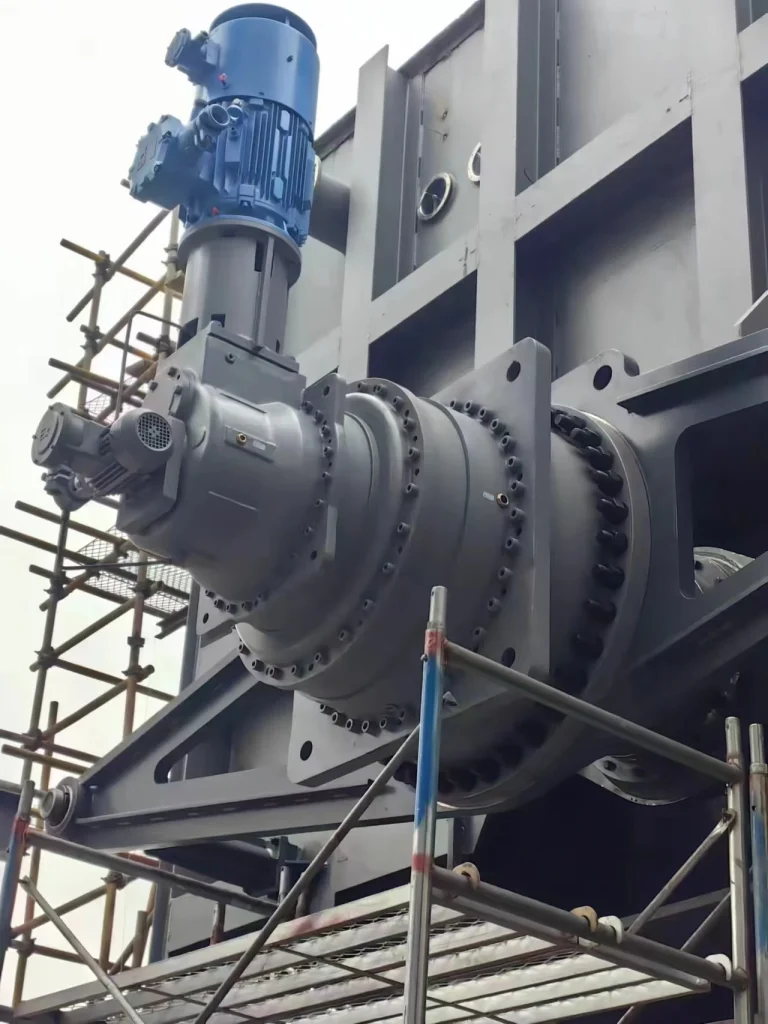
Energy Cost Implications of Planetary Gearbox Efficiency
Planetary gearbox efficiency shapes long-term work cost right away. Even a small efficiency gain cuts energy use over thousands of work hours.
Lower inside heat also cuts oil break and upkeep times.
Engineering Solutions That Improve Planetary Gearbox Efficiency in 2026
Advanced Gear Manufacturing for Higher Planetary Gearbox Efficiency
Planetary gearbox efficiency in 2026 relies more on exact gear making. Case-hardened slanted gears with high-rightness smoothing cut, rub, and steady fit shape.
Better load-split rightness stops spot wear and keeps long-term efficiency.
Compact Planetary Design with Higher Torque Density
Compact planetary structures enhance torque density without sacrificing stiffness. Reduced housing deformation maintains alignment stability during dynamic load fluctuations.
Sealing, Protection, and Operational Stability
Dust-tight protection equivalent to IP65 prevents contamination-induced friction increase. Stable sealing systems preserve lubricant integrity in harsh industrial environments.
Modular Configurations for System Optimization
Modular design enables flexible installation and integration with high-efficiency motor systems. Proper matching between motor characteristics and gearbox input parameters minimizes transmission losses.
How Guomao Enhances Planetary Gearbox Efficiency Through Engineering Design
Engineering Mechanical Planetary Gearbox for Heavy-Duty Applications
Ingeniería de la caja de cambios planetaria mecánica build handles planetary gearbox efficiency issues under tough torque and changing load setups. Hardened slanted gears (58–62 HRC) paired with double-supported planet gears boost twist firmness and steady load split.
This series backs power from 0.37 kW to 540 kW. It handles max torque up to 850,000 kN·m. By keeping the frame firmness under shock load, it stops wrong-line rub. And it holds per-stage efficiency.
Precision Planetary Reducer for High-Accuracy Industries
Reductor planetario de precisión options boost planetary gearbox efficiency in applications requiring precision and even motion rules. Higher twist firmness and less backlash change cut small-hit losses.
Hardened slanted gears and steady inside support build allow even show in robot and machine tool systems. There, changing steadiness shapes energy work rate right away.
Manufacturing Strength and Quality Control
Manufacturing precision ensures planetary gearbox efficiency remains consistent over long service life. Controlled heat treatment, Grade 6 gear grinding accuracy, and strict bearing selection validation minimize premature wear.
With ISO9001-certified systems and large-scale production capability, repeatable quality ensures that design-level efficiency is achieved in industrial operation.
Technical Support and Application-Based Selection Guidance
Use-based pick shapes planetary gearbox efficiency after setup. Load range check, cooling plan, and line guide make sure work setups fit plan guesses.
The right match between motor traits and gearbox input parts stops changing overload. It keeps long-term efficiency stability.
Preguntas frecuentes
Q: What is typical planetary gearbox efficiency in industrial applications?
A: Planetary gearbox efficiency per stage commonly ranges between 97% and 98% under optimized conditions. Multi-stage configurations require cumulative calculation to determine overall efficiency.
Q: How to calculate planetary gearbox efficiency in multi-stage systems?
A: Multiply each stage’s efficiency to determine total efficiency. For example, two stages at 98% result in approximately 96% overall efficiency.
Q: Planetary gearbox vs worm gear efficiency, which performs better?
A: Planetary gearbox efficiency is generally higher because planetary systems rely on rolling contact rather than sliding friction, which reduces mechanical loss.
Q: How to choose a planetary gearbox for high efficiency and durability?
A: Selection should consider torque density, service factor, bearing life, lubrication strategy, and installation accuracy to maintain sustainable efficiency.
Q: Which planetary gearbox brand is suitable for heavy-duty efficiency requirements?
A: A suitable planetary gearbox should demonstrate verified load capacity, precision gear grinding, hardened tooth surfaces, and a stable lubrication design to maintain long-term efficiency in demanding environments.