


Heavy-duty process systems need an industrial gearbox to connect motor characteristics with the actual speed, torque, and load behavior of the driven machine. Selection depends on operating hours, startup conditions, material behavior, transient loads, installation layout, lubrication, and heat rejection. Motor power alone is not enough when the machine starts under load or experiences repeated surges.
Why Do Heavy-Duty Process Systems Require Industrial Gearboxes?
How Does an Industrial Gearbox Match Speed and Torque to Process Equipment?
Industrial motors commonly operate faster than the process equipment they drive. An industrial gearbox uses a reduction ratio to convert motor speed into the required output speed while providing torque multiplication at the output. This enables continuous mechanical power transfer through a controlled transmission path rather than forcing the motor to operate at the process speed.
The required combination changes between process stages. A mixer may need slow rotation and high starting torque, a conveyor may prioritize speed consistency, and a crusher may also tolerate short-duration torque spikes. Ratio, output speed, continuous torque, and peak torque therefore have to be evaluated together.
Why Do Process Loads Differ From One Machine to Another?
Process loads are defined by how the machine resists motion over time. A steady load changes little after startup, while a variable load changes with material level, viscosity, feed rate, or process stage. A shock load introduces impact events; a high-inertia load demands extra acceleration torque; and a starting load can differ sharply from running torque. Reversing duty adds changing tooth forces and shaft reactions.
Thus, a conveyor, mixer, and crusher with similar motor power may require different specifications. Operating hours, startup frequency, material surges, and interruptions affect service factor and fatigue assessment.
Where Are Industrial Gearboxes Used in Mixing and Process Equipment?
Industrial Gearbox Applications in Mixers, Agitators, and Process Vessels
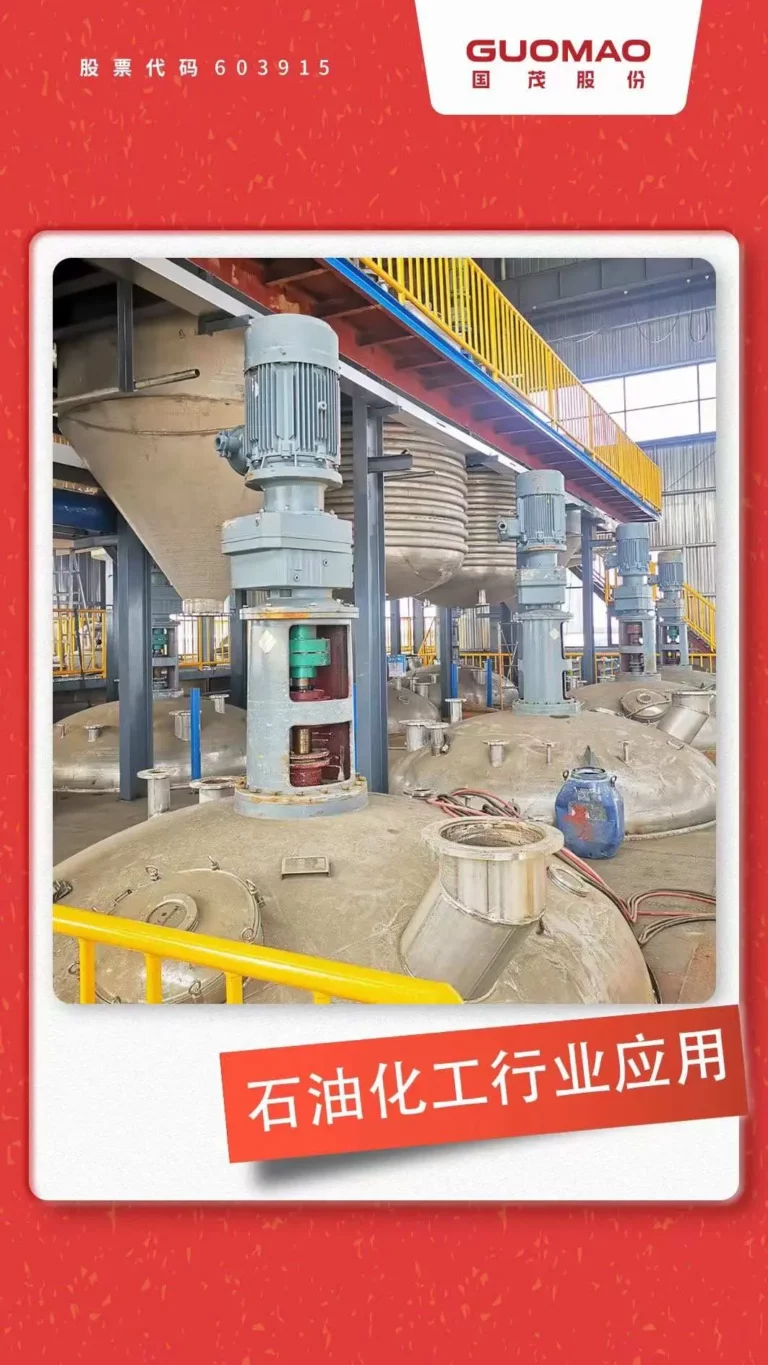
Mixers, agitators, and process vessels often combine high starting torque with changing viscosity, varying fill level, and non-uniform loads. The gearbox must transmit torque through long cycles without treating the load as constant. Startup may occur with settled or highly resistant material, and operating torque may change as the process develops.
These conditions are relevant to alumina decomposition tanks, medicine and daily chemicals, petrochemical processing, and lithium battery processing. Check starting torque, continuous torque, peak events, shaft loading, duty cycle, and heat generation rather than nominal motor power alone.
Industrial Gearbox Applications in Water Treatment and Biological Processing
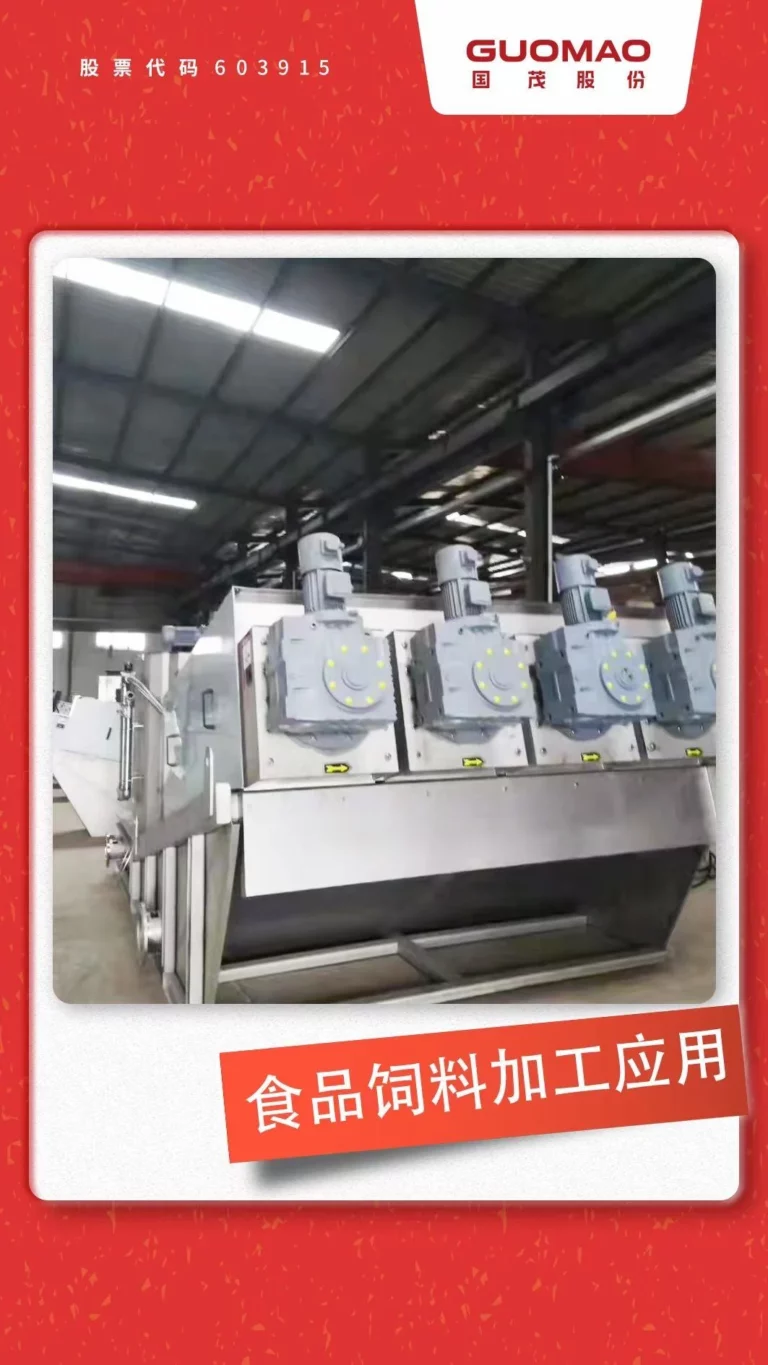
Water treatment and biological fermentation use slow-speed process drives that may operate continuously. Their requirements are shaped by process reliability, stable speed, long operating hours, and the consequences of interruption. The load may change as fluid conditions or process resistance change.
Selection should consider continuous torque, lubrication condition, operating temperature, installation access, and maintenance intervals. Configuration depends on the actual drive arrangement and process duty.
Industrial Gearbox Applications in Paper, Food, and Bulk Process Production
Paper making and food, cereals, and oil processing depend on throughput continuity. Speed disturbance or torque interruption can affect material flow, product consistency, or timing between stages. An industrial gearbox must provide stable torque transmission within the equipment’s thermal and lubrication conditions.
The same principle applies to bulk production: the gearbox is part of a chain including the motor, coupling, driven shaft, bearings, structure, and material flow. Check the whole chain under its real duty cycle.
How Are Industrial Gearboxes Applied in Heavy Material Handling Systems?
Industrial Gearbox Drives for Belt Conveyors and Bucket Elevators
Belt conveyors and bucket elevators commonly run for long hours and may start under load. The gearbox must handle belt pull, output-shaft loading, continuous torque, speed consistency, alignment, and radial load.
Because material may be present before motion begins, separate starting torque from continuous torque and include acceleration time, stopping behavior, and repeated cycles. A steady-state check may miss frequent loaded starts.
Industrial Gearbox Drives for Crushers and Bulk-Material Handling Equipment
Crushers expose an industrial gearbox to torque spikes, impact loading, material surges, and changing gear and bearing loads. Unlike a steady conveyor, transmitted torque can change quickly in the crushing zone. Examine peak torque, shock frequency, shaft loading, bearing reactions, and the complete load path.
Bucket wheels, stackers, and reclaimers also need application-specific evaluation because travel, lifting, reclaiming, or rotation can combine high inertia with variable material resistance. Match the industrial gearbox to the complete load profile, not one maximum value.
How Should Industrial Gearbox Configuration Match Process-System Layout?
When Does a Parallel-Shaft Industrial Gearbox Fit the Drive Arrangement?
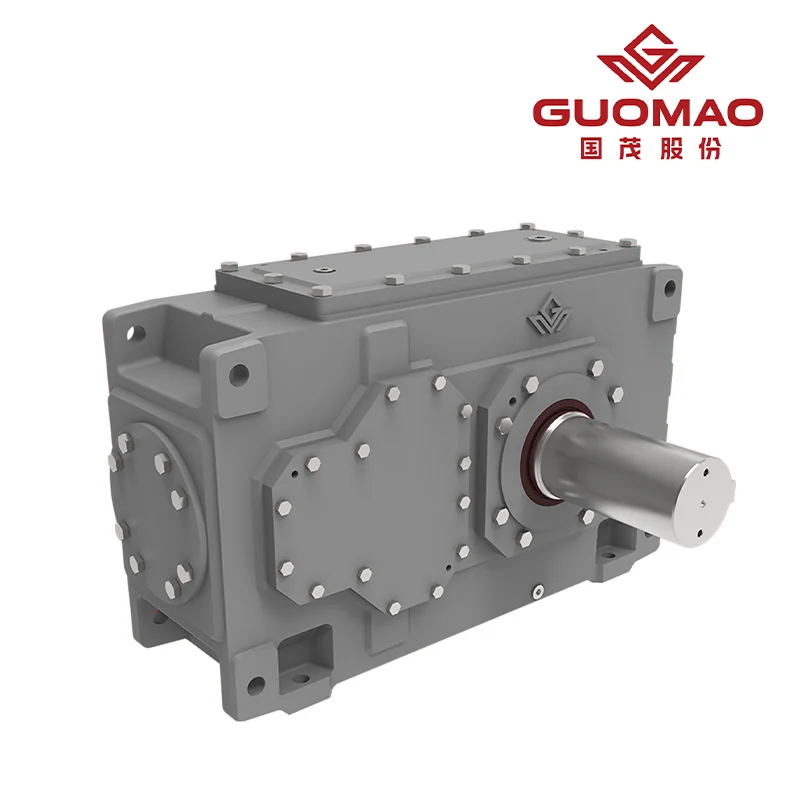
A parallel-shaft industrial gearbox is a parallel-shaft gearbox arrangement that fits when the motor and driven machine can be connected through aligned or substantially parallel shaft centerlines. This geometry can simplify the power path and support a compact horizontal or vertical installation.
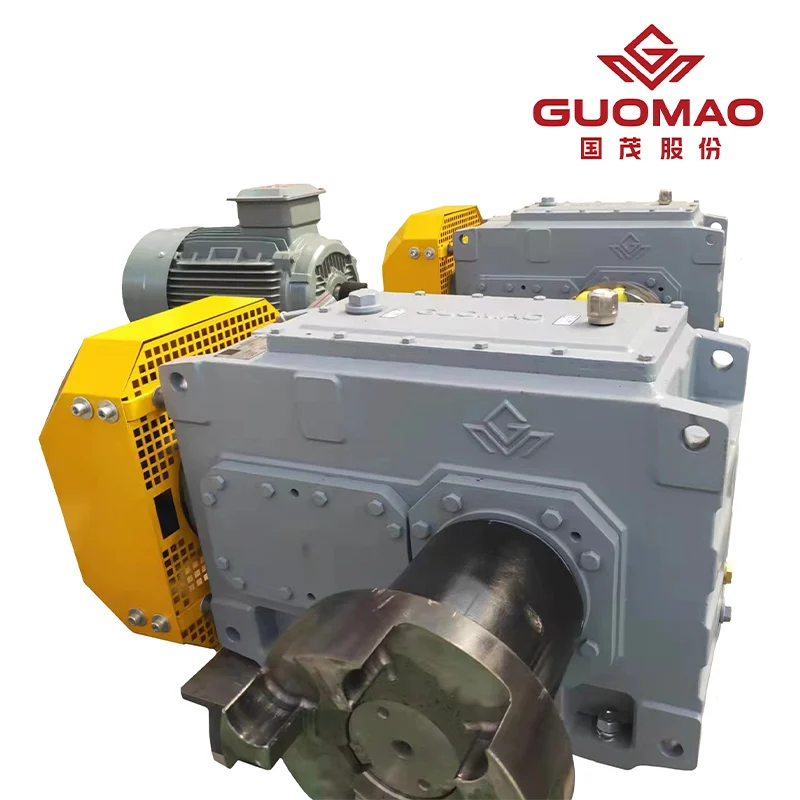
Review shaft relationship, motor position, mounting surface, coupling access, alignment tolerance, output-shaft loading, and service access. The H-Parallel Industrial Gearbox is relevant when this arrangement matches the layout, subject to load-path and maintenance checks.
When Is a Right-Angle Industrial Gearbox Better for Process Equipment?
A right-angle industrial gearbox is useful when equipment requires a 90-degree power path, restricted floor space, or vertical drive orientation. It can place the motor away from a process vessel or conveyor within an existing envelope.
The B-Vertical Industrial Gearbox has input and output shafts arranged at 90 degrees. Consider it when that geometry follows the machine layout and load path. B is not universally better than H; shaft geometry, mounting, radial load, axial load, lubrication access, and clearance determine the choice.
What Determines Industrial Gearbox Reliability in Heavy-Duty Process Systems?
Match Continuous Torque, Peak Loads, and Service Factor to the Real Duty Cycle
Start with running torque, startup torque, peak torque, operating hours, interruptions, acceleration, deceleration, and reversing events. Service factor should reflect start frequency, peak duration, and expected material surges.
This prevents motor kW from becoming the only selection variable. The H/B industrial gearbox range can be reviewed only after continuous and batch process requirements are defined for thermal capacity, fatigue, bearings, couplings, and shaft loading.
Check Gear Accuracy, Bearing Capacity, and Structural Rigidity Under Load
Reliability is affected by gear accuracy, bearing capacity, housing rigidity, manufacturing quality, and assembly accuracy. Under load, alignment errors can change contact distribution and increase local gear or bearing loading. Evaluate the gearbox as a loaded structure, not only as a catalog outline.
At Guomao, we evaluate these factors as an application-engineering problem rather than a motor-power comparison. Guomao’s H-Parallel Industrial Gearbox uses helical gear pairs and grade 6 tooth accuracy as approved design facts for smooth engagement and controlled transmission. These properties support the engineering review, but they do not replace application-specific checks for torque, radial load, alignment, and duty cycle.
Control Heat Through Lubrication and Cooling for Continuous Process Duty
Gearbox heat comes from transmission losses, bearing friction, seals, and lubricant movement. Oil condition and operating temperature influence viscosity, film formation, sealing, and heat dissipation. For continuous duty, match cooling and lubrication to speed, load, ambient conditions, and operating hours.
Fans, external oil circulation, and air cooling can be selected according to actual heat load and configuration. They are options, not universal requirements for every H or B installation. Maintenance should include oil condition, leakage inspection, temperature monitoring, and service access.
FAQ
Q: What applications use an industrial gearbox in heavy-duty process systems?
Industrial gearboxes are used in mixers, process vessels, water treatment and biological processing equipment, paper and food production machinery, belt conveyors, bucket elevators, crushers, bucket wheels, stackers, and reclaimers. The correct design depends on the load profile and duty cycle.
Q: How do I select an industrial gearbox for continuous process equipment?
Match reduction ratio, output speed, continuous torque, peak torque, operating hours, service factor, lubrication, cooling, radial load, installation layout, and the complete duty cycle. Do not select from motor power alone.
Q: What industrial gearbox is suitable for high-torque mixing equipment?
Use a gearbox evaluated for high starting torque, changing viscosity, fill-level variation, non-uniform loads, long cycles, and heat generation. The final choice must be based on the mixer’s actual startup and running profile.
Q: How does an industrial gearbox handle shock loads in crushers and conveyors?
It must be sized and verified for peak torque, impact frequency, material surges, bearing reactions, shaft loading, and structural rigidity. Crusher duty generally requires a different transient-load assessment from steady conveyor duty.
Q: What factors affect industrial gearbox service life in continuous-duty applications?
Key factors include load magnitude, peak-load frequency, operating hours, service factor, gear and bearing loading, alignment, lubrication, cooling, contamination control, installation quality, and maintenance condition.