


A high-precision gearbox is a motion-control component. Its performance depends on more than the ratio or encoder resolution. In an industrial axis, positioning accuracy is affected by backlash, torsional stiffness, reflected inertia, thermal behavior, bearing support, coupling compliance, and machine structure. The real test comes during motion. This includes acceleration, deceleration, reversing, payload changes, and long cycles.
What Defines High Precision Gearbox Performance in Industrial Motion Systems?
How Does Gearbox Backlash Affect Positioning Accuracy and Repeatability?
Backlash is angular clearance between mating gear elements. During a direction reversal, the input shaft can move through this clearance. It does this before the output torque path is fully re-established. That interval is lost motion. In a servo axis, it can appear as positioning error. It may also show as inconsistent reversal behavior or reduced repeated positioning accuracy.
A high-resolution servo encoder does not automatically eliminate mechanical backlash. It measures shaft position where installed. It cannot remove clearance downstream in the gearbox, coupling, or machine structure. The accuracy budget must include backlash, coupling compliance, structural deflection, and load direction. The target is sufficient axis precision. It is not the lowest clearance alone.
Why Does Torsional Stiffness Matter for Dynamic Motion Response?
Torsional stiffness determines how much elastic wind-up occurs. This happens when the gearbox transmits torque. Under load, that wind-up appears as angular deflection. It occurs between the motor command and the output motion. When acceleration stops, or direction reverses, stored elastic energy can contribute to oscillation. It can also lead to longer settling time.
High precision is not low backlash alone. Limited angular clearance can still produce poor response. This occurs if torsional compliance is too high for the load inertia or acceleration profile. Rapid acceleration, deceleration, and reversing expose stiffness. They do this through overshoot, vibration, and delayed settling.
How Do Efficiency and Thermal Stability Influence Precision Over Time?
Transmission losses include gear-mesh friction, bearing friction, seal resistance, and lubricant churning. Heat can change clearances, preload, alignment, and contact conditions. This happens as viscosity shifts with temperature. Precision may drift over a long cycle. It does this even when the cold static measurement looks acceptable.
Evaluate a precision planetary reducer at actual speed, torque, temperature, lubrication condition, and duty cycle. A catalog value is operating-point data. It is not proof of identical stability in every machine.
How Does a High Precision Gearbox Improve Servo Motion System Performance?
How Does Gear Ratio Improve Servo Motor and Load Inertia Matching?
The reduction ratio changes the load inertia reflected to the motor. Motor inertia, reflected load inertia, available acceleration and deceleration torque, speed change, and controller tuning jointly determine response time and stability. A suitable ratio keeps the motor within a controllable speed and torque range.
Start with required output speed, operating torque, starting torque, acceleration time, deceleration demand, and peak events. Tune the servo around the actual motor-gearbox-load combination. Ratio alone does not solve overshoot. But a poor match can make stable tuning difficult.
How Do Torque Density and Load Sharing Affect Compact Motion Axes?
In a planetary architecture, the sun gear drives multiple planet gears. These engage with a ring gear. Torque is distributed through multiple mesh points. This supports compact transmission and high torque density. It helps when an actuator must fit inside a limited envelope.
Load sharing is not automatic. Gear accuracy, alignment, bearing support, housing rigidity, and assembly consistency determine how evenly the planet gears carry load. Uneven support can increase local deflection, noise, wear, and transient positioning error.
Why Do Reversals and Rapid Acceleration Expose Gearbox Performance?
A reversing axis changes tooth forces, bearing reactions, and shaft deflection. Rapid acceleration adds transient torque. Deceleration can return energy through the drivetrain. Check peak torque, repetition rate, load inertia, and mechanical compliance together.
Directional consistency matters when the axis returns to the same position from opposite directions. Backlash affects the first part of reversal. Torsional deflection affects the loaded response afterward. Test both with the actual servo profile. Do not use a static no-load check.
Where Are High Precision Gearboxes Used in Industrial Motion Systems?
High Precision Gearboxes for Industrial Robots and Automated Positioning
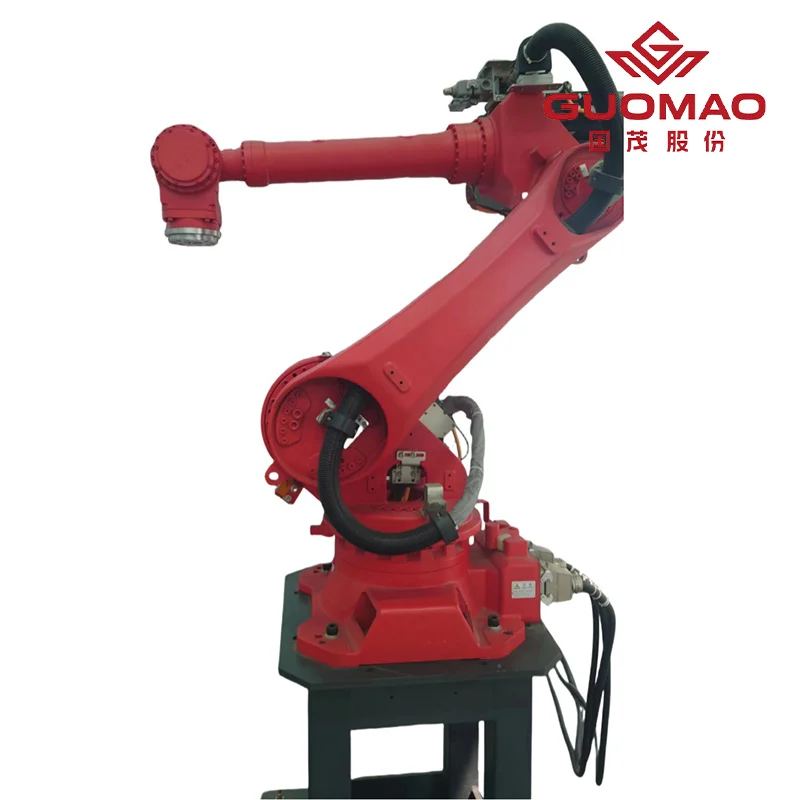
Robot joints and automated positioning axes combine repeated reversals, payload changes, compact packaging, and end-position repeatability. The gearbox must prevent backlash or elastic deflection from dominating the servo loop. Stiffness under payload matters. This is because gravity and tool loads alter joint torque.
High Precision Gearboxes for CNC Machine Tools and Precision Axes
CNC rotary axes and indexing mechanisms depend on repeatable angular positioning, controlled acceleration, and short settling after speed changes. Backlash affects indexing reversals. Torsional compliance can influence contouring. Installation accuracy and structural rigidity belong to the same accuracy chain as the gearbox.
High Precision Gearboxes for Semiconductor and Aerospace Motion Equipment
Semiconductor and aerospace motion equipment often prioritizes controlled motion, compact precision transmission, stiffness, and repeatable positioning in restricted space. These systems can be sensitive to transient vibration, thermal drift, and cumulative error. The gearbox specification must follow the axis accuracy budget and operating profile.
How Should Engineers Select a High Precision Gearbox for a Motion Axis?
Match Reduction Ratio, Output Speed, and Continuous Torque to the Motion Profile
Define motor speed, output speed, reduction ratio, continuous torque, starting torque, peak torque, acceleration, deceleration, and the complete duty cycle. Include dwell periods, reversals, load inertia, operating temperature, and transient-load duration. Motor power alone cannot describe output demand.
The ratio should satisfy output speed. It must also leave torque and speed margin at the motor. Check continuous torque separately from peak torque. Short-transient capability does not prove thermal suitability for repeated high-load operation.
Set Backlash and Stiffness Targets From the System Accuracy Requirement
Start with the axis accuracy budget. Identify allowable positioning error and repeatability. Then allocate contributions from gearbox backlash, torsional deflection, coupling compliance, machine structure, bearings, encoder location, and thermal expansion. Lower backlash is not always correct. This is true if another compliance source dominates.
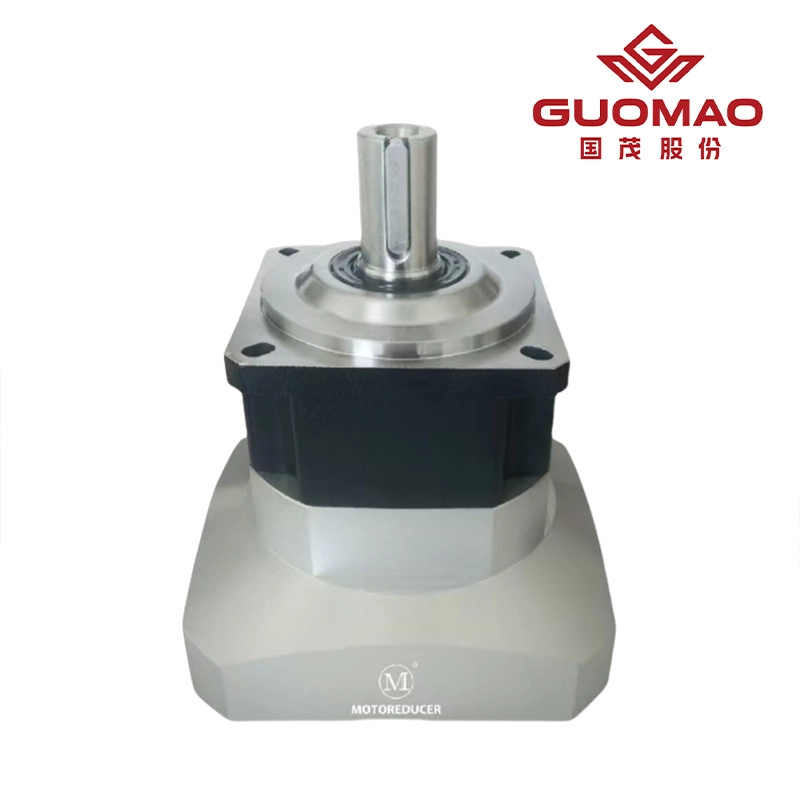
The Precision Planetary Reducer category is relevant when the axis requires compact planetary transmission and controlled positioning.
Verify Servo Interface, External Loads, Duty Cycle, and Installation Conditions
Check motor shaft and flange compatibility, mounting, installation space, radial and axial load, coupling alignment, repeated cycles, ambient conditions, lubrication access, and thermal dissipation. Radial load from a pulley, sprocket, or offset mechanism can overload bearings. It can do this even when output torque is acceptable.
Match the Precision Planetary Reducer to the verified interface, load limits, and application data before approval.
Which Design Factors Help Maintain High Precision Gearbox Performance?
How Do Helical Gear Geometry and Surface Hardening Support Stable Transmission?
The precision planetary reducer uses helical-shaped sun and satellite gears. Helical engagement can develop contact progressively. It supports smoother transmission when geometry, alignment, bearing support, and assembly accuracy are controlled. The product description specifies case hardening to 58-62 HRC. This treatment supports surface durability and wear resistance. It is not a universal hardness rule.
Stable contact supports transmission smoothness and precision retention. It does not replace checks for backlash, torsional deflection, lubricant condition, temperature, or machine stiffness.
Why Do Planet Support and Bearing Rigidity Matter Under Dynamic Loads?
The precision planetary reducer uses double-supported satellite gears with full-complement needle bearings. Supporting planet gears at both sides can reduce movement under dynamic load. Bearing rigidity helps preserve the intended mesh relationship. Greater support can reduce deflection. It helps control oscillation and long-cycle positioning drift.
Guomao provides a customizable speed ratio of 30-160 for this product context. That range is a selection input. It is not a guarantee for every servo motor, load inertia, or duty cycle. Our evaluation should connect ratio, stiffness, thermal conditions, external loads, and axis accuracy.
FAQ
Q: What is a high-precision gearbox used for in industrial motion systems?
A: It reduces motor speed, increases usable output torque, and controls backlash, stiffness, and load transmission for positioning axes such as robots, CNC equipment, semiconductor tools, and aerospace systems.
Q: How does a high-precision gearbox improve positioning accuracy?
A: It can reduce lost motion and torsional deflection within the accuracy budget. The encoder, coupling, structure, thermal behavior, and installation must also be controlled.
Q: How much backlash should a high-precision gearbox have for servo motion control?
A: The requirement comes from the axis accuracy budget and motion profile. Evaluate reversal error, repeatability, torsional deflection, coupling compliance, and structural error together. Do this instead of applying one universal value.
Q: How do I select a high precision gearbox for a servo motor?
A: Match ratio, motor and output speed, continuous and peak torque, reflected load inertia, radial and axial loads, interface, duty cycle, environment, backlash, and stiffness.
Q: What affects the service life of a high-precision gearbox in industrial automation?
A: Load spectrum, peak torque, reversals, alignment, gear and bearing support, lubrication, temperature, contamination, installation, and maintenance affect service life and retained precision.