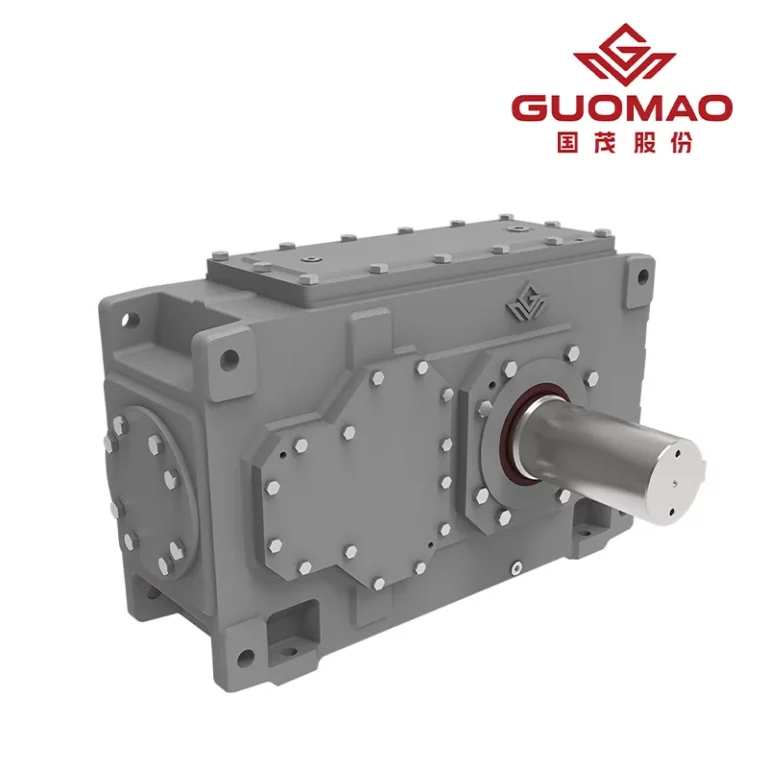



A compact high-ratio drive must do more than slow a motor. It has to deliver usable output torque, tolerate changing loads, fit the available machine envelope, and remain serviceable after installation. A cycloidal gearbox addresses these needs through a compact coaxial arrangement and a reduction mechanism based on eccentric motion and cycloidal pinwheel engagement. Its real value appears when engineers evaluate the complete drive system rather than choosing a reducer from ratio alone.
Why a Cycloidal Gearbox Achieves High Ratios in a Small Footprint
The geometry creates a large speed change without requiring a long sequence of separate housings. Understanding that motion makes the compactness claim easier to evaluate.
How Eccentric Motion Transfers Torque Through the Cycloidal Disc
The input shaft drives an eccentric bearing, causing the cycloidal disc to orbit while it turns. The disc lobes engage with pins arranged around the housing, and output pins collect the disc’s reduced rotational movement. Several contact zones participate as the disc moves, so torque does not depend on one isolated tooth pair. Because the input and output remain on the same general axis, the reducer can transmit substantial torque in a short package. The surrounding motor connection, output coupling, foundation, and service clearance still belong in the final space calculation.
How Tooth-Count Difference Produces a High Reduction Ratio
The official product sample explains that a single-stage cycloidal transmission can reach a reduction ratio of 87:1, with efficiency above 90 percent, while additional stages permit larger reductions. It also attributes the compact envelope to the planetary transmission principle and the coaxial input and output shafts. These claims describe the family architecture rather than every operating point, so they should be checked against the selected unit’s duty and thermal conditions. The key design benefit is that substantial speed reduction does not require a long train of separate housings.
Main Advantages of a Cycloidal Gearbox in Compact Drive Systems
Compactness matters only when the reducer remains stable under real loads. Cycloidal engagement adds several operating advantages that support dense industrial layouts.
Multi-Tooth Engagement for Load Sharing and Shock Resistance
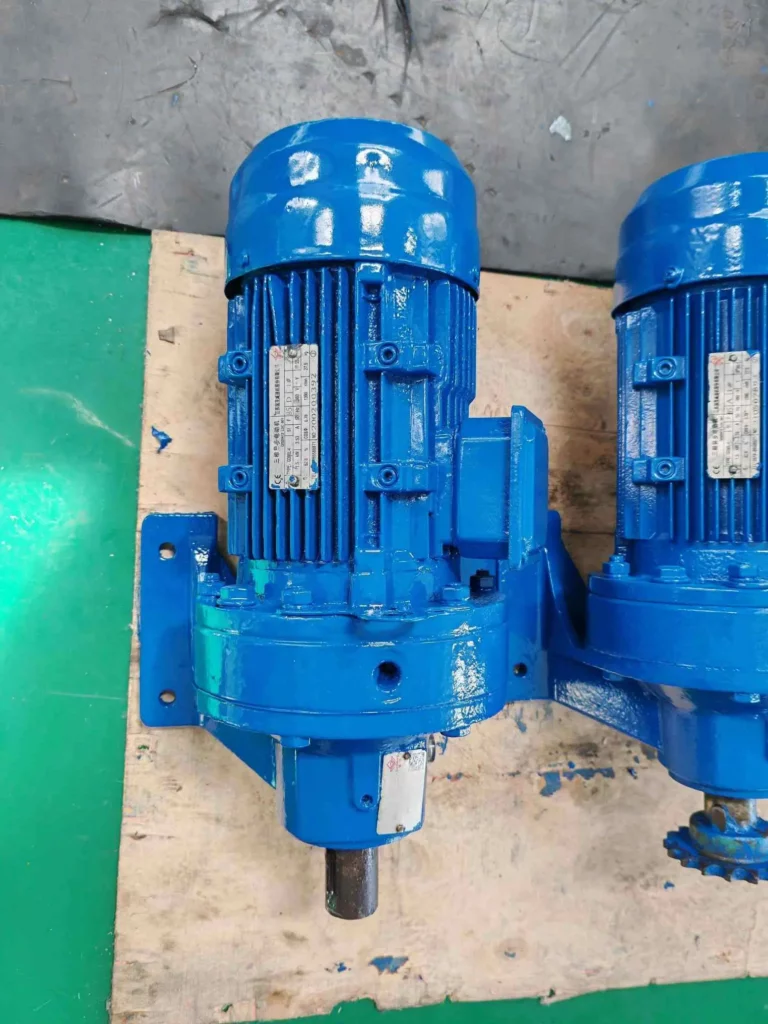
Guomao’s official sample connects smooth operation with a large number of teeth in engagement and a high overlap coefficient. It also identifies strong overload capacity, impact resistance, and a small moment of inertia as product characteristics. The main meshing components use bearing steel and rolling contact, supporting durability when the reducer is correctly selected and maintained. In practical terms, distributed engagement can make a cycloidal gearbox well suited to repeated starts, reversals, and short load peaks, but protection is still necessary when a machine can jam or exceed its design load.
Compact Coaxial Layout, Stable Operation, and Low Inertia
A coaxial arrangement can shorten the drive line and simplify alignment within a crowded frame. Low inertia helps the transmission respond during acceleration and reversal, while stable multi-point engagement supports controlled motion at reduced output speed. Maintenance access remains part of the compactness decision: a reducer that fits tightly but leaves no room for lubrication checks or coupling service is not truly space-efficient. Readers assessing broader cycloidal gear reducer performance trends should therefore separate architectural benefits from application-specific ratings.
Where Compact High-Ratio Cycloidal Drives Deliver the Most Value
The strongest applications combine low output speed, limited installation space, changing loads, or frequent operating cycles. The specified product page identifies process and material-moving equipment as relevant areas.
Continuous and Reversing Duty in Mixing and Process Equipment
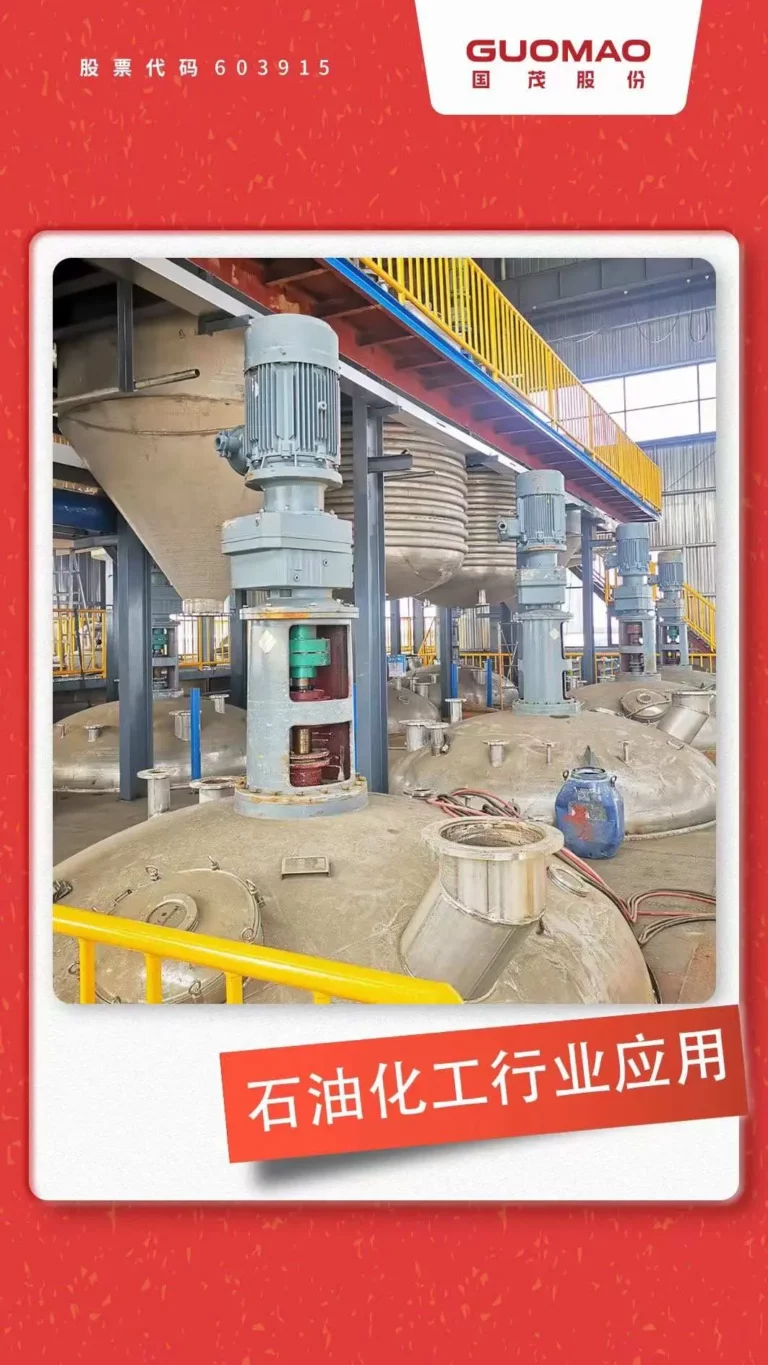
Mixers, reaction equipment, food-processing machines, oil presses, and pulverizers often need steady low-speed motion over long duty periods. Some also reverse during cleaning, discharge, or process control. A cycloidal gearbox can support these demands when motor power, ratio, output torque, thermal balance, and lubrication are selected together. The reducer should not be sized only for average torque; startup resistance, material viscosity, batch variation, and the possibility of a loaded restart can determine the required service margin.
Conveying, Lifting, and Walking Systems with Variable Loads
Screw conveyors, belt conveyors, drawing machines, bending machines, and walking equipment may experience uneven feeding, repeated starts, or sudden resistance. Compact high-ratio reduction helps place the motor and reducer close to the driven mechanism while producing low output speed. For more application detail, Guomao’s discussion of cycloidal reducers in material handling systems explains the connection between multi-tooth engagement and variable-load operation. Lifting duties require additional attention because the reducer is not a substitute for a properly selected brake.
How to Match a Guomao Cycloidal Reducer to the Drive Requirement
Selection should translate the machine’s operating profile into a ratio, torque, installation, and maintenance requirement. Portfolio ranges are a starting point, not a final model rating.
Start with Power, Ratio, Output Torque, and Duty Cycle
The Guomao Cycloidal Reducer page presents family-level ranges of 0.12–90 kW, speed ratios from 7 to 650,000, and maximum output torque up to 30 kN·m. At Guomao, we use these values to frame the available product scope, while the final choice must be based on the required output speed, calculated operating torque, peak load, start frequency, and daily running time. Engineers should also confirm whether the intended ratio uses one stage or a combined reduction arrangement, because stage count affects efficiency, heat, dimensions, and lubrication.
Match Installation Conditions, Environment, and Maintenance Access
The product family supports multiple installation concepts, including flange, foot, double-shaft, motor coupling plate, and motor direct connection arrangements. The correct choice depends on how the machine frame carries reaction loads and how accurately the shafts can be aligned. Check the surrounding temperature, contamination, vibration, mounting orientation, foundation stiffness, and access to oil or grease points. Our technical review should also cover the driven shaft load and coupling method before the order is finalized, especially when the installation is inclined or exposed to frequent starts and stops.
Trade-Offs and Sizing Checks Before Selecting a Cycloidal Gearbox
High ratio and compact volume do not remove normal mechanical limits. A dependable selection makes the constraints visible before installation.
Check Axial Load, Braking, and Overload Protection
The official instructions state that the reducer is suitable for continuous service and forward or reverse operation, but it has no self-locking function. Lifting equipment therefore requires a brake motor or a separate input-side brake. The instructions also state that the output shaft cannot withstand axial force, recommend overload protection where overload may occur, and require a solid, vibration-free foundation for base-mounted units. If an inclined installation is necessary, the stated axis inclination limit is ±15 degrees. Harsh conditions, frequent starts, and unusually high or low temperatures require a technical review rather than an assumption based on catalog range.
Compare Heat, Efficiency, Precision, and Total Installed Space
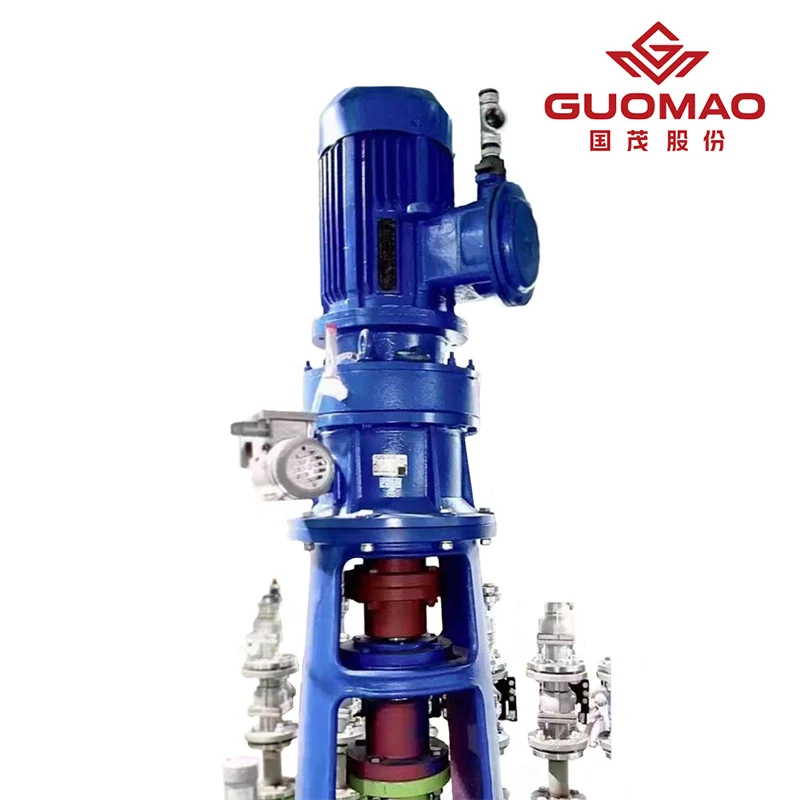
Ratio, torque, and housing dimensions are only the first screen. Confirm acceptable oil temperature, expected losses across the selected reduction arrangement, output-speed tolerance, vibration limits, and the rigidity of the connected structure. Include the motor, brake, coupling, guards, fasteners, and service clearances in the installed envelope. This wider check prevents a compact cycloidal gearbox from becoming difficult to cool or maintain. It also helps avoid oversizing, which can increase cost and inertia without improving the actual machine duty.
FAQ
Q: What reduction ratios can a cycloidal gearbox provide?
A: Guomao lists a family speed-ratio range from 7 to 650,000. The appropriate ratio depends on output speed, torque, stage arrangement, duty cycle, and thermal conditions.
Q: Why is a cycloidal gearbox compact?
A: Eccentric cycloidal engagement produces a large speed reduction in a coaxial layout, reducing the need for a long sequence of separate transmission housings.
Q: Can a cycloidal gearbox handle shock loads?
A: Multi-tooth engagement distributes load across several contact areas, supporting impact resistance. The machine still needs correct sizing and overload protection.
Q: How should a cycloidal gearbox be sized?
A: Start with motor power, target output speed, continuous and peak torque, start frequency, operating hours, mounting conditions, and the driven shaft load.
Q: What installation checks matter for a cycloidal gearbox?
A: Verify alignment, foundation rigidity, mounting orientation, braking needs, axial-load conditions, lubrication, temperature, contamination, and maintenance access before commissioning.