

Smart manufacturing depends on software, sensors, and connected controls, but every digital instruction still has to become reliable physical motion. That conversion happens at the drive system. Modular Gear Drives give machine builders a practical way to configure torque, speed, shaft direction, and mounting without designing a unique transmission for every station. The result is a mechanical platform that can change with the production line while preserving predictable performance.
The Mechanical Drive Requirements Behind Smart Manufacturing
Reconfigurable production lines need adaptable drive interfaces
Flexible factories add, remove, and rearrange conveyors, process modules, and handling stations as products change. A drive platform therefore needs more than sufficient torque. It should offer compatible motors, ratios, output shafts, mounting positions, and connection options that let engineers adapt a proven architecture. Modular Gear Drives support this approach by turning a large number of application layouts into controlled combinations of standard components.
Stable torque and repeatable motion matter as much as connectivity
A connected machine is not necessarily a productive one. If the transmission introduces excessive backlash, vibration, heat, or speed variation, data collection cannot restore process quality. Correctly sized gearing provides the stable torque and repeatable output speed required for synchronized material flow, consistent cycle times, and dependable starts under load. Mechanical performance is the foundation on which digital coordination is built.
How Modularity Reduces Drive-System Complexity
Standardized motors, ratios, and mounting options limit unnecessary variants
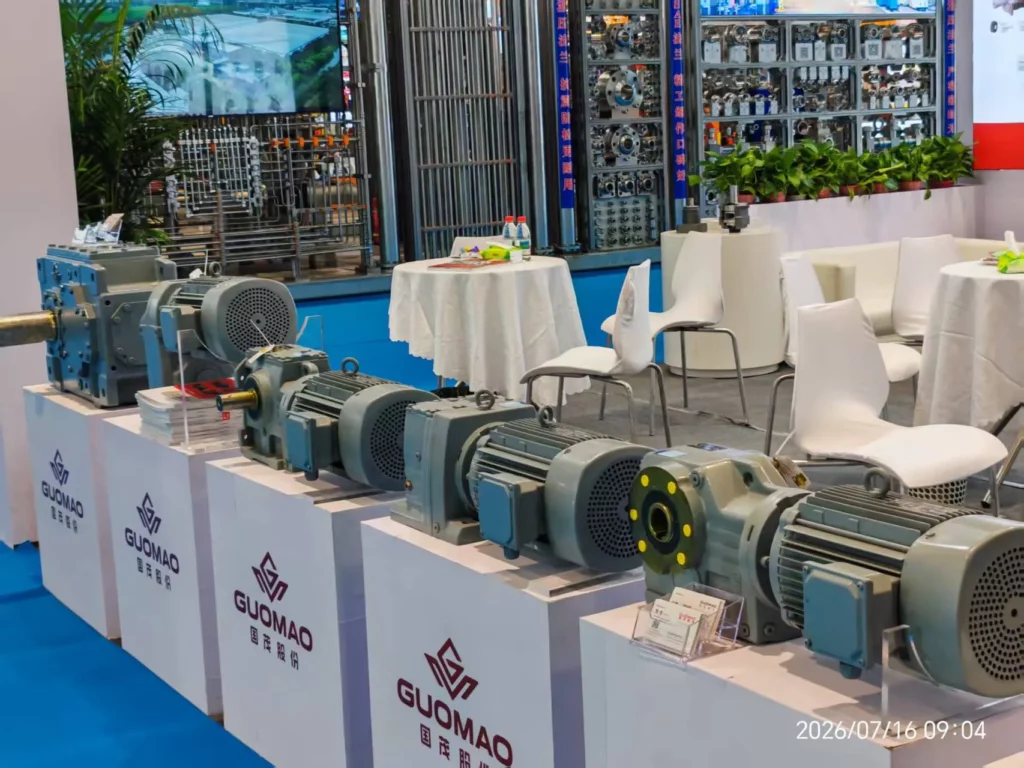
Standard interfaces allow one drive family to cover many machine functions. Engineers can change a ratio, motor size, shaft style, or mounting arrangement while keeping the broader design logic familiar. This reduces one-off drawings, simplifies bills of materials, and makes spare-part planning more manageable across multiple cells. It also helps maintenance teams recognize common service points instead of learning an unrelated gearbox for every asset.
Right-sized configurations support efficiency across changing production demands
Modularity does not mean selecting an oversized unit for every possible duty. It makes right-sizing easier because designers can combine the required reduction ratio, motor power, service factor, and output arrangement. A suitable configuration avoids unnecessary energy use and cost while retaining enough thermal and mechanical capacity for expected peaks. When demand changes, engineers can reassess the affected module instead of redesigning the entire line.
Matching Modular Drive Layouts to Automated Equipment
In-line helical drives suit general-purpose production modules
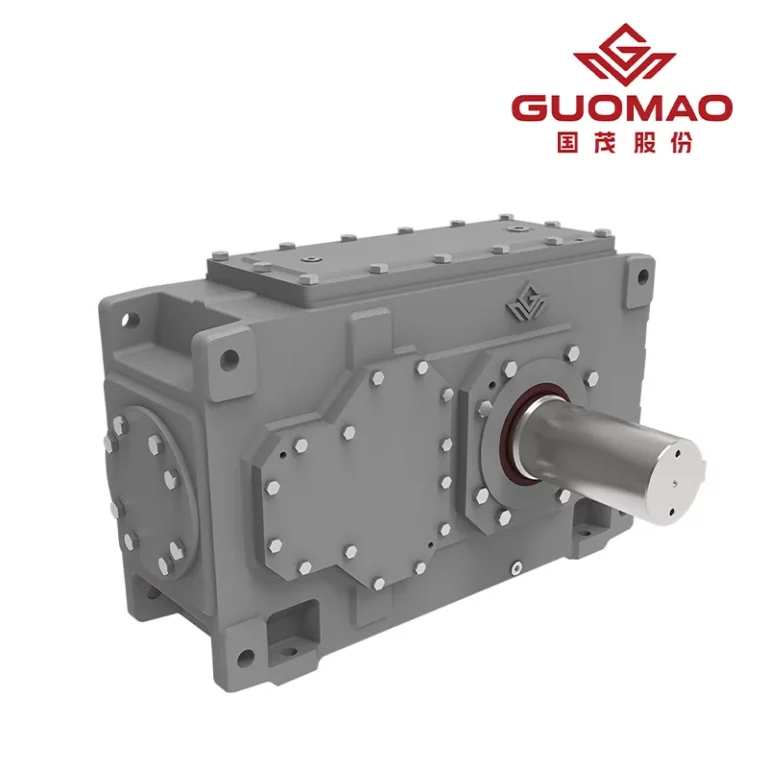
Coaxial layouts are useful where input and output remain on the same axis, including mixers, pumps, and general conveyors. The GR Series Helical Geared Motor provides a modular in-line option with a broad range of ratios, powers, and installation forms. Its helical gearing also supports efficient, low-noise operation where production equipment runs for long periods.
Parallel-shaft drives support compact conveying and material flow
When floor space or machine height is limited, a parallel-shaft arrangement can place the motor alongside the driven shaft. The GF Series Parallel-Shaft Helical Geared Motor offers foot, flange, and shaft-mounted configurations with solid- or hollow-shaft choices. That flexibility is valuable for conveyors, lifting modules, and material-handling systems that must fit within established frames.
Right-angle drives solve space constraints inside machine cells
A right-angle transmission changes the direction of power and can shorten the overall equipment envelope. The GK Series Helical-Bevel Geared Motor combines helical and bevel stages with several mounting forms, including torque-arm arrangements. It is well suited to transfer units, packaging cells, and process equipment where the motor cannot project along the driven axis.
Where Modular Gear Drives Create Smart-Factory Value
Reconfigurable conveyors keep material flow aligned with production changes
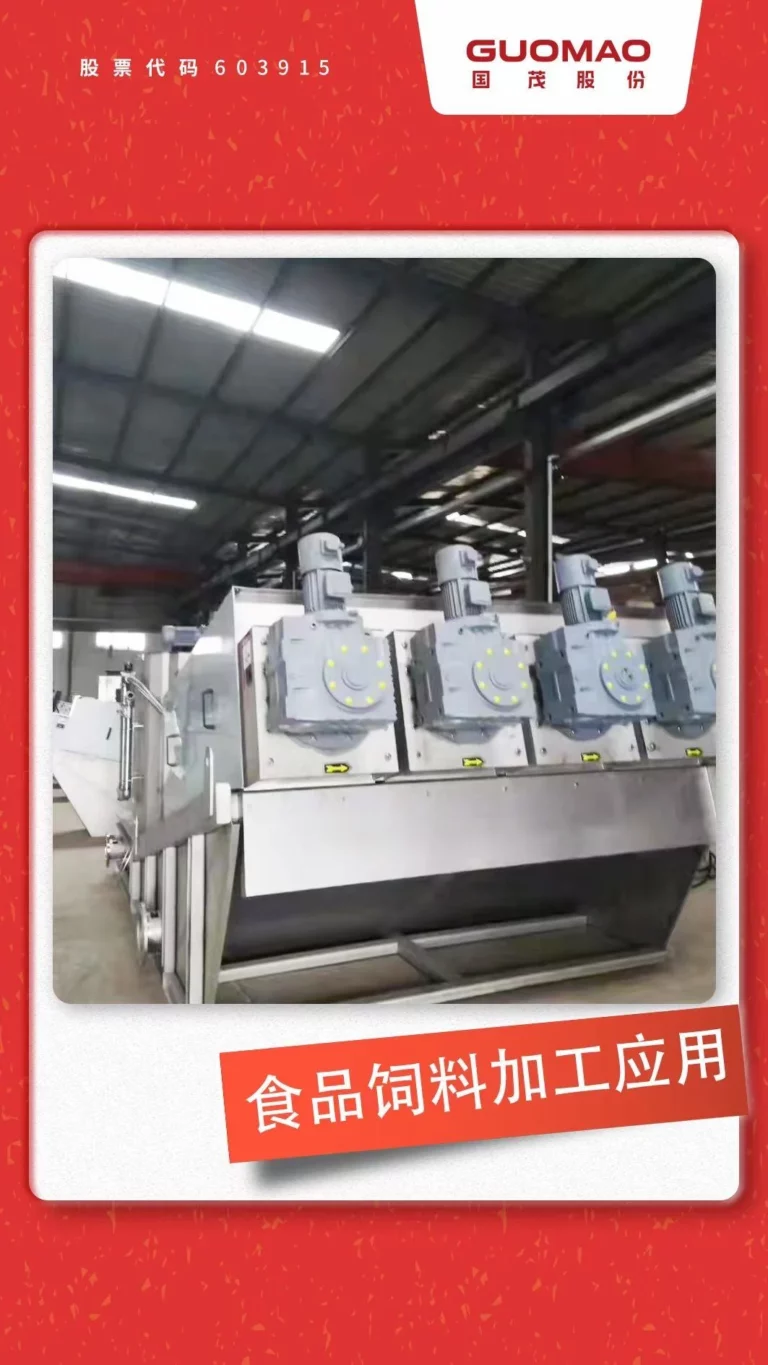
Conveyors frequently change speed, direction, elevation, or position when a factory introduces a new product. A modular drive family lets designers retain common engineering principles across straight sections, transfers, lifts, and compact corners. Guomao demonstrated this breadth while participating in the Asia-Pacific International Intelligent Equipment Expo, where its geared motors and precision transmission products were presented alongside automation technologies.
New-energy process equipment benefits from scalable drive configurations
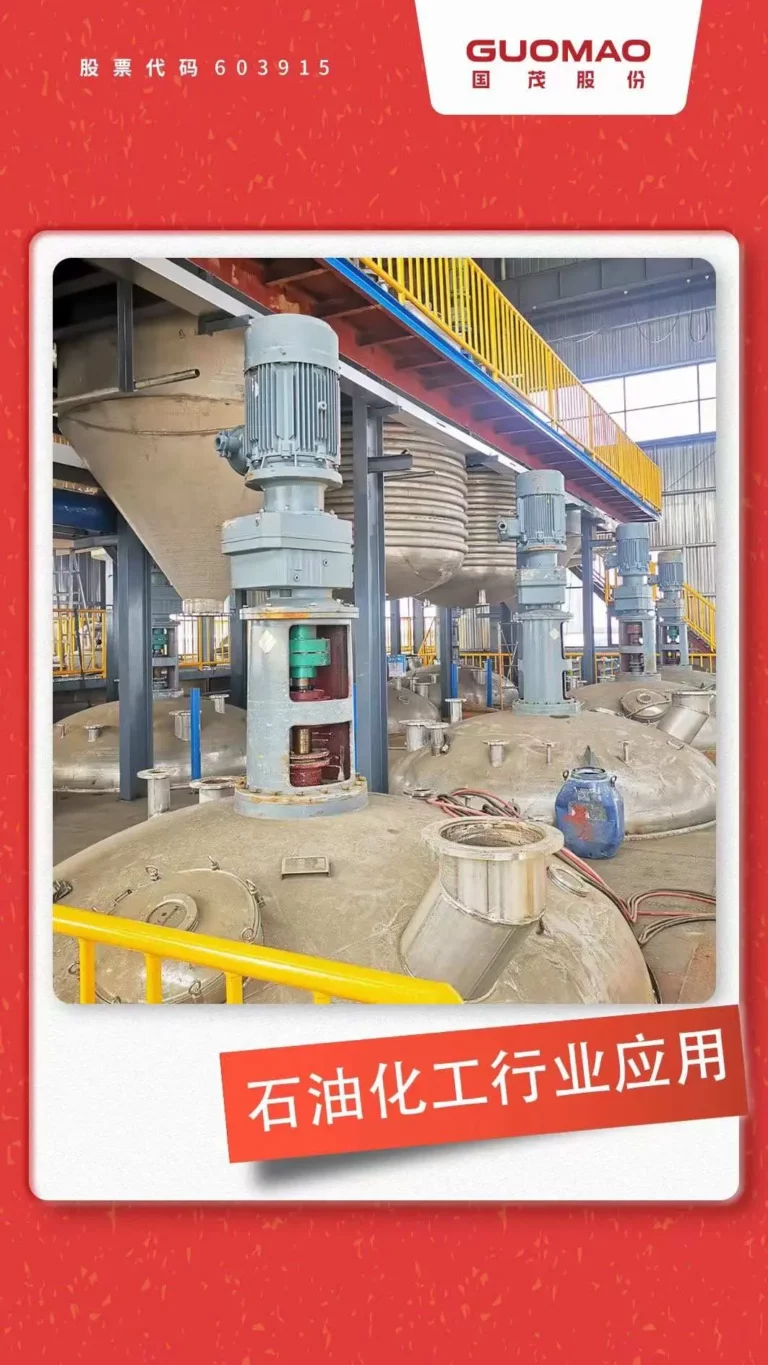
Battery, solar, and other new-energy production lines combine continuous conveying with dosing, mixing, coating, and auxiliary processes. Loads and duty cycles vary substantially between these stations. At Guomao, we use modular product options to match the transmission architecture to each machine rather than force every axis into one layout. Our application selection considers operating torque, peak load, installation direction, and the surrounding process environment.
Precision motion axes require a complementary reducer strategy
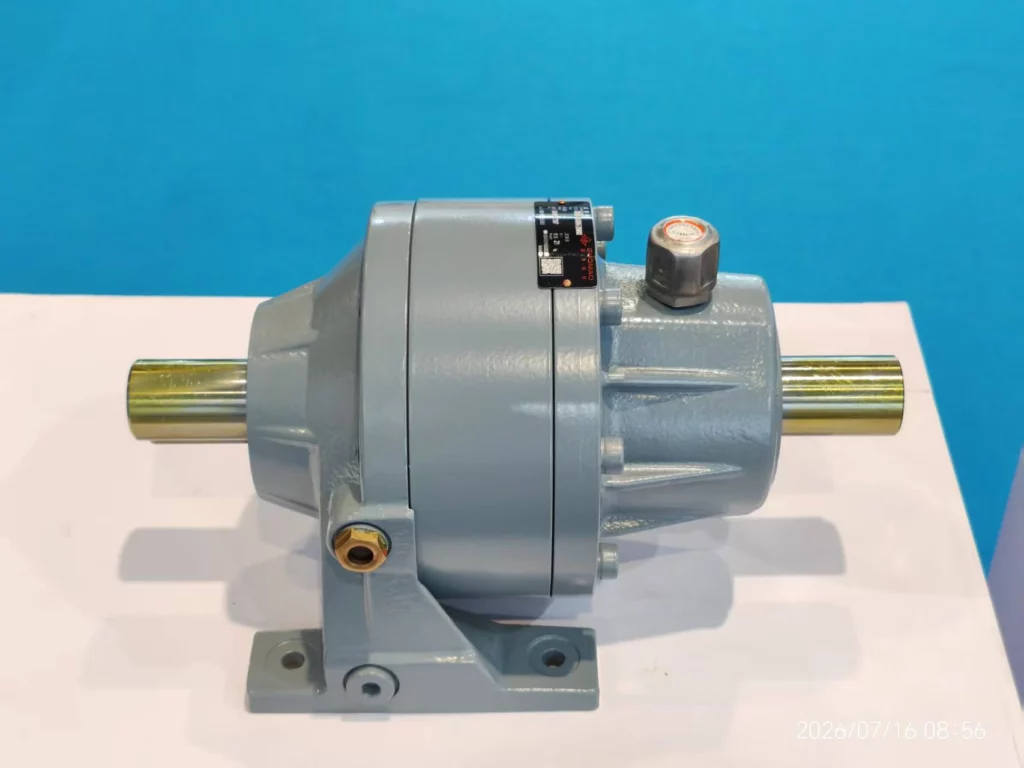
General geared motors are not the answer for every axis. Robots, positioning tables, servo-driven indexers, and other low-backlash applications may require a precision planetary reducer selected for accuracy, rigidity, and dynamic response. Smart manufacturing benefits when engineers distinguish these motion-control duties from conveying and process duties, then use the appropriate reducer technology within one coordinated machine design.
Connecting Modular Mechanics with Digital Control and Condition Monitoring
Variable-speed motors and drives convert mechanical flexibility into controlled motion
A gearbox establishes the mechanical relationship between motor speed and output torque; a variable-frequency drive or servo control then adjusts motion within the selected operating range. This combination enables recipes, controlled acceleration, synchronized conveyor zones, and energy-saving speed reductions. The mechanical ratio should still place normal operation in an efficient region and provide adequate torque during starts, jams, or planned overloads.
External sensors and analytics provide the data layer for predictive maintenance
Modular Gear Drives do not become intelligent simply because they are installed in a connected factory. Condition monitoring normally comes from external vibration, temperature, current, or speed sensors linked to the control and analytics platform. Trend data can reveal abnormal heat, misalignment, lubrication problems, or increasing vibration. Reliable alerts depend on defined baselines, suitable sensor locations, and maintenance thresholds tied to the actual duty cycle.
A Selection Checklist for Smart Manufacturing Projects
Start with torque, speed, duty cycle, inertia, and load variation
Selection begins with output torque and speed, but those values are only the start. Record operating hours, starts per hour, acceleration demands, driven inertia, shock loads, reversals, and ambient conditions. Calculate both continuous and peak requirements, then verify service factor and thermal capacity. This prevents a digitally sophisticated machine from being limited by an incorrectly sized mechanical drive.
Then verify shaft orientation, mounting, service access, and monitoring points
Choose in-line, parallel-shaft, or right-angle geometry according to the equipment layout. Confirm the output shaft, flange, foot, torque arm, and installation position before releasing the design. Leave access for lubrication, inspection, removal, and sensor installation. Finally, document the approved module variants so future line changes preserve interchangeability without bypassing application engineering.
FAQ
Q: What are Modular Gear Drives?
A: They are configurable transmission systems built from compatible gear stages, motors, ratios, shafts, and mounting options. Their standardized interfaces let engineers create application-specific layouts without treating every drive as a completely custom design.
Q: Why are modular drive systems useful in smart factories?
A: They make it easier to adapt mechanical layouts as production cells change. Common components also simplify engineering, spares, training, and service, while suitable ratios and mounting forms support dependable motion across different machine functions.
Q: Do Modular Gear Drives include smart sensors?
A: Not necessarily. The gearbox provides the mechanical transmission. Smart functions usually come from the motor control system plus external sensors for vibration, temperature, speed, or current, with analytics interpreting the collected data.
Q: How should a modular gear drive be sized for variable production?
A: Use the real operating profile, including continuous torque, peak torque, output speed, starts, inertia, duty cycle, and environmental conditions. Select for credible production changes, but avoid oversizing solely to cover undefined future demands.
Q: Which shaft layout is best for automated equipment?
A: In-line drives suit coaxial arrangements, parallel-shaft drives help reduce installed length or height, and right-angle drives redirect power inside compact cells. The best choice depends on machine geometry, load, mounting, and service access.