

Axial Thrust in 2-Stage Helical Gears: Why It Matters for Industrial Gearbox Performance
How Helical Gear Geometry Generates Axial Thrust in Multi-Stage Drives
Axial thrust in 2-stage helical gears arises from the angular orientation of helical teeth, which creates a force component parallel to the shaft. This axial load increases with helix angle and torque demand, placing additional stress on bearings and shaft-support structures. In multi-stage gearboxes, each mesh introduces its own axial force direction, making the cumulative thrust a critical design parameter for long-term reliability.
Why Two-Stage Arrangements Can Intensify Axial Loading in Gear Systems
Two-stage designs often intensify axial loading because forces produced by the first stage can combine with those from the second stage if not intentionally balanced. When both stages produce thrust in the same direction, the total load imposed on locating bearings rises significantly. Such conditions accelerate wear and may lead to alignment drift within the housing.
Operational Risks and Failure Modes Caused by Poor Thrust Management
Poor thrust management can lead to bearing overheating, tooth edge loading, lubrication deterioration, and shaft migration. In severe cases, cumulative thrust causes gear misalignment, raising noise levels and increasing vibration. These failure modes highlight the necessity of deliberate thrust-control strategies during gearbox design.
Engineering Factors That Influence Axial Thrust Behavior in 2-Stage Helical Gearboxes
Helix Angle Selection and Its Impact on Thrust Direction and Magnitude
Helix angle selection directly influences the magnitude of axial thrust by altering the sliding component between mating teeth. Larger angles improve contact smoothness but also increase the axial load on the shaft. Balancing angle selection with load requirements is essential to achieve efficient torque transmission without overstressing bearings.
Load Transfer Mechanisms Between Stages and Their Effect on Axial Forces
Load transfer from the high-speed stage to the low-speed stage affects how axial forces accumulate. Depending on the direction of rotation, shaft arrangement, and helix orientation, the axial forces may cancel or add. Designers must analyze tangential and axial load propagation between stages to ensure that bearings are not subjected to excessive load concentration.
Bearing Arrangement Strategies for Balancing Axial and Radial Loads
Bearing setup plays a big role in how a gearbox deals with thrust and radial loads. Locating bearings handle both forces. Floating bearings allow for heat expansion. They also help keep shaft alignment during active use.
Locating vs Floating Bearing Architecture in Multi-Stage Gear Sets
Locating bearings set axial position. They must handle thrust from both gear stages. Floating bearings ease pressure. They let axial growth happen without internal strain. Using these bearings, the right supports even operation. It also lengthens system life.
Thrust Bearing Capacity and Control of Shaft Axial Displacement
Thrust-bearing capacity must exceed peak axial loading to prevent shaft displacement beyond acceptable limits. Well-selected bearings maintain correct gear meshing, preserve torque efficiency, and reduce vibration under fluctuating loads.
Effects of Alignment, Housing Stiffness, and Lubrication on Sliding Forces
Alignment, structural stiffness, and lubrication condition strongly influence sliding forces at the tooth interface. Misalignment increases thrust forces by altering the tooth contact pattern. Similarly, housing deflection disturbs shaft positioning, increasing mechanical stress. Adequate lubrication forms stable films that mitigate sliding friction and reduce thrust variations.
Practical Design Tips for Reliable Axial Thrust Control in 2-Stage Helical Gear Systems
Using Opposite Helix Angles to Distribute Axial Forces Between Stages
Opposite helix angles are one of the most effective methods for controlling thrust in multi-stage gearboxes. By generating opposing axial forces, the system naturally reduces the net thrust transmitted to bearings.
Optimizing Gear Face Width and Tooth Profile for Improved Load Sharing
Properly sized face widths distribute axial forces more uniformly and decrease edge loading. Refined tooth profiles also minimize sliding friction, resulting in reduced thrust fluctuations during operation.
Managing Shaft Alignment and Housing Rigidity to Limit Thrust Spikes
Good alignment and rigid housing structures help stabilize axial forces by maintaining consistent contact geometry. Reducing deflection under load ensures steady operational behavior and mitigates transient thrust spikes.
Selecting High-Reliability Thrust Bearings for Continuous-Duty Gearboxes
High-reliability thrust bearings make sure multi-stage helical gearboxes keep performance in non-stop cycles. This holds true especially with big and changing thrust loads.
When Tapered Roller Bearings Provide Better Axial Load Support
Tapered roller bearings manage radial and axial loads well. They fit heavy industrial gear that needs strong thrust handling.
When Angular Contact Bearings Improve Stability and Service Life
Angular contact bearings offer steady axial shift control. They keep preload in high-speed work. This boosts service life in active setups.
Thermal Behavior and Its Influence on Axial Force Variation Over Time
Heat growth changes internal gaps and lubrication thickness. Both affect thrust patterns. Planning for heat-based shifts ensures steady work over long shifts.
Application Insights: Where Effective Axial Thrust Control Extends Gearbox Life
Conveyor Drives and Material-Handling Systems Sensitive to Axial Loading
Conveyor systems operate under continuous torque and experience steady axial loads. Effective thrust control reduces downtime and maintains consistent material-handling performance.
Mixers, Agitators, and Pumps Operating Under High Continuous Thrust
Mixers and pumps frequently impose both hydraulic and mechanical axial forces on gearboxes. Controlled thrust behavior prevents bearing overheating and maintains operational stability.
Industrial Power Transmission Systems Using Multi-Stage Helical Gear Motors
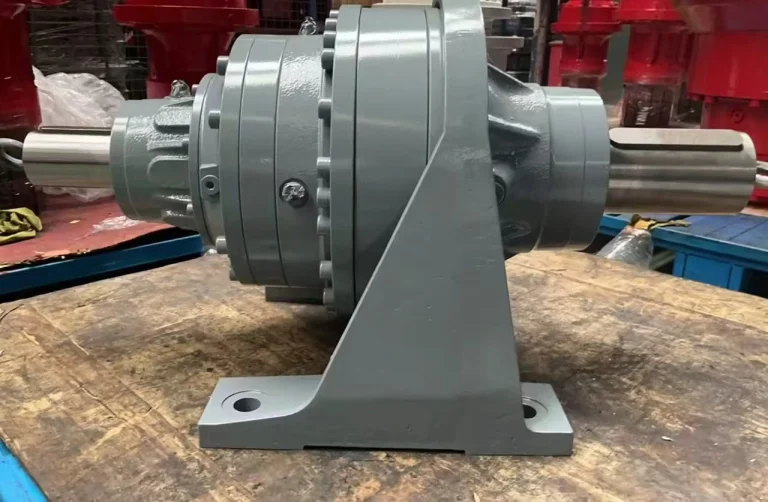
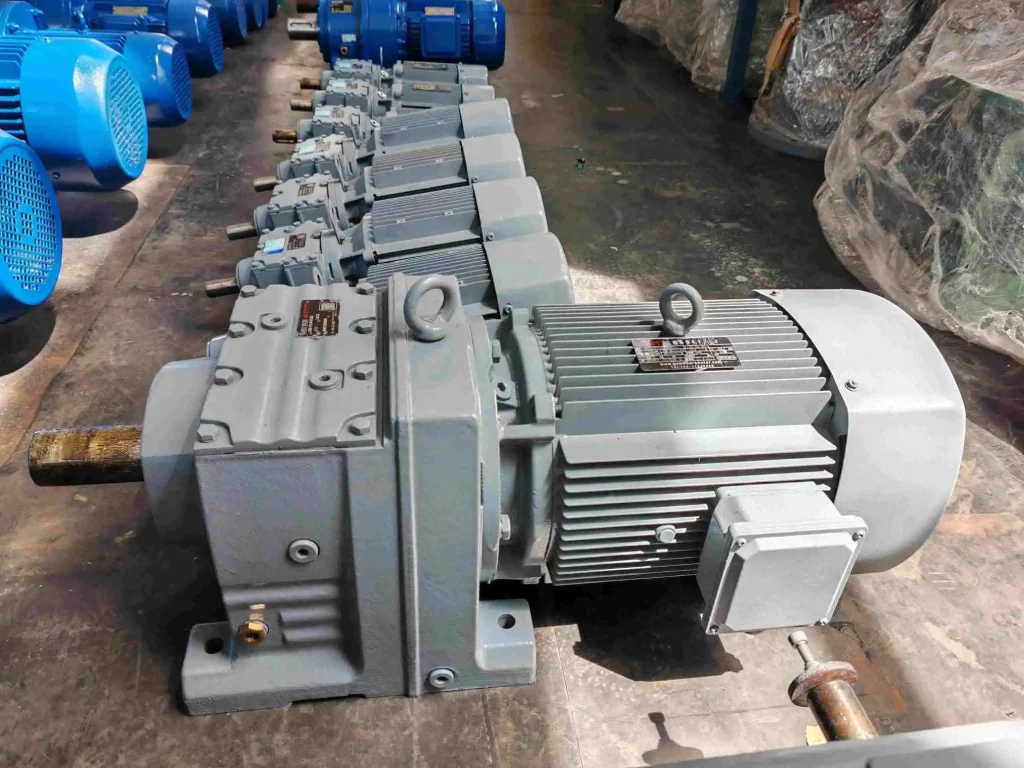
Multi-stage helical gear motors in industrial power transmission require precise thrust control to maintain efficiency and reduce wear. For example, Guomao’s GR Series Helical Geared Motor is engineered to support both axial and radial loads while delivering consistent torque in demanding applications.
Guomao Helical Gearbox Solutions for Managing Axial Thrust in Industrial Applications
How Guomao Gear Reducers Handle Axial and Radial Loads
At Guomao, our helical gear reducers use strong bearing setups, precision-ground gears, and stiff housings. These manage combined axial and radial loads well. Units like the GK Series Helical-Bevel Geared Motor run reliably under high thrust in conveyors, hoisting mechanisms, and slurry equipment.
Advantages of Guomao Gear Grinding Accuracy and Load-Carrying Geometry
Our tuned geometry and gear grinding accuracy cut sliding forces. They steadily thrust during load changes. This brings smoother meshing, less vibration, and lower heat strain in ongoing work.
Low-Noise Meshing and Surface-Finish Optimization for Reduced Sliding Forces
Our surface-finishing steps boost meshing output. They lower the noise and cut thrust shifts during high torque needs.
Modular Housing and Shaft Support Design for Improved Alignment Stability
Our modular housings hold firm alignment. They stop structure-based shifts that might raise thrust loads.
Industrial Use Cases Where Guomao Gear Units Enhance Thrust Control and Reliability
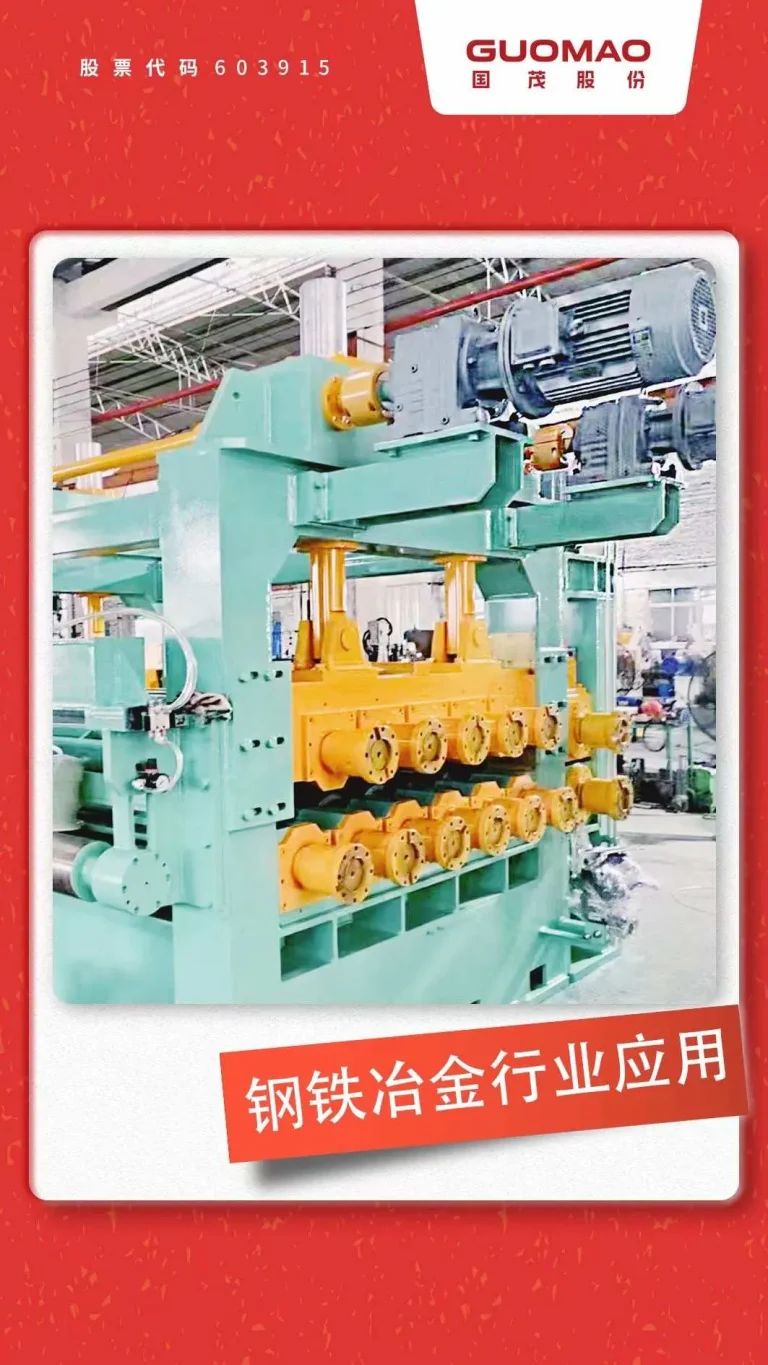
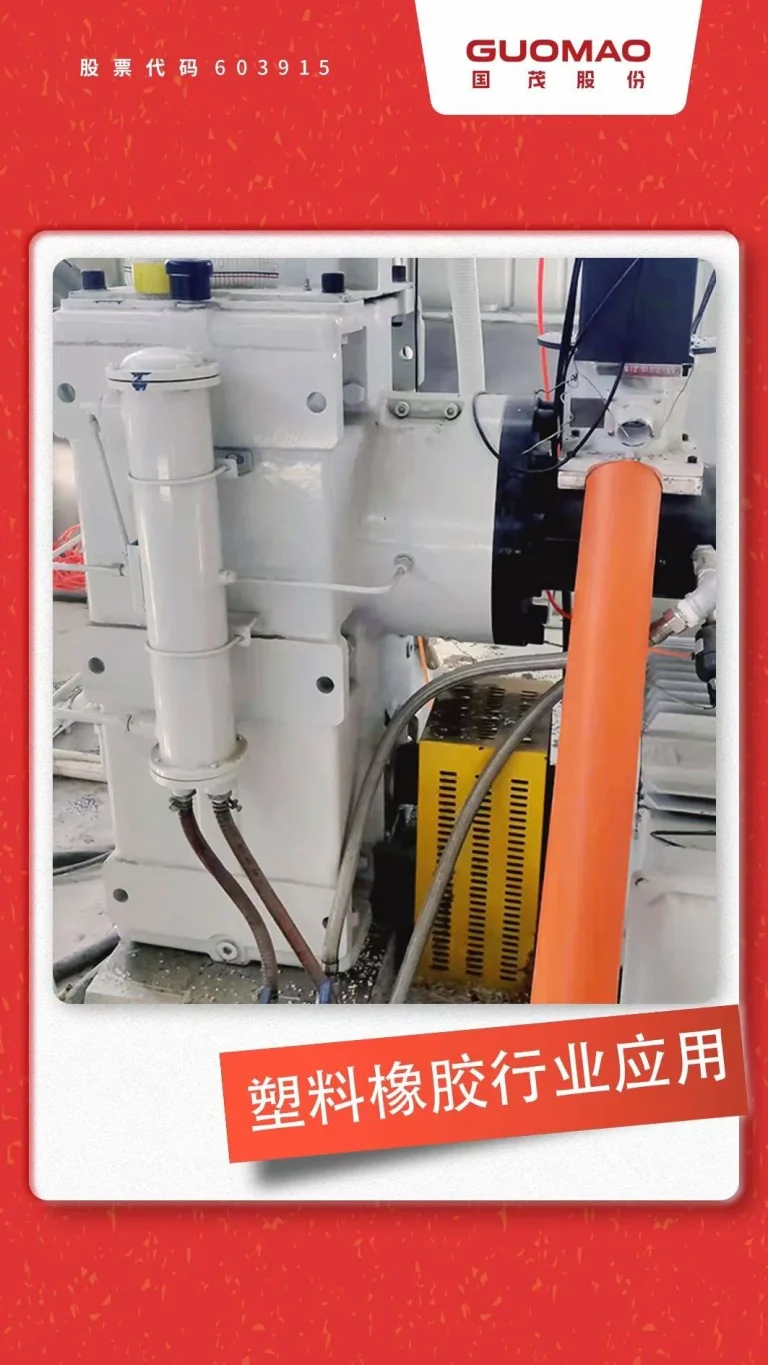
Guomao products work in conveyors, mixers, and material-handling systems. There, steady thrust handling lengthens operational life a lot. These units run well in spots needing steady axial load patterns and long check intervals.
FAQ
Q: What is axial thrust in 2-stage helical gears, and why must it be controlled?
A: Axial thrust is the force generated along the shaft due to angled gear teeth. In 2-stage systems, these forces accumulate and must be controlled to protect bearings and ensure stable operation. Guomao gear reducers include bearing configurations that help manage these loads effectively.
Q: How does helix angle influence axial thrust in industrial gearboxes?
A: Larger helix angles produce smoother engagement but generate stronger axial forces. Guomao designs apply optimized helix angles to balance performance, efficiency, and thrust stability.
Q: What design strategies effectively reduce axial thrust in 2-stage helical gear systems?
A: Effective methods include opposite helix angles, optimized face widths, rigid housings, and high-capacity thrust bearings. These practices enhance gearbox stability in industrial environments.
Q: How do multi-stage helical gear motors compare with single-stage units regarding axial thrust?
A: Multi-stage units experience cumulative axial load from each stage, increasing bearing demand. Guomao multi-stage reducers mitigate these effects through reinforced shaft support and precise assembly.
Q: What factors should engineers consider when selecting a gearbox for applications with high axial thrust?
A: Engineers should evaluate bearing load ratings, housing stiffness, gear geometry, and lubrication stability. Guomao provides solutions designed to handle elevated thrust while maintaining long service life.