

What Is a 2-Stage Helical Gearbox? Key Features and Working Principles
Definition and How Two-Stage Helical Reduction Works
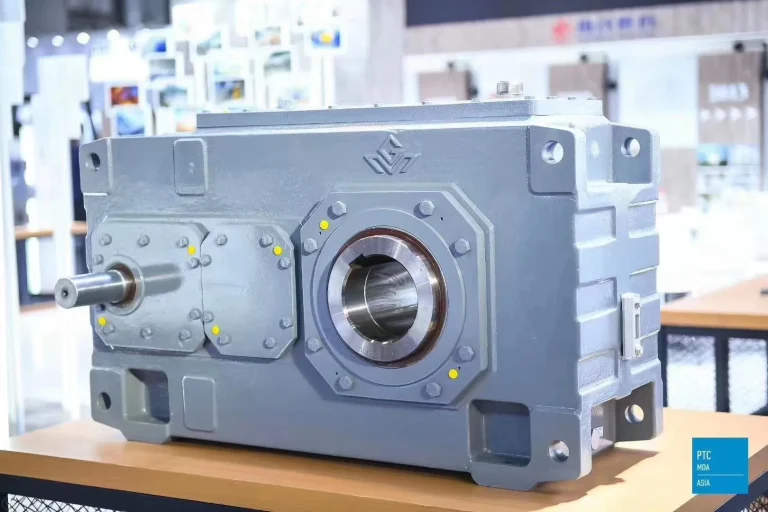
A 2-stage helical gearbox slows down speed and boosts torque by using two pairs of helical gears, one after the other. The teeth are cut on a slant, so they meet little by little instead of all at once. This gives smooth power flow. The motor first turns a small gear that drives a larger one. That larger gear then turns another set to reach the final slow speed. Two stages let you get high ratios in a small box. Each stage shares the job, so no gear gets too much stress. The gearbox stays strong and runs longer.
How Helical Gear Meshing Improves Smoothness and Stability
Slanted teeth touch over a longer path. Several teeth carry the load together. This cuts down on shaking and sudden jolts. You hear less noise and feel less wear, even when the load changes fast. Factories that run conveyors, mixers, or hoists all day love this quiet, steady performance.
Differences Between Single-Stage, Two-Stage, and Three-Stage Helical Gearboxes
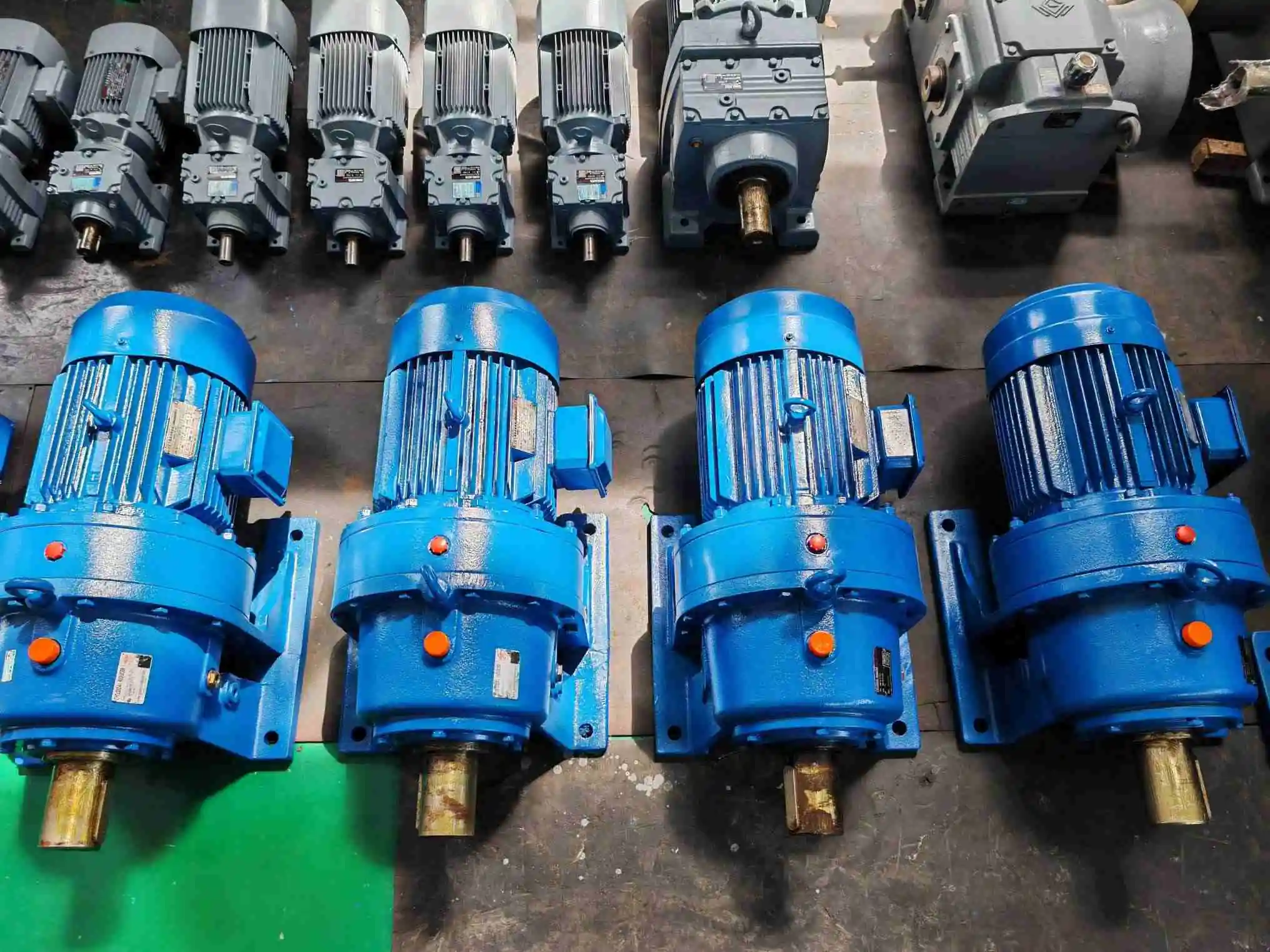
A single-stage box is small and cheap. It fits simple jobs with low ratios. A 2-stage helical gearbox gives higher ratios while staying fairly small. Most plants pick this type because it handles everyday work without trouble. A 3-stage helical box is for very high ratios or huge loads. It costs more and needs extra care to build right. For most machines, the 2-stage version gives the best mix of power, size, and price.
Cost vs Precision in 2-Stage Helical Gearbox Manufacturing
Key Cost Drivers — Design Complexity, Machining, Heat Treatment
More stages mean more parts – extra gears, shafts, and bearings. Cutting and grinding every tooth takes time. Heat treatment hardens the steel so it lasts in tough conditions. That step costs money, too. Stronger housings and better bearings also add to the price. All these things decide how much the gearbox costs.
Precision Factors — Tolerances, Gear Grinding Levels, Assembly Accuracy
Precision shows in how perfect the tooth shape is and how straight everything lines up. A tiny mistake in the first stage gets bigger in the second stage. Workers must measure carefully when they put the box together. Good machines and skilled hands keep errors small.
How Precision Affects Efficiency, Noise, Load Capacity, and Gear Life
Better precision saves energy. Gears roll instead of scrape, so the box stays cooler and quieter. Teeth wear more slowly and can carry heavier loads for many years. In a busy factory, that small extra precision can save a lot of power and repair time.
Balancing Cost and Precision for Industrial Applications
Not every job needs top precision. A simple belt line runs fine with standard gears. A big crane that lifts heavy loads every day needs tighter work. Look at the real job – how hard it runs, how long, and how quiet it must be. Then choose the level that fits without paying extra.
Performance Benefits of 2-Stage Helical Gearboxes in Industrial Use
High Efficiency and Energy Stability in Continuous Operation
Two stages spread the work. Less heat builds up, so the motor uses less power hour after hour. Plants that run non-stop see real savings on electricity.
High Torque Density and Compact Structure
You get strong torque from a small unit. That helps when space is tight on a machine or inside a crane.
Low Noise, Low Vibration, and Extended Service Life
Smooth teeth keep the noise down. Less shaking means bearings last longer. Factories pick 2-stage boxes to keep the workshop quiet and cut repair stops.
Application Industries of 2-Stage Helical Gearboxes
Metallurgy and Mining Equipment Applications
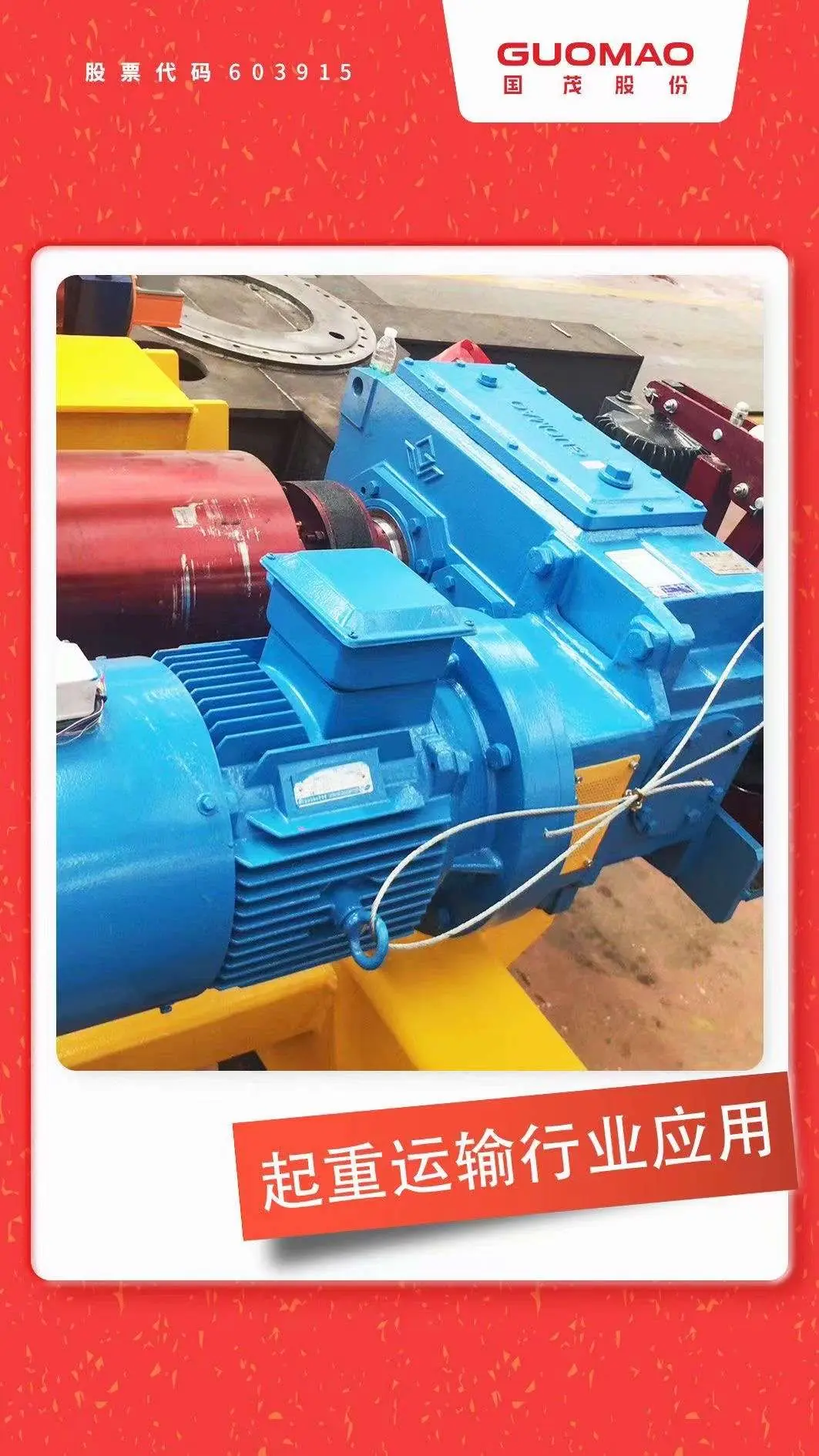
Steel mills and mines use these boxes on long belt lines and big crushers. The gears take hard hits and keep running.
Construction and Building Materials Processing
Cement factories run mixers and conveyors in dust all day. These boxes keep working without trouble.
Chemical, Pharmaceutical, Food, and Daily Chemical Industries
Mixing tanks need a slow, steady speed. Low noise matters in food and medicine plants.
Environmental Protection and Water Treatment
Water plants run pumps and scrapers 24 hours a day. Reliable slow speed is important.
Energy and New Energy Applications
Battery factories move heavy rolls. The boxes give exact speed and save power.
Plastics and Rubber Processing Equipment
Feed lines and conveyors inside plastic plants use these boxes every shift.
Hoisting, Port, and Lifting Machinery
Cranes and winches need safe, strong torque. Two-stage boxes lift smoothly and stop exactly.
Transportation and Conveying Machinery
Belt lines, screw conveyors, and bucket elevators all run smoother with helical gears.
How to Select a 2-Stage Helical Gearbox: Practical Engineering Guidelines
Define Torque, Ratio, Duty Cycle, and Ambient Conditions
Write down the torque you need, the speed drop, how many hours it runs, and the heat or dust around it. This list stops you from buying too little or too much.
Choosing Gear Accuracy Level Based on Application Needs
Standard accuracy works for most belt jobs. Higher grades fit cranes and robot drives where every small move counts.
Material, Heat Treatment, Lubrication, and Cooling Considerations
Hardened alloy steel lasts the longest. Good oil and proper cooling keep the box happy for years.
When to Use Standard Designs vs Custom Solutions
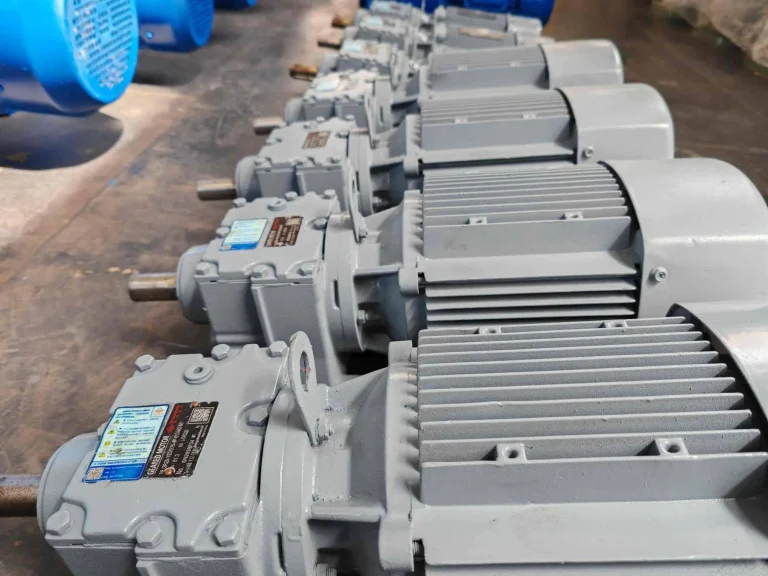
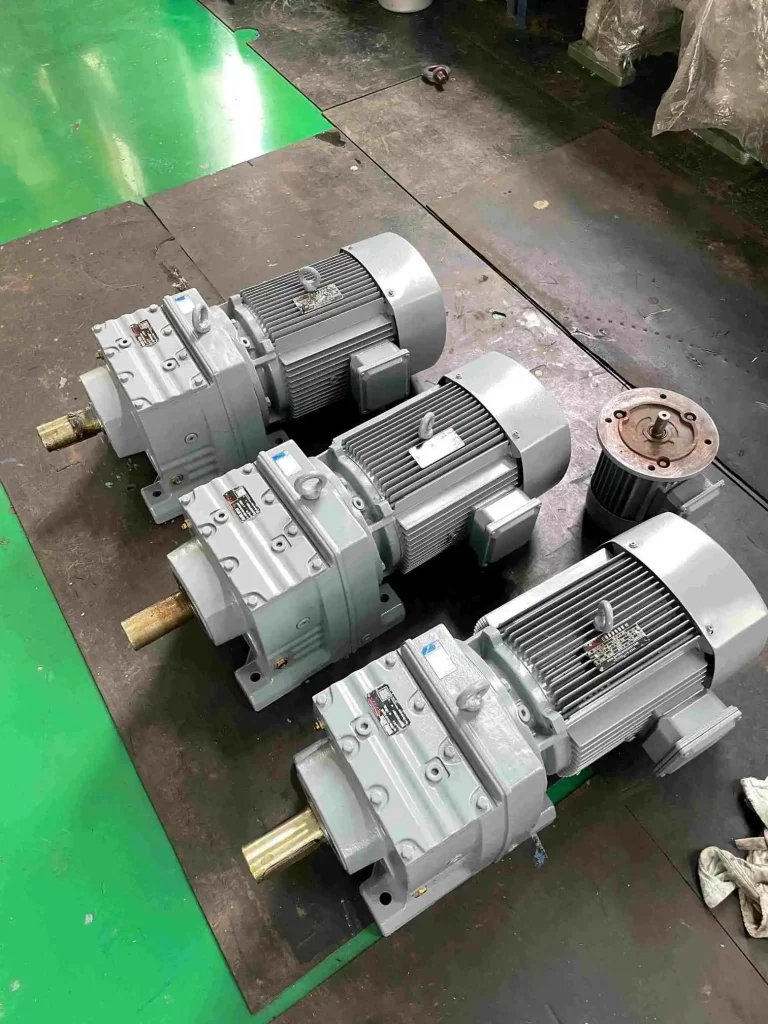
Guomao’s GR Series Helical Geared Motor, GF Series Parallel-Shaft Helical Geared Motor, GK Series Helical-Bevel Geared Motor, and H Series cover almost every normal job. Only order custom when the mounting or shaft is special.
Why Choose Guomao for Two-Stage Helical Gearbox Solutions
Comprehensive Helical Gearbox Portfolio
Guomao offers the full range – GR Series, GF Series, GK Series, GS Series, and ZY Series Cylindrical Gear Reducer. One call gets you the right box for steel, chemical, water, or new-energy work.
Precision, Stability, and Long-Term Reliability
We grind gears accurately, harden them right, and check every box before it leaves. You get steady power and low noise year after year.
Modular Architecture and Application Flexibility
Same parts fit many mounting styles. Swap flanges or shafts fast. Repairs and upgrades stay easy.
FAQ
Q: What is the main advantage of a 2-stage helical gearbox compared with a single-stage design?
A: You get higher ratios and smoother power in a still-small box. Guomao’s GR and GF Series show how two stages give the best mix of strength and size for factory work.
Q: How to choose a 2-stage helical gearbox for different industrial applications?
A: Look at torque, speed ratio, running hours, and shop conditions. Guomao offers ready boxes in GR, GF, GK, and H Series for almost every job.
Q: Which brand offers reliable 2-stage helical gearboxes for heavy-duty use?
A: Guomao builds strong boxes with accurate gears and tough housings that stand up to hard daily work.
Q: What is the difference between a 2-stage helical gearbox and a 3-stage gearbox?
A: Two stages fit most needs with good size and price. Three stages are only for very high ratios or extreme loads.
Q: What factors most affect the service life of a 2-stage helical gearbox?
A: Good gear grinding, strong steel, clean oil, and careful building decide how long it runs. Guomao controls all these steps for a long, trouble-free life.