

Helical Gearbox vs. Planetary Gearbox — Understanding the Fundamentals
What Is a Helical Gearbox? (Core Working Principles & Gear Structure)
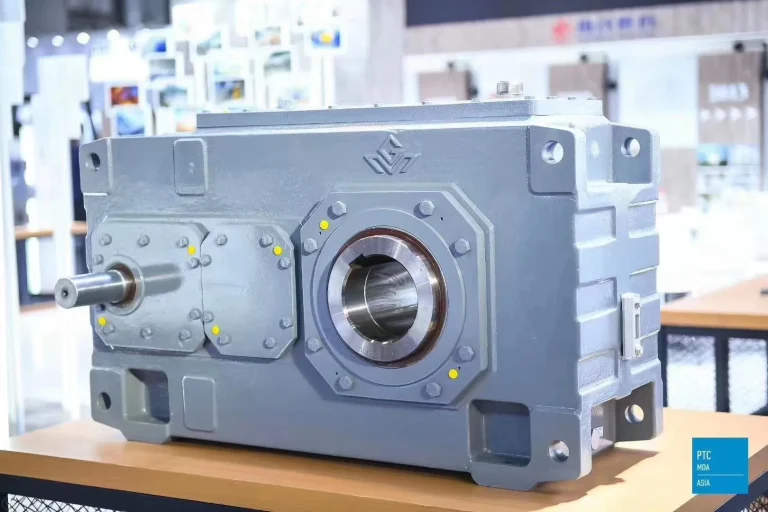
A helical gearbox has teeth that sit at an angle instead of straight up and down. When the gears turn, the teeth slide into each other slowly. That gentle touch makes everything run smoothly and quietly. The load spreads over several teeth at once, so nothing gets hammered too hard. You will find these boxes on long factory belts, big mixing tanks, screw feeders, and water pumps that never stop. The motor stays happy, the machine does not shake, and people in the plant can still talk without shouting.
What Is a Planetary Gearbox? (Sun Gear, Planet Gears, Ring Gear Architecture)
Picture one gear in the middle – the sun. Three or four smaller planet gears roll around it while also spinning on their own pins. A big ring gear holds everything on the outside. All the planet’s gears share the heavy work together. That simple trick gives you huge torque from a very small box. It also keeps everything stiff with almost no play. Robots, cranes, excavators, wind turbine turns, and precision machines all use planetary gearboxes because they pack so much power into tight spaces.
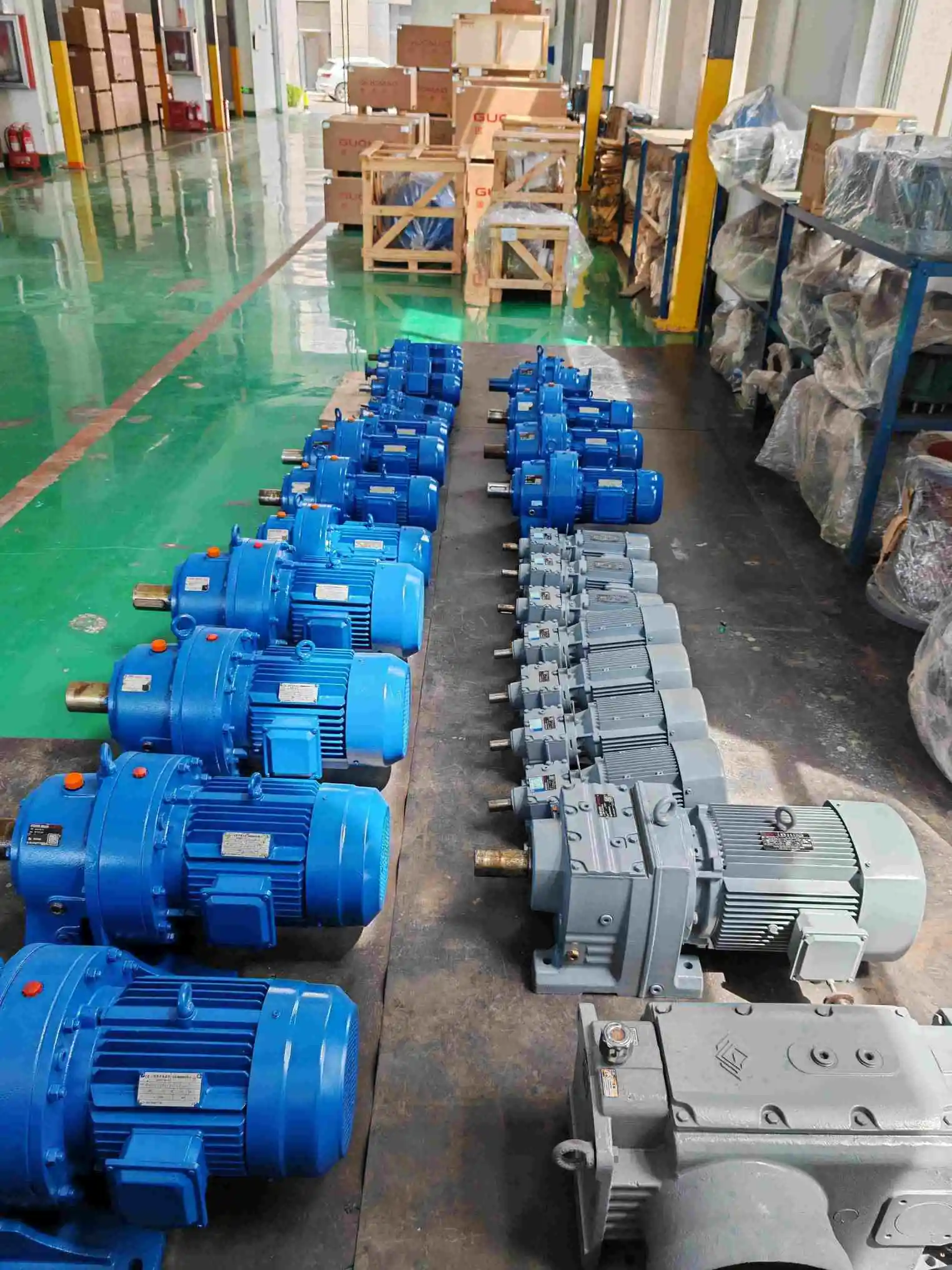
Technical Comparison — Helical Gearbox vs. Planetary Gearbox Performance
Torque Density, Load Capacity & Space Efficiency
Planetary wins hands down when you need a lot of torque but have almost no room. Three or four planets carry the load, so the box stays small and light. Perfect for mobile cranes, robot arms, or truck drives. A helical gearbox needs more length or width to reach the same torque. Most fixed factory machines have that extra space, so the bigger size is no problem, and the price stays lower.
Noise, Vibration & Smooth Operation
Nothing beats a good helical gearbox for quiet running. The slanted teeth glide in softly, so you barely hear them. Food factories, packaging halls, and any place with noise rules love helical boxes. Planetary boxes are decent, but at high speed, you can sometimes hear a light whine. Modern grinding helps, but helical still stays the quietest choice.
Gearbox Efficiency, Heat Management & Power Loss
Both types waste very little power – usually 95–98 %. Helical loses almost nothing on long, steady runs because the teeth mostly roll. It stays cool all shift. Planetary spreads the heat across many teeth, so it also stays cool even when you start and stop heavy loads all day.
Durability, Maintenance Complexity & Service Life
Helical boxes are easy to open. You pull the cover, look at the gears and bearings, change what is worn, and you are done. Planetary boxes need everything lined up perfectly. Once they are built right, they take hard knocks for years, but fixing one takes more time and better tools.
Application Analysis — When to Choose a Helical Gearbox vs. a Planetary Gearbox
When a Helical Gearbox Is the Best Fit (Noise-Sensitive, Continuous-Duty Applications)
Pick helical when the machine runs at the same speed for hours. Long conveyors, cement mixers, chemical tanks, and water pumps are perfect examples. The whole line runs smoother, and the workshop stays quiet.
When a Planetary Gearbox Performs Better (High-Torque, Space-Constrained Projects)
Choose planetary when you need big power in a tiny corner. Cranes, digger swing drives, robot joints, and wind turbine yaw systems all need that small-but-strong package.
Industry-Specific Use Cases & Real-World Scenarios
Planetary gearboxes frequently appear in:
- lifting mechanisms and hoisting drives
- rotary drilling and construction machinery
- precision automation and robotic joints
- heavy-duty conveyors and crushers
- mobile equipment requiring compact transmission
Helical gearboxes commonly support:
- bulk material conveying
- mixing and homogenizing equipment
- screw and belt conveyors
- continuous industrial process lines
These patterns—derived from load characteristics and mechanical requirements—guide engineers toward a well-matched gearbox solution.
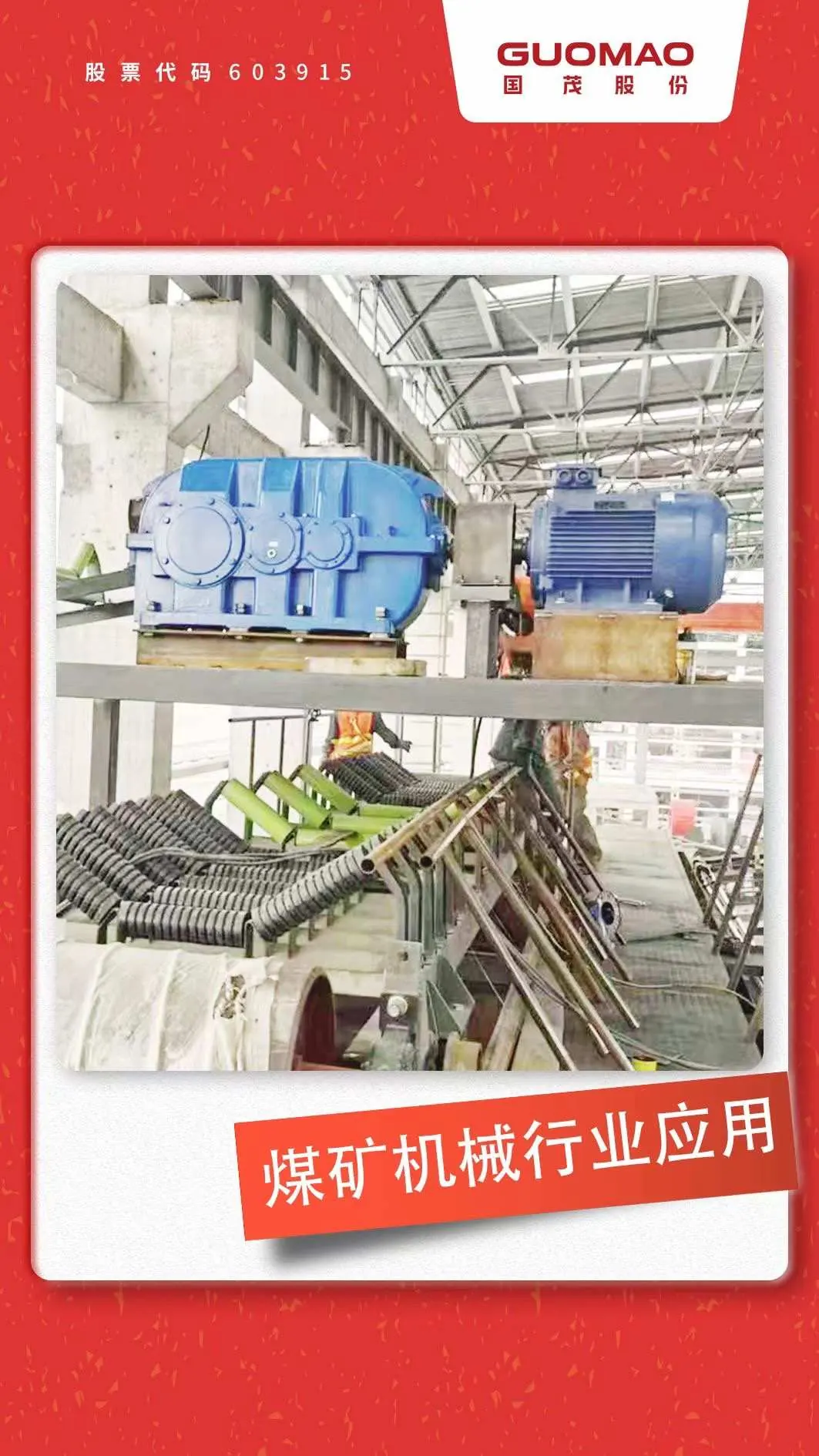
Evaluating Total Cost of Ownership (TCO) in Gearbox Selection
Initial Investment vs. Long-Term Operational Value
Planetary costs more on day one because of the extra parts and tighter tolerances. But when it lifts heavy loads every minute, it lasts longer and uses less electricity, so the money comes back. Helical costs less to buy and even less to fix. For normal factory jobs, it often gives the lowest bill after ten years.
Engineering Considerations for Gearbox Specification
Write down five numbers first: torque, speed, hours per day, space left, and how loud it may be. Then think about dust, heat, and who will change the oil. Good numbers at the start stop bad surprises later.
Decision Checklist for Project Engineers
• Choose a planetary gearbox for high torque in limited space, where compact structure and torque density are essential.
• Choose a helical gearbox for low noise and continuous-duty stability, especially in systems requiring smooth and quiet operation.
• Choose a planetary gearbox for precision motion, where stiffness and low backlash determine positioning accuracy.
• Choose a helical gearbox for cost-sensitive general industrial use, when loads are moderate and maintenance access matters.
• Choose a planetary gearbox for heavy shock or fluctuating loads, where load-sharing gears ensure greater resilience.
Guomao Gearbox Solutions — Reliable Helical & Planetary Gear Drives for Global Industries
Guomao Helical Gearbox Solutions
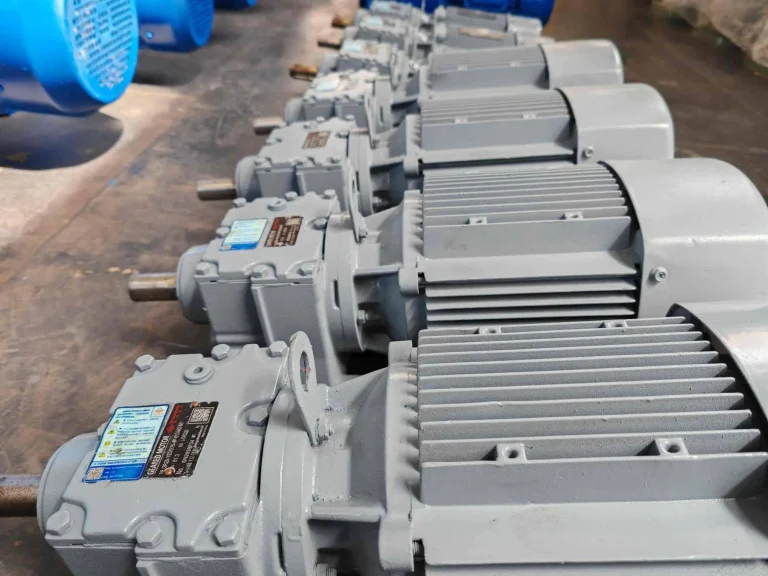
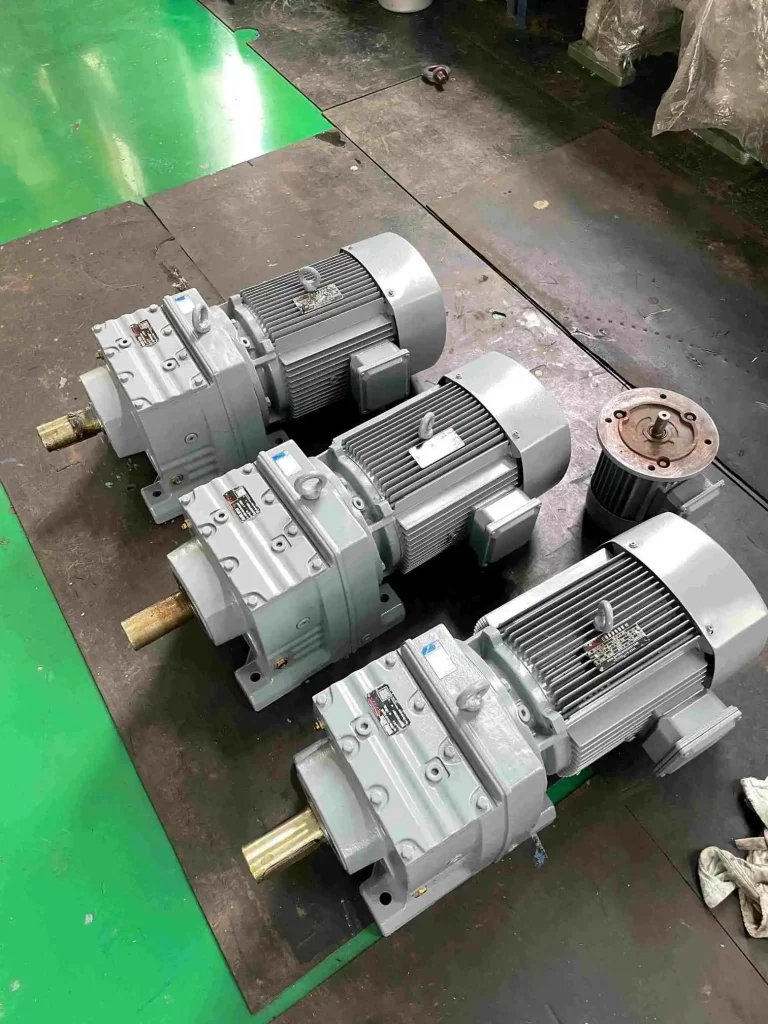
Our GR Series Helical Geared Motor, GF Series Parallel-Shaft Helical Geared Motor, GK Series Helical-Bevel Geared Motor, and GS series cover every common helical job. You get quiet operation, ratios up to 33,000:1, and power up to 200 kW. We grind the teeth smooth and harden them tough, so they run for years on conveyors, elevators, and mixers.
Guomao Engineering Planetary & Precision Planetary Series
Our planetary line reaches 850,000 N·m torque and a 2,500:1 ratio. Big cranes, road pavers, drilling rigs, and robot arms use them every day. The precision models have extra-hard helical planet teeth for almost zero backlash – just right for machine tools and automation lines.
Why Engineers Choose Guomao for Industrial Gearbox Projects
Guomao checks every detail from raw steel to the final test run. The same base parts fit foot mount, flange mount, or shaft mount, so you can change the layout later without buying all new. One trusted supplier for both helical and planetary – that keeps your project simple and fast.
FAQ
Q: How to choose between a helical gearbox and a planetary gearbox for industrial machinery?
A: Selection depends on torque, space, noise, and duty cycle. A helical gearbox is ideal for quiet, continuous-duty conveyors or mixers, while a planetary gearbox is recommended when compact size and high torque are required. Guomao provides both solutions with engineering-focused specifications.
Q: Which type of gearbox offers higher torque density, a helical gearbox or a planetary gearbox?
A: In a planetary gearbox, the torque density is much higher due to load sharing among multiple planet gears. Guomao engineering planetary units are specially designed for heavy-duty load cases and constrained installation spaces.
Q: Which gearbox type is more suitable for precision motion applications?
A: With high stiffness and low backlash, a planetary gearbox is better suited for applications such as robotics or machine tools. Accurate motion in Guomao precision planetary series is ensured by hardened helical gears.
Q: Are helical gearboxes more efficient than planetary gearboxes?
A: A: Both types achieve high efficiency—typically 95–98%—but the best choice depends on load characteristics. For steady, continuous-duty environments, helical gearbox designs tend to do well, while planetary gearboxes maintain efficiency under heavy or fluctuating loads.
Q: Which brand offers reliable industrial planetary and helical gearbox options?
A: Guomao provides engineering-grade helical and planetary gearboxes with strong torque capacity, modular structures, and strict manufacturing standards. Guomao’s product portfolio covers both heavy-duty machinery requirements and precision-driven automation needs through dedicated gearbox series.